Showing posts with label perception. Show all posts

Sunday, 8 February 2015

Scholarship and the BBC

This is the picture of Winston Silcott that appeared in the media, when he was accused of murdering PC Keith Blakelock during the Broadwater Farm riots in 1985.


Wolf Hall, a tv dramatisation of a novel about Thomas Cromwell by Hilary Mantel, is currently being shown on the BBC.  Building on the viewing public's love of history, particularly in relation to Henry V111 and his court, the BBC is also screening a range of documentaries giving a view of arts and culture at the time.

Waldemar Januszczak attacks the current revision of history in the way Thomas Cromwell and Thomas More are portrayed.  This is how he does it.


He focusses on the Shrine of our Lady of Caversham in Berkshire.  Januszczak went to a Catholic school nearby, as the son of Polish Catholic refugees.

He tells the story of how this ancient shrine was visited by Katherine of Aragon.  She prayed to Our Lady to prevent the divorce and Henry's marriage to Anne Boleyn.  He alleges that Henry V111 was so enraged he ordered Cromwell to strip the shrine and have the statue transported to London.  Nice dramatic story.

Sadly for Januszczak, it leaves out some vital details and distorts time.  Henry was already married to Anne Boleyn and looking for a way to divorce her, so that he could marry Jane Seymour.  The shrine was stripped on 14 September 1538 as part of the reformation, to wipe out idolatry.  Far from singling out the Shrine of Our Lady, the King and his Secretary aimed to clean up the church.  This was 2 years before the fall of Cromwell.

Januszczak spends a lot of time discussing the character of 2 statesmen:  The Chancellor, Thomas More and the Secretary, Thomas Cromwell.

 
Thomas More was portrayed in Robert Bolt's 1954 play 'A Man for All Seasons' as a man of principle, who would not agree to the divorce from Catherine of Aragon.  In the play More is loved by the people and envied by Thomas Cromwell.


Hilary Mantel's novels revise this view and portray Thomas Cromwell as a quick witted man, who has risen from humble beginnings and made himself useful to the nobility and king.  She presents him as someone who prefers to persuade people rather than torture them, contrasting this with Thomas More, who pursues a fanatical anti-protestant ('heretic') line and relies much on torture, burning and hanging.  Mantel based her novels on exhaustive reading and research over 20 years.

How does Januszczak rebut this?

He contrasts the portraits of the 2 men painted by Hans Holbein the younger.  He tells us that More is obviously honest and sincere, by the look in his eye.  Thomas Cromwell has small piggy eyes and looks shifty, says he.  What proof does he offer that this is true?  "Hans Holbein must be right BECAUSE HE WAS THERE."

Later, in discussing other portraits, Januszczak discussed Holbein's study of Anne of Cleves, which was shown to the king as his first view of the prospective bride.  


We are told that Henry V111 was repulsed by Anne of Cleves, claiming she looked nothing like Holbein's portrait.  Januszczak would have us believe that this picture must be right, because Holbein was there.

What has this got to do with Winston Silcott?

Silcott was released from prison and received compensation because there was no proof he'd killed PC Keith Blakelock.  Silcott commented on how the police skewed media coverage by releasing a photo to the media which seemed to show Winston has a deranged man.  This is how he looks today.


I find it hard to believe that we can credibly draw major conclusions based on how someone looks, rather than viewing hard evidence.  If we did, people like Stephen Hawking might be shunned for being a bad 'un.

Handsome is as handsome does.

The BBC seems to be saving money on research and producing nice looking, but vapid documentaries.


Monday, 30 January 2012

Cause-Effect? Why bother when conjecture will do

Deaths from heart attacks have halved in the UK in the past decade. This is the conclusion by researchers from the Public Health Department of Oxford University.


Researchers have looked at the data and found that fewer people are having heart attacks and more people are surviving heart attacks. Dr Kate Smolina concludes that this a great success story for the NHS.

Dr Mike Rayner then goes on to discuss why that might be so. Coronary care in the NHS seems to have improved.

He then describes things that may have made a difference, such as a reduction in smoking. He guesses that a reduction in saturated fat intake and an increase in fruit consumption (mostly as juice) may have made a difference.

Professor Goldacre thinks that drugs for high cholesterol and high blood pressure may have made a difference. Goldacre also details improvements in cardiac care, such as faster transportation to hospital after a heart attack may have made a difference.


So we have a report that gives us a simple fact: deaths from heart attacks have halved in the UK in the past decade.

It then discusses what may or may not have contributed to this change.

What gets reported in the UK press?

Deaths have halved because NHS doctors have been prescribing statins.

Never let facts get in the way of cosy beliefs and comfortable prejudices.

Monday, 23 January 2012

Charlatan

I had an interesting conversation with a young Polish cardiologist recently. He was friendly and open to discussing views on health, without resorting to the 'Me expert, you idiot' approach of yesteryear.


I talked about some of the things I've learned about preventing heart problems and mentioned the work of Dr William Davis. The cardiologist turned to his computer, typed in Dr William Davis in the PubMed search engine and found no results. He then told me that Dr Davis must be one of those American charlatans, who are just trying to make money out of empty assertions and selling snake oil. I explained that Dr Davis has had stunning results by recommending diet and lifestyle changes in order to reduce coronary arterial plaque. The cardiologist dismissed this telling me he could claim numerous positive results and that this would prove nothing. He told me that he would need to see peer reviewed articles to convince him that Dr Davis had anything valuable to contribute to the field.

I then asked for his views on the lipid hypothesis and the idea that saturated fats contribute to heart disease. He told me that there is evidence that they do, took my email address and promised to send me links to peer reviewed articles substantiating this fact. That was at the end of November 2011 and to date I've heard nothing.

Later I typed the young cardiologist's name into PubMed and found zero results, despite the fact that this doctor routinely prescribes heart drugs and surgery to deal with various symptoms. I also checked on my GP colleagues, with whom I've worked for 20 years, and found no peer reviewed papers by any of them. I've witnessed and heard from patients testimony to their efficacy in dealing with a wide range of medical conditions. I doubt if patients need peer reviewed articles to show that their doctors aren't charlatans.

Dr Davis relies on the results of scans to show his patients' calcium scores. It's possible to challenge the cause-effect relationship between diet and heart disease that he proposes, but his results are impressive.


Dr Davis is generous with his knowledge and shares his experience freely on his blogs and in interviews. He does have a heart disease prevention programme with a membership and also sells 2 books. I don't think this automatically discounts his work.

In a previous post I mentioned the difficulty of getting research published in peer reviewed journals if it challenges orthodoxy or a sticky metaphor. Lynn Margulis persisted and made a difference to how we understand the process of evolution. The way that the Helicobacter was brought to public attention so that research was financed and appropriate antibiotics developed for the treatment of stomach ulcers is another example of this trend.


Commentators are challenging how pharmaceutical companies chase gold mine drugs and jump to conclusions about cause-effect relationships rather than correlations to research treatment for serious conditions. Some claims for drugs have been undermined by research or more detailed analysis of the initial findings on which claims for the drug were based. 'Why Science is Failing Us' is a provocative article in this vein.

$29 Billion Introduction from 29billion on Vimeo.


Another angle in this debate focuses on the trend towards senior researchers to claim credit for all breakthroughs (and to quash evidence that young juniors have found something new.) Peter Lawrence claims that the heart of research is sick. He describes the push for publication in a few high profile journals so that your papers are cited by colleagues. This means that small, obscure areas of research are overlooked and that papers on planned genetic research are favoured, an area which seems to be reaching some dead ends. The outlook for UK scientific research is depressing.

I think it's absurd to assert that a doctor can only treat people if he/she has published research in a peer reviewed journal on the subject. The history of medicine has been built on doctors and surgeons applying the results of other people's research. Some members of the field indicate that the true charlatans may be those who change the paramaters of their research AFTER the results are in or those who conceal or understate side effects and statistically insignificant results by manipulating the data.

Friday, 9 December 2011

Rapper Fat Joe says "Educate yourself to weight loss"

Here's how he used to look:


In this video he talks about how he lost 100lbs by educating himself on the science of food and metabolism. Basically Rapper Fat Joe cut out most starch and sugar.

'Super crack head level with sugar...... and then we wonder how we caught diabetes...'


'I lost 6 friends last year to heart attacks..... all younger than me...'

'We're not superheroes, we're human beings. I'm being a realist. That's going to happen to me if I don't switch it up.'

'Not only do I feel better, I'm not missing nothing. I still eat chicken, steak, lobster, with sauteed vegetables or salad. I don't eat it with that pasta, rice or bread.'

In breaking news, Denmark has levied a tax on saturated fat and Norway is running out of butter from the increasing popularity of high fat/low carb ways of eating.. 2 neighbouring countries with diametrically opposed views on diet and obesity.

Listen to da man. Rapper Thin Joe tells it like it is.

Respect.

Thursday, 1 December 2011

Doers versus Dreamers

Books offering home spun philosophy, such as 'Chicken Soup for the Soul' do well in the best seller lists, but don't seem to draw on life experience in a useful way.

Here are 2 excerpts from an interview with Steve Jobs, where he offers 2 concepts that helped him.

The first relates to change and the power of ordinary people to make a difference:


The second gives us an insight into how he made progress in his career, mainly by asking for help:

Tuesday, 29 November 2011

Sharing my secrets

Bruce Muzik talks about his experience of challenging perceptions and prejudices he absorbed from birth in Apartheid South Africa. Here's how he took off those distorting lenses and experienced his native country in a new way.

It started by sharing his terrible secret:


He gives a good insight into how generalisations about other cultures and communities arise and are perpetuated.

His main purpose is in motivating others to take steps to remove numbness and increase aliveness.

In management studies we consider various ways in which people interact and cooperate. There are psychometric instruments to help us distinguish personality and style differences. Emotional intelligence guides us in ways to manage ourselves and our interactions with others. Team roles enable us to consider various functions that have to be fulfilled in completing a project and the distribution across members of the group engaged in the work.

Bruce Muzik encourages us to come back to ourselves and work on the inner kinks that block energy and a full sense of aliveness. I don't think he's encouraging people to be naive and blunder into the boss's office with the words 'I hate you and all you stand for'. He does suggest ways that might improve working relationships and trust.

One of his coaching examples might shed some light on the mysterious suicide of Welsh football manager, Gary Speed, who did not seem depressed and had no major conflicts with family and friends in the days before he died. Perhaps he nursed a secret that became unbearable?

Tuesday, 1 November 2011

Truth, Justice and the American Way

This week UNESCO voted with a majority of 93 votes to recognise Palestine as a separate entity for the purposes of the organisation's work:


The United States voted against, along with 13 other countries including Canada, Germany and Australia.

107 countries voted for the motion including France, Russia, China and Austria.

The United Kingdom abstained along with 51 other countries including Denmark and Georgia.

Comments from the source of these numbers:

'Most of these are no surprise, although it is worth noting the division in Europe, with Spain, France, Ireland, Austria, Finland and Greece voting “yes,” Germany, Czech Republic and Sweden voting “no,” and the UK, Italy and Denmark abstaining. It’s also probably worth noting that the US didn’t manage to get a “no” vote from such solid supporters as countries like Latvia (which voted “no” to bringing the motion to the General Assembly earlier this month but abstained today) and Tuvalu, Nauru and other island states that almost always support the US in international forums. Another formerly stalwart US supporter who voted for Palestine is Iceland. I remember chatting with an Icelandic diplomat during the Bush administration who had told me that after one particularly egregious instance of Washington dictating terms on what should have been a bilateral decision between Reykjavik and DC the US could no longer count on their automatic support in international forums.'

The United States has since cut off $60 million funding to UNESCO. The spokeswoman at the press conference stated that the USA criticised this unilateral move, which undermined their efforts at brokering a peace settlement in the Middle East.

Wikileaks (strongly attacked by the US government as a hostile force working against democracy) released the Palestine Papers earlier this year, revealing the true nature of this 'peace process'.

They revealed that the Palestinians had made concessions requested of them repeatedly, only to be greeted with indifference by the Israeli/US parties to the negotiations, who then demanded more:


Other papers revealed communications between Israel and the US describing policy to keep Gaza on the brink of economic collapse, without tipping it over to the abyss completely:


Noam Chomsky has been critical of US support for Israel, posing as an honest broker in peace negotiations, when its role is firmly partisan. Part of the problem is the economic benefit to the US arms industry that flows from the huge amount of aid given to Israel. The US government has promised $30 billion in military aid over the next decade. He also believes that the US contributes to a PR offensive to soften public opinion to accept an attack on Iran. The principal rationale is the allegation that Middle Eastern people want such a military offensive, when the idea comes from Middle Eastern dictators (allied with the US) rather than ordinary people:


What do you do when you want to enforce policies, but find yourself in the minority?

Bully and coerce by withdrawing funding. Go on the offensive with mis-information.

Who abstained?

Countries that rely on good relations with the USA... such as UK, Denmark and Georgia. It's easier to remain neutral than vote against and risk public ridicule.

When Israel voted against the motion, other delegates laughed.

The United States and some other western governments have taken action to starve Wikileaks of funding. They have targetted online payment conduits, banks and other financial institutions to ensure that money does not flow in for further revelations.

Professor Chomsky believes that the US government reveals itself as defiantly anti-democratic in its foreign policy action. He also thinks that the scare tactics about the threat to security by the leaks is a smokescreen. He cites the example of a study from a medical journal in Falluja (attacked by US forces in November 2004). They found levels of cancers, leukemias and other diseases higher than in the aftermath of Hiroshima. This was not covered in the US media, which focussed on Iran and Afghanistan:


From a Palestinian viewpoint it seems fruitless to continue negotiating with two parties, who have huge economic interests in delaying a resolution or allowing concessions from their side. It makes more sense to take another route and seek acceptance by a UN body responsible for humanitarian aid and cultural heritage. Trust networks within the UN have built up over time and recognise some of the attempts made by Israel to erase Palestinian territory, homes and culture. UNESCO has censored Israel several times for its treatment of Arab sites of archaeological significance (to little effect.)

It will be interesting to see what happens when the UN resolution is tabled to recognise Palestine as a separate state.

Update

Israel has today decided to speed up building 2000 new settlement homes in the West Bank and withhold funds from the Palestinian Authority. Palestinians are appealing to the UN to intervene.

The USA and Israel have long criticsed Middle Eastern governments and held Israel as a prime example of democracy in the region.

How strange that their response to democratic election processes is to punish people for 'voting the wrong way.'

Perhaps the world does not share a common perception of democracy and dictatorship.

Update 2

Canada has also announced a cut to its UNESCO funding. It would be fascinating to have heard this week's conversations across North America between US and Canadian diplomats and politicians.

Friday, 21 October 2011

Give us the money

There's a view that financial resources are a necessary pre-requisite for creativity and innovation. Some say that commercial firms won't produce anything of value unless they can find a way to monetise it.

One curious exception to this idea is the development of the internet. 'Necessity is the mother of invention' seems to have been a driving force in opening up communication between people via computer in a variety of settings. Academics and research scientists at CERN contributed to a mixture of piecemeal developments that eventually led to what we use (and take for granted today):


Tim Berners-Lee was one of the pioneers at CERN and often credited as one of the fathers of the world wide web. He has recently spoken at UK Parliamentary sub committees discussing the idea of a 2 speed internet, charging people a premium for faster data transfer. He argues passionately that web innovation developed (and continues) through a culture of cooperation, free exchange of ideas and collaboration. He describes it as a Worldwide Open Data Movement:


The European Court of Justice has recently banned the issuing of patents for embryonic stem cell research. Research companies protested that this would set back the timetable for research into cures for a range of chronic and life threatening illnesses. News reports warned that scientists and their research could migrate to other territories, where there were no legal barriers to the work. They hinted that profits from drugs would benefit other economies than our own.

On the one hand there is growing criticism of the ways in which drug companies have profited from harvesting tissue samples, stem cells and genetic code for their work, without rewarding individuals who contributted to them. Henrietta Lacks is a famous example of someone who benefitted mankind through her tissue samples, but did not gain any reward for her family.

Lawyers have already quietly shifted their strategy to patenting the drug therapies rather than the stem cells, so the argument seems to be specious.

Dennis Ritchie is another innovator who gives the lie to the 'money first' premise of creativity and innovation.


Dennis Ritchie and Ken Thompson worked for Bell Labs (at AT & T) and were designing a complex muti-user operating system called Multics. Bell Labs stopped the project, but Ritchie and Thompson decided to continue building the operating system themselves and came up with Unics (which became Unix). As a telephone monopoly, AT & T were not legally able to sell computer products.


'So the researchers in Bell Labs did what geeks do – they gave it away to their peers in university research labs, under a licence that permitted the recipients to modify and improve it. In doing this Ritchie and Thompson unwittingly launched the academic discipline of computer science, because university departments were suddenly able to give their students software that was not only powerful (and malleable) but also free. The result was that virtually every computer science student in the world became a Unix geek in the course of his or her education.'

Graduates took their Unix experience with them to industry and continued to modify and improve it in commercial applications.

This was the catalyst for several developments. Richard Stallman founded the free software movement (GNU), following Bob Wallace's Shareware. Linus Torvalds modified Unix and released it as Linux.

C++ and Java were built on the C language that Dennis Ritchie devised. Steve Jobs used Unix as the basis for his NeXT computer workstation. He took this experience back to Apple. OS X is built on Unix and and powers all Apple products.


Money does come for good work, but not necessarily for the original patented design. It seems that holding on tight to an idea only seems to squash it, rather than sharing and helping it grow.

Sunday, 16 October 2011

War on terror?

The USA give an annual subsidy of $3bn to an independent and affluent state. Much of it is in the form of military hardware.

The policy supports the line that Israel is conducting a war on terror.

This is part of state supported military action:


Destroying the means for a population to feed themselves and earn money from food crops does not fit into my perception of a war against terrorism.

However it does support the idea that Israel wishes to systematically remove Palestinians from land and colonise it for Israeli (non Arab Jews). That reminds me of something my parents' generation fought against as part of a world war.

Such action will continue unopposed until the USA recognises that their subsidy is used to displace, starve and destroy one ethnic group.

Friday, 14 October 2011

We're all in this together.........

UK politicians tell us that cuts and economies are painful but necessary. We need to reduce government debt and deficit to secure our position in world markets and ensure that cash continues to flow into the UK and through the economy.

So far so good.

We are part of the global capitalist economy. The focus is on private ownership of the means of production, creation of goods and services for profit in a market. Profit enables businesses to expand and grow. Without profit, companies must cut their coat according to their cloth and trim expenses.


Some UK banks were in trouble and needed government assistance to survive. Some of them stopped paying dividends to shareholders until they were in balance and had made efforts to repay government loans. I have written before about interesting practices used by Bank of Ireland (supported by the Irish government), which included some sleight of hand in dealing with bond holders (who had purchased bonds in other financial institutions, only to find that BOI had taken them over and intended to squeeze them to the limit.)

This post reflects on an interesting new breed of UK capitalism.

It seems that when they don't make a profit but losses, some organisations reduce shareholder dividends, staff wages, capital spending and other outgoings. At the same time, or after a suitably discreet interval, they increase executive pay. A lot. More than the rate of inflation.


Here's the comment of one seasoned investor on this practice and his lone cry at shareholder meetings challenging the economics and ethics of it.

He quotes the reply of one non-executive to his challenge:

'Well .... you do understand it is the Chancellor that you need to blame for all this !!? You see he raised the tax up to 50% last year on all pay after £150k.'

So remuneration committees ensure that executives don't have to tighten their belts in a tough economic climate, unlike everyone else in their organisation.


Mothercare is one company that experiences this pattern.

Will Hutton, editor of the Observer, is said to be in the same boat.


Protests in the United States may spread to the UK. The focus over the Atlantic is banking profits at the expense of ordinary people's jobs. Here the socialisation of capitalism at executive pay levels seems to be a greater concern. If excessive executive pay empties the coffers of the company, the ship is sinking and the boardroom occupants are taking on board more water. Action by ShareSoc is focussed on government regulation. They want to end the practice of directors voting 18x the salary of ordinary workers for new directors and CEO (who probably had nothing to do with any profits generated). Sharesoc are here.

My complaint is a behaviourist one. B F Skinner taught us about reward and punishment through his animal experiments.

If you reward success, it's more likely to continue. If you reward failure, there's no incentive to improve the business or evaluate risk before taking action.


Clearly we're NOT all in this together.

Monday, 3 October 2011

Israel versus Israel

Where do people in the West get information about the situation in the Middle East?

Talking to many Jewish people in the UK, I get the impression that some rely solely on news that is filtered, particularly by commentators from the East Coast of the USA. Few seem to have heard of Israeli English language newspapers like Haaretz, much less have read them online. This enables many to take the view that Israel has a homogenous and completely negative view of relations with Palestinians and see Israel as a powerless victim defending itself against those who seek to destroy the state.

Swedish filmmaker, Terje Carlsson, has made a film about internal resistance to the harsh treatment of Israeli Arabs and Palestinians and the increasing occupation in Gaza, the West Bank and East Jerusalem.


He charts small acts of resistance to settlements and the humiliation of Palestinians crossing internal borders to work, study or attend hospital. Israelis involved are not just radical students, but rabbis, former soldiers and concerned middle aged, middle class people defending human rights.

The Israeli army protects Israeli Jewish settlers and demonstrators and activists risk their lives in taking action. Participants describe it as their moral obligation to demonstrate, to challenge the actions of their government.

RT televised the film, which is available here:

When asked about the response of Arabs and Palestinians to his film, Carlsson speaks of hope fostered by the knowledge that some Israelis want to cooperate and live peacefully together with them. This runs counter to the current charm offensive being mounted by Israel and the attempt to suppress criticism of their policy in the region.

Saturday, 17 September 2011

Peace One Day

At regular intervals the media announce that today is International ***** Day (insert worthy cause in the gap.) It's easy to be cynical and assume that a committee of retired bureaucrats have devised this as make-work activity. Little seems to change.

The same reaction occurs when emails circulate about World Peace Day on 21 September. The story of how this came about is intriguing.


Actor and filmmaker Jeremy Gilley decided to campaign for the idea of one day of peace and non-violence. Gilley was frustrated at the relentless level of conflict in the world. He was influenced by the early death of his grandfather, who, as a prisoner of war, witnessed the bomb in Nagasaki and had lasting health effects from the radiation. Gilley chose the date because 21 was his grandfather's favourite number.

Gilley had no money. He wrote to everyone he could think of to promote the idea. He travelled all over the world filming and listening to ordinary people in war zones and the difference that peace might make to them. He decided to build a case and make it stronger and more detailed.

Finally UK and Costa Rica proposed a motion to the UN General Assembly on 7 September 2001 and it was passed unanimously. Kofi Annan invited him to a press conference at 8am on 11 September, but the attack on the twin towers make it impossible.

Gilley persisted and toured with his film. People in Israel sneered that it's just symbolism, after watching Gilley's film. He recognised that he needed tangible results to convince people.

He came to understand the 4 pillars of success:

- A great idea
- A constituency
- Finance
- An ability to raise awareness


His profile was too low to make an impact, so he recruited the actor, Jude Law. Together they went to Afghanistan and spoke to all organisations involved in the conflict. A major problem was the safety of humanitarian workers in the country. After Gilley returned home, a letter came from the Taliban agreeing to a ceasefire on 21 September.

On that one day of peace 1.6 million children were vaccinated against polio as a result.

Later it was announced that there was a 70% reduction in violence on that day.

Gilley then aimed for a Global Truce on 21 September, with the idea that a 70% reduction in violence could be possible everywhere if it had been achieved in such an intractable situation as that facing Afghanistan.

One of his mentors told him that it's not going to come from the action of governments. 'It's all about individuals - you and me, partnerships, local businesses - working together.'


In Pinchot's terms Gilley has followed most of the commandments, particularly doing any job necessary, finding people to help him, running in his own race and being true to his goals.

Lowering blood sugar

Those concerned with weight loss, diabetes and heart disease have found that blood sugar levels are one of the keys to making positive changes. Specialists such as Dr Richard Bernstein and Dr William Davis recommend lower levels than typical Department of Health guidelines (indicated here).


Bernstein, Davis and others recommend eliminating sugars from the diet and starches (easily converted to sugars). Fats and proteins, as well as non starchy vegetables and berry fruits are helpful in maintaining blood glucose at optimum levels.

Blood sugar can also be affected by drugs, raising, lowering or causing swings in levels. The list includes caffeine, which can contribute to hyperglycemia (high blood sugar), so coffee, tea (including green tea) and chocolate may cause a spike. If caffeine is consumed with sugars or starch the blood sugar spike can be followed by a dramatic drop to hypoglycemia (low blood sugar). This may be dangerous for diabetics on insulin.

Each person responds differently to food and may tolerate more carbohydrate/fat/protein than others without raising and maintaining blood sugar above the recommended levels. Dairy products can raise blood sugars and increase weight, for example. Some people struggle to limit food intake and reduce their appetite, in spite of curbing addiction to sugars and carbs.

Dr Gundry recommends increasing levels of raw vegetables in the diet to increase the feeling of fullness, which encourages us to stop eating. The diet includes high levels of fibre to help regulate how the body processes food and maintains an even blood sugar level.

These are healthy blood sugar targets recommended by Jenny Ruhl:

Fasting under 83 mg/dl or 4.6 mmol/L

1 hour after food under 120 mg/dl or 6.6 mmol/L

2 hour after food under 100 mg/dl or 5.5 mmol/L

Bernstein and Davis advise people to aim for lower levels, but this may be difficult to achieve, particularly when losing weight.

Some people struggle to bring blood sugar down, even when following these guidelines and may risk long term health effects from excess glycated haemoglobin. One challenge is coping with signs that the body is adjusting to a lower background level of sugar and getting through symptoms that seem to be hypoglycemia (low blood sugar) but are not:

'The symptoms you feel during a false hypo may include a pounding pulse, shakiness, a raised blood pressure and other symptoms very similar to those of a panic attack.'


One simple food seems to produce startling reductions in blood sugar, without first spiking or taking blood glucose down to dangerous levels. Chia seed comes from a plant, which is part of the mint family, native to Central and South America. The seed can be soaked in coconut milk to make a porridge or sprinkled on any food.

According to Dr Wayne Coates, who wrote 'Chia: Rediscovering a Forgotten Crop of the Aztecs' chia is 16% protein, 31% fat, 44% carbohydrate of which 38% is fibre. Most of its fat is omega-3 fatty acids including alpha-linolenic acid (ALA).


The high fibre content of chia, both soluble and insoluble, induces a feeling of satiety, which seems to last for some time, without converting to sugar and spiking blood glucose levels. On the contrary, blood sugar levels may drop to mid 4 or 3 mmol/L (85, 75 or 65 mg/dl).

Jenny Ruhl states: 'Doctors do not consider true hypoglycemia (low blood sugar) to begin until under 3.9 mmol/L (70mg/dl). It does not become dangerous until it reaches levels like 2.5 mmol/L (45 mg/dl).'

Dr Coates has collected research on his website, following the work he undertook at the University of Arizona. He gives sensible advice on choosing your seed for best results.

Some organisations are trying to patent strains of white chia seed, to make some money out of a simple, safe food that has many health benefits. Doctors are unlikely to recommend adding chia to the diet and may continue to prescribe medication to control blood sugar and blood pressure. Obese people might find chia helpful in controlling appetite and losing weight steadily without drugs or surgery.

The internet provides a medium for sharing information and research, so that individuals can choose a diet and lifestyle approach to avoiding surgery and unnecessary drugs. The Wiki Patient won't conform.

Friday, 9 September 2011

Banking pirates?

30 years ago Allied Dunbar financial advisers used to sit down with prospective clients and review their finances using a set of forms on a laptop. One of the first questions was about the level of risk the client found comfortable. Smiling indulgently at the baffled expression, the adviser would then talk about low, medium and high risk investments. High risk might be small cap shares, medium risk might be bonds or extra pensions and low risk could be banks.

The adviser would mention the Post Office account and the mattress as 2 of the lowest risk places to stash their money, pointing out that lack of interest earned would erode the value of their savings over time.


Safe banks?

In the UK we have seen queues of people outside branches of Northern Rock bank and other demutualised building societies, when it became clear that the banks couldn't meet their obligations.

Safe pensions?

Ordinary Equitable Life policy holders are still waiting for compensation years after being reassured by government that their savings were safe, only to find that the facts did not support that view.

Since the late 1980s and privatisation of many public sector organisations such as utility companies, the Great British Public have been encouraged to participate in stocks and shares and have a stake in the economy and wealth creation. Empowerment of ordinary people in this way was well meaning. Sadly the pace of globalisation and frequency of mergers and acquisitions has made it confusing to keep track of who owns what, particularly when the name of organisations is maintained as a brand.


The sell off of UK assets has attracted many foreign investors to our shores. That's fine when it's a company running busses or piping gas to our homes. It's more tricky when foreign firms by British financial institutions and then operate under non-UK regulations.


The most prominent example on the high street is of Abbey National building society, which demutualised, became a bank and was then bought by the Spanish bank, Santander. It looks the same as a British bank, but shares in the company are subject to Spanish withholding tax. Customers in 2011 have complained about poor service and have not been reassured by Santander's response.


Investors in BOI (Bank of Ireland) are nervous about the bank's ways of getting out of debt following the financial crisis in Ireland. Bond holders in the UK have been told that they face losing 80% of their money and that the UK regulatory body the FSA will do nothing about it.

As with Equitable Life, one way of overcoming negative publicity has been to characterise this group of investors as wealthy people who could easily bear the loss. Many are small investors, who invested their meagre savings with a local British building society, never suspecting that their money could be seized and the authorities would take no action.


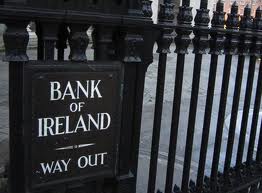
(Thanks to Chattanooga Times Free Press for the above image.)

What about the post office?


Bank of Ireland has a 16% stake in the Post Office and takes over 50% of its profits. The Post Office relies on BOI for its banking licence granted by the FSA. It is not a member of the Government Compensation Scheme, so in 2010 account holders would not get their money if BOI had problems. It is alleged that the arrangement has changed so that investors would get some money back.

What's the worry?

Bank of Ireland has form. It acquired Bristol & West Building Society in 1997 when it was demutualised. BOI took over the renamed Bristol & West plc's banking business (but not the insurance side) using a banking transfer. 'BOI raided permanent investment bearing shares (PIBS), which are typically used by people with small savings to top up their pensions pots.' There was no meeting of bond holders and scant notice of the High Court hearing was given.

As one investor wrote:

'So what has effectively happened is that thousands of unsophisticated UK retail investors who invested in a UK Building Society have unwittingly, unknowingly and without consent or full information had their investment reclassified as subordinated bonds of a foreign bank and changed to foreign regulation and foreign law for the only remedy under the Trust Deed - being a winding up of the Issuer. And now, as a result, they are threatened with confiscation of their investments by a foreign finance minister using a foreign law.'

Who is responsible for protecting these people?

It seems that UK regulators and institutions stand aside.

Many elderly people in the UK rely on Post Office accounts for their pension and small savings. The branch is local and accessible.

The key issue is about trust between lender and borrower. If the 'lowest risk home for UK savings' is under threat in this way, then that only leaves the mattress.


Update:

Bank of Ireland is continuing to strengthen its position by plans to take money from 'subordinated bondholders'. Banks of other EU countries seem to be considering bondholders as a way of dealing with their debts. Beware.

Update 2:

Some success and an appreciation of the work of Mark Taber here (and an opportunity to donate).

Wednesday, 7 September 2011

Why don't we all get cancer?

This question is the title of a lecture by Craig B. Thompson, President and CEO of Memorial Sloan-Kettering Cancer. He's talking about the latest findings in cancer research.

The answer focusses on the state of our genes and specifically those responsible for glucose metabolism. A PET scan checks this.

Glucose is the trigger for dormant cancer cells to proliferate.


'It matters where your calories come from. We have good evidence that excess fat does not increase your cancer risk, excess carbohydrate does increase your cancer risk and protein is somewhere in the middle.'

As Tom Naughton comments, 1/3 of the student audience had misunderstood the lecture and still believed that dietary fat would increase the growth of tumours. Low fat health messages have taken hold on public perception.

Thursday, 1 September 2011

The weight loss 'expert'

Fitness trainers at the gym often profess to be experts on nutrition and weight loss. Here's an example of one leaflet circulated on the topic.


Metabolism and why diets don't work includes a paragraph on body fat percentage and ratio of fat to lean, but does not distinguish between visceral fat (surrounding the internal organis) and body fat (under the skin.) The first is the main indicator of potential problems with heart disease and poses a greater risk than the second.

Guidance focusses on calorie restriction and increased exercise (calories in/calories out). Anyone who has exercised on machines in gyms, that show calorie expenditure, know that much exercise expends far fewer calories than we consume in food. It makes no mention of the effects of different foods (irrespective of calories) and how some people lose weight even when injured and unable to exercise, by changing what they eat.

The section on understanding food labels includes some sensible advice:

'What else to look out for

• Foods that have lots of artificial ingredients such as artificial flavours, sweeteners,
colours, stabilisers and preservatives
• Foods that have a lot of fat, sugar and salt
• Foods that contain “trans fats” or “hydrogenated fats”
• Foods containing very few natural foods, or foods that have been altered: “modified”, “hydrogenated”, “reconstituted”, etc
• Watch out for ingredients that you do not recognise, if in doubt leave them on the shelf
• Foods that have no nutritional information - “takeaways”'

Slipped in the middle of the list is the warning against: 'Foods that have a lot of fat'

Gary Taubes has demonstrated that saturated fat is important for most people, except the few with conditions such as hyperlipidemia, in his books: 'Good fats, bad fats' and 'Why we get fat'. Saturated fat, such as coconut oil, can be useful in working with dementia.


He also challenges the received wisdom about weight loss and exercise, though many acknowledge its role in maintaining insulin sensitivity.

Doug McGuff has some interesting views on exercise and the relative effectiveness of different types on human metabolism:


Petro Dobromylskyj makes a strong case for the central role of insulin in fat gain.

Tom Naughton points out that intelligent people in the West seem incapable of distinguishing good from bad science and the use and abuse of statistics. His lecture helps to explode some of the myths peddled by 'weight loss experts' and gym staff.

Science for smart people:


PS

There's an interview at the end of Tom Naughton's lecture. He talks to an Ob Gyn, who wants to set the story straight about HRT and explain why one of Naughton's examples isn't so simple.

Questions: Who funds him and his research? What about links between HRT and breast cancer? Why should women take HRT anyway, when dietary and lifestyle changes can help them reduce and deal with natural signs of menopause?

Keep your brain switched on, when watching this segment.

Thursday, 25 August 2011

Grief and grains


2 high profile Americans are said to have consulted Dr Dean Ornish for a diet to improve their health after a major challenge.


His dietary recommendations are as follows:

* Consume 10% of calories as fat, with a ratio of polyunsaturated fat to saturated fat that is greater than 1
* Consume 70-75% of calories as complex carbohydrates and 15-20% of calories as protein
* Limit cholesterol intake to less than 5 mg per day
* Consume whole grains, fruits, vegetables and legumes in unlimited quantities
* Exclude all meat and dairy products, except egg whites, nonfat milk and nonfat yogurt
* Eliminate caffeine from the diet and consume sugar, salt, and alcohol in moderation

Bill Clinton had a heart attack and quadruple bypass surgery in 2004 and was fitted with a stent in 2010. He talked about the vegan diet that has helped him improve his heart health.


Observers, such as Dr Michael Eades, comment that Clinton seems to have lost most of his muscle mass and does not look good.

Steve Jobs has been a pescetarian for some time. Jobs had pancreatic cancer since 2004 and a liver transplant in 2009. He is reported to have consulted Ornish on a diet to beat cancer.


Steve Jobs' latest public appearance to launch the Apple iCloud service, was greeted with concern as he appeared very thin and unwell.

Few people in the forefront of research agree with Ornish. There is still much debate about appropriate macronutrient ratios, particularly protein and carbohydrate levels. However, those who focus on the science and causal relationships rather than simple correlations seem to agree that for most people a high fat diet is healthy. They also tend to agree that a high intake of starch from grains is not good for health, particularly the heart. They would agree with Ornish about eliminating sugar. One cancer specialist focusses on the impact of sugars on cancer.

Dr Steven Gundry has clinical and personal experience of weight loss and heart health by reducing grains and increasing vegetable intake. He believes animal protein is important, but in smaller quantities.

What's the problem with a high starch diet, particularly from grains?

The answer is glycation. The process which alters the lining of blood vessels throughout the body occurs when blood sugars are consistently higher than normal. High fat is not the problem, but sugars that attach to proteins.


I wish Bill Clinton and Steve Jobs long life and good health, particularly in avoiding the onset of dementia through too little fat intake and high blood sugars from excess starch. Dr Larry McCleary refers to this as Type 3 diabetes. There are mental health concerns about certain vegan and vegatarian diets.


More posts on Steve Jobs here.

Friday, 19 August 2011

The visionary systems thinker

Zen and the art of digital design could be the title of the Steve Jobs story. His focus is on beautiful design, simplicity, integrity and the user experience of technology.

'He will reject something which no one will see as a problem. But because his standards are so high, people sit there and say, “How does Apple do it? How does apple have such incredible products?”'


Apple is often criticised for not licensing some of its innovative technology to other companies, but the refusal stems from the need to stop people tinkering and blemishing the beauty of perfection.

'Steve believed that if you opened the system up people would start to make little changes and those changes would be compromises in the experience and he would not be able to deliver the kind of experience that he wanted.'

John Sculley, former CEO who was kicked out by Apple after 10 years, describes Jobs' methodology and how this drove the company even when he had left to start Next.

'The user experience has to go through the whole end-to-end system, whether it’s desktop publishing or iTunes. It is all part of the end-to-end system. It is also the manufacturing. The supply chain. The marketing. The stores. I remember I was brought in because I had a design background and because I was a marketer. I had product marketing experience. Not because I knew anything about computers.'

The charismatic Jobs was able to work across a huge range from the 'change the world' level down to the detail of designging and building products. He insisted that the core team could never be more than 100 people. Even though Apple now employs thousands of people at its Cupertino HQ, the product development division is still small.

Jobs looked beyond the computer world of USA and Europe and admired Ako Morita of Sony and the way his Japanese factories were laid out.

The hierarchy at Apple puts designers at the top, followed by engineers and both above managers in levels of respect.

'Microsoft hires some of the smartest people in the world. They are known for their incredibly challenging test they put people through to get hired. It’s not an issue of people being smart and talented. It’s that design at Apple is at the highest level of the organization, led by Steve personally. Design at other companies is not there. It is buried down in the bureaucracy somewhere… In bureaucracies many people have the authority to say no, not the authority to say yes. So you end up with products with compromises. This goes back to Steve’s philosophy that the most important decisions are the things you decide NOT to do, not what you decide to do. It’s the minimalist thinking again.'

The user experience includes Apple Stores (a long way from the glass, carpet and chrome fortresses that were Apple Centres in the early days.)

'He brought one of the top retailers in the world on his board to learn about retail (Mickey Drexler from The Gap, who advised Jobs to build a prototype store before launch). Not only did he learn about retail, I’ve never been in a better store than an Apple store. It has the highest revenue per square foot of any store in the world but it’s not just the revenue, it’s the experience.'

The futuristic design ethos is reflected in plans for the new Apple HQ in Cupertino, nicknamed the iSpaceship.


Jobs constantly changed the hardware and removed aspects that customers took for granted. His eye was on the future and the changes to come.

The iPhone brought with it apps and the beginning of an integrated portable internet access through dedicated platforms rather than Web browsers. These work better and fit better into the lives of consumers. They also enable companies to make money more easily on these platforms.


Commentators note that working trends are shifting with the increasing use of Blackberries and own gadgets. Some individuals are tired of using dinosaur technology supplied by their employers and resort to using their own up-to-date equipment. This makes them more productive with interesting consequences for data security.

“This is a huge change,” says Citrix’s Andrew Millard. “As the boundaries between office hours and personal time become less distinct, managers are losing control of how people 'work’, as individuals want to prioritise what they do. It is no surprise therefore that there is so much resistance to 'workshifting’.” With the right kit, however, it’s a trend that should be hard for employers or employees to resist.

Chris Anderson and Michael Wolff discuss the evolution of internet use in a recent Wired article. They draw on Jonathan L. Zittrain's 'The Future of the Internet — And How to Stop It.'

CISCO estimates based on CAIDA publications, Andrew Odlyzko

IP and TCP protocols enable a range of communication on the internet. The web with its HTML data is in decline, accounting for less than a quarter of internet traffic. Peer-to-peer, file transfers, email, company VPNs, machine to machine communication of Skype calls, online games, Xbox Live, iTunes, voice-over-IP phones, iChat and Netflix movie streaming are expanding. Many of the newer Net applications are closed, often propietary networks.

'And the shift is only accelerating. Within five years, Morgan Stanley projects, the number of users accessing the Net from mobile devices will surpass the number who access it from PCs. Because the screens are smaller, such mobile traffic tends to be driven by specialty software, mostly apps, designed for a single purpose. For the sake of the optimized experience on mobile devices, users forgo the general-purpose browser. They use the Net, but not the Web. Fast beats flexible.'

I've discussed news media response to the increasing move to digital content. Businesses are challenged by the changes and the increasing difficulty of deriving income from web based content.

'The Internet is the real revolution, as important as electricity; what we do with it is still evolving. As it moved from your desktop to your pocket, the nature of the Net changed. The delirious chaos of the open Web was an adolescent phase subsidized by industrial giants groping their way in a new world. Now they’re doing what industrialists do best — finding choke points. And by the looks of it, we’re loving it.'

Articles appear announcing the death of the PC.

'Apple CEO said that PCs are going to be "like trucks" in that they'll still be around and useful for certain work, but only a smaller percentage of the users will need one.'

This view is challenged, but perhaps at the level of semantics:

'Just what is a "personal computer", anyway? Is it defined by the operating system it uses - Windows, MacOS, or Linux? Does a physical keyboard make it a PC? A processor that uses more than some arbitrary amount of power? Is it size? It can't be size - a MacBook Air is a personal computer, and it's about the same size as an iPad. You could easily argue that today's smartphones are personal computers, as they're easily as powerful as the PCs of five or six years ago.'

'The world isn't moving away from the PC, it's just transitioning from the PC being defined as a "personal computer" to "pervasive computing." Computers will fill our lives with specialized capabilities in various form factors, sizes, and locations.' Here's an example from British Airways.


Update:


Steve Jobs has resigned today as CEO and asked to become Chairman of the board, director and Apple employee. Jobs recommends Tim Cook to replace him as CEO.

Apple demands total commitment from staff and a blurring of work/life boundaries, where late night phone calls to discuss a new idea are commonplace. Jobs has health challenges and is unable to maintain that level of intense involvement.

"I believe Apple's brightest and most innovative days are ahead of it. And I look forward to watching and contributing to its success in a new role."

Ironically the biggest tributes to Steve Jobs have come from staff in the field of medicine.

One example is how the iPad enables collaboration between doctor and patient:

"The laptop was a barrier. It was like a screen being put up between the two of us, my eyes were focused on the laptop and not on the patient," Halamka said. "Then the iPad came along and was a game changer because it invites the doctor and the patient to look at this device together. Just think about the way you hold it, it is not something that you have a wall between you and the patient, so I can show the patient their x-rays or lab tests. What I and many other clinicians have experienced is that the iPad invites shared decision making as opposed to patient and doctor alienation."

Update 2

Steve Jobs died on 5 October 2011 aged 56.

There's only one Steve Jobs and attempts to recreate his spirit at the company may lead to failure as happened at Sony, according to Time magazine.

More posts on Steve Jobs here.