Zen and the art of digital design could be the title of the Steve Jobs story. His focus is on beautiful design, simplicity, integrity and the user experience of technology.
'He will reject something which no one will see as a problem. But because his standards are so high, people sit there and say, “How does Apple do it? How does apple have such incredible products?”'
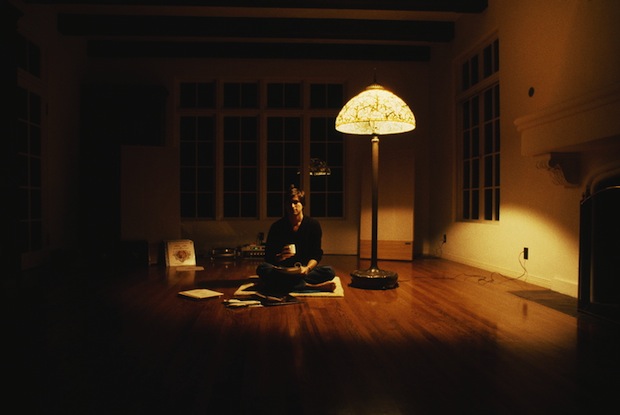
Apple is often criticised for not licensing some of its innovative technology to other companies, but the refusal stems from the need to stop people tinkering and blemishing the beauty of perfection.
'Steve believed that if you opened the system up people would start to make little changes and those changes would be compromises in the experience and he would not be able to deliver the kind of experience that he wanted.'
John Sculley, former CEO who was kicked out by Apple after 10 years, describes Jobs' methodology and how this drove the company even when he had left to start Next.
'The user experience has to go through the whole end-to-end system, whether it’s desktop publishing or iTunes. It is all part of the end-to-end system. It is also the manufacturing. The supply chain. The marketing. The stores. I remember I was brought in because I had a design background and because I was a marketer. I had product marketing experience. Not because I knew anything about computers.'
The charismatic Jobs was able to work across a huge range from the 'change the world' level down to the detail of designging and building products. He insisted that the core team could never be more than 100 people. Even though Apple now employs thousands of people at its Cupertino HQ, the product development division is still small.
Jobs looked beyond the computer world of USA and Europe and admired Ako Morita of Sony and the way his Japanese factories were laid out.
The hierarchy at Apple puts designers at the top, followed by engineers and both above managers in levels of respect.
'Microsoft hires some of the smartest people in the world. They are known for their incredibly challenging test they put people through to get hired. It’s not an issue of people being smart and talented. It’s that design at Apple is at the highest level of the organization, led by Steve personally. Design at other companies is not there. It is buried down in the bureaucracy somewhere… In bureaucracies many people have the authority to say no, not the authority to say yes. So you end up with products with compromises. This goes back to Steve’s philosophy that the most important decisions are the things you decide NOT to do, not what you decide to do. It’s the minimalist thinking again.'
The user experience includes Apple Stores (a long way from the glass, carpet and chrome fortresses that were Apple Centres in the early days.)
'He brought one of the top retailers in the world on his board to learn about retail (Mickey Drexler from The Gap, who advised Jobs to build a prototype store before launch). Not only did he learn about retail, I’ve never been in a better store than an Apple store. It has the highest revenue per square foot of any store in the world but it’s not just the revenue, it’s the experience.'
The futuristic design ethos is reflected in plans for the new Apple HQ in Cupertino, nicknamed the iSpaceship.
Jobs constantly changed the hardware and removed aspects that customers took for granted. His eye was on the future and the changes to come.
The iPhone brought with it apps and the beginning of an integrated portable internet access through dedicated platforms rather than Web browsers. These work better and fit better into the lives of consumers. They also enable companies to make money more easily on these platforms.

Commentators note that working trends are shifting with the increasing use of Blackberries and own gadgets. Some individuals are tired of using dinosaur technology supplied by their employers and resort to using their own up-to-date equipment. This makes them more productive with interesting consequences for data security.
“This is a huge change,” says Citrix’s Andrew Millard. “As the boundaries between office hours and personal time become less distinct, managers are losing control of how people 'work’, as individuals want to prioritise what they do. It is no surprise therefore that there is so much resistance to 'workshifting’.” With the right kit, however, it’s a trend that should be hard for employers or employees to resist.
Chris Anderson and Michael Wolff discuss the evolution of internet use in a recent Wired article. They draw on Jonathan L. Zittrain's 'The Future of the Internet — And How to Stop It.'
CISCO estimates based on CAIDA publications, Andrew Odlyzko
IP and TCP protocols enable a range of communication on the internet. The web with its HTML data is in decline, accounting for less than a quarter of internet traffic. Peer-to-peer, file transfers, email, company VPNs, machine to machine communication of Skype calls, online games, Xbox Live, iTunes, voice-over-IP phones, iChat and Netflix movie streaming are expanding. Many of the newer Net applications are closed, often propietary networks.
'And the shift is only accelerating. Within five years, Morgan Stanley projects, the number of users accessing the Net from mobile devices will surpass the number who access it from PCs. Because the screens are smaller, such mobile traffic tends to be driven by specialty software, mostly apps, designed for a single purpose. For the sake of the optimized experience on mobile devices, users forgo the general-purpose browser. They use the Net, but not the Web. Fast beats flexible.'
I've discussed news media response to the increasing move to digital content. Businesses are challenged by the changes and the increasing difficulty of deriving income from web based content.
'The Internet is the real revolution, as important as electricity; what we do with it is still evolving. As it moved from your desktop to your pocket, the nature of the Net changed. The delirious chaos of the open Web was an adolescent phase subsidized by industrial giants groping their way in a new world. Now they’re doing what industrialists do best — finding choke points. And by the looks of it, we’re loving it.'
Articles appear announcing the death of the PC.
'Apple CEO said that PCs are going to be "like trucks" in that they'll still be around and useful for certain work, but only a smaller percentage of the users will need one.'
This view is challenged, but perhaps at the level of semantics:
'Just what is a "personal computer", anyway? Is it defined by the operating system it uses - Windows, MacOS, or Linux? Does a physical keyboard make it a PC? A processor that uses more than some arbitrary amount of power? Is it size? It can't be size - a MacBook Air is a personal computer, and it's about the same size as an iPad. You could easily argue that today's smartphones are personal computers, as they're easily as powerful as the PCs of five or six years ago.'
'The world isn't moving away from the PC, it's just transitioning from the PC being defined as a "personal computer" to "pervasive computing." Computers will fill our lives with specialized capabilities in various form factors, sizes, and locations.' Here's an example from British Airways.
Update:
Steve Jobs has resigned today as CEO and asked to become Chairman of the board, director and Apple employee. Jobs recommends Tim Cook to replace him as CEO.
Apple demands total commitment from staff and a blurring of work/life boundaries, where late night phone calls to discuss a new idea are commonplace. Jobs has health challenges and is unable to maintain that level of intense involvement.
"I believe Apple's brightest and most innovative days are ahead of it. And I look forward to watching and contributing to its success in a new role."
Ironically the biggest tributes to Steve Jobs have come from staff in the field of medicine.
One example is how the iPad enables collaboration between doctor and patient:
"The laptop was a barrier. It was like a screen being put up between the two of us, my eyes were focused on the laptop and not on the patient," Halamka said. "Then the iPad came along and was a game changer because it invites the doctor and the patient to look at this device together. Just think about the way you hold it, it is not something that you have a wall between you and the patient, so I can show the patient their x-rays or lab tests. What I and many other clinicians have experienced is that the iPad invites shared decision making as opposed to patient and doctor alienation."
Update 2
Steve Jobs died on 5 October 2011 aged 56.
There's only one Steve Jobs and attempts to recreate his spirit at the company may lead to failure as happened at Sony, according to Time magazine.
More posts on Steve Jobs here.
Showing posts with label systems thinking. Show all posts
Friday, 19 August 2011
The visionary systems thinker
Labels:
change,
diffusion of innovation,
leadership,
perception,
Steve Jobs,
systems thinking,
values,
vision
Monday, 11 April 2011
Cooperation not guns
Attack invites defence. Opposing sides become caught in vicious circles of attack and retribution.
How we can break the cyle?
Arna Mer defied Israeli convention by marrying a communist, Christian, Arab Palestinian, Saliva Khamis. She could no longer work as a teacher, so she trained as a therapist and founded a centre in the Jenin refugee camp. This contained a theatre, which was destroyed during the second intifada. Her son the Israeli actor and film maker, Juliano Mer-Khamis, recreated the Freedom Theatre and worked with local children there until last week, when he was shot dead by an anonymous gunman:
The theatre worked therapeutically with young people from ages 5 to 21. Part of the aim was to shift away from victim consciousness and foster confidence and broader thinking. Jule challenged all authority including patriarchy and was an advocate for feminism in his work:
Edward Said and Daniel Barenboim founded the West-Eastern Divan Orchestra to bring together Arab and Israeli young people to play classical music.
When young people are brought up in a society that may promote the idea that people of the other side are less than human and share no common characteristics, striving for a common goal helps to break down these preconceptions and increase understanding. At the very least, bringing young people together, who would normally never meet, is a start.
10th anniversary interview:
Both projects encourage young people to reflect on experience and make conscious choices in future.
Update
The murderer of Juliano Mer Khamis has not been found. The Freedom Theatre in Jenin has been attacked by Israeli security forces.
Here is an Open letter to the Israeli Security Apparatus:
...'After the attack on The Freedom Theatre's office and multimedia centre, during which you arrested our head technician Adnan Naghnaghiye and Bilal Saadi, the chairperson of The Freedom Theatre Board in Jenin; and after you have for two weeks refused Adnan and Bilaal access to a lawyer, treated them inhumanely and denied them their basic human rights, and after the arrest of our acting student Rami Hwayel, we hereby state:
We encourage all efforts to find whoever is responsible for the brutal murder of Juliano Mer Khamis and we are deeply concerned over the fact that the murderer has not yet been found. Nevertheless we reject the inhumane methods that you apply in investigating the murder. The Freedom Theatre has been seriously damaged by your actions which have further implanted fear and trauma not only among our students and employees but also into the very society we aim to empower.
By acting the way that you act you have once again proved to the residents of Jenin refugee camp as well as to the outside world that the only methods you know are the ones involving violence, terror and fear. We in The Freedom Theatre have nothing to conceal redarding the murder of Juliano Mer Khamis......'
Labels:
change,
empowerment,
informal networks,
leadership,
reflection,
systems thinking
Monday, 21 March 2011
Health Messenger
An article by Elizabeth Day caught my eye as it describes a practical example of innovation adapted to local culture and conditions, empowering people with lowest status and resources.
Dr Abhay Bang and his wife, Rani, have worked for 26 years training local volunteers in Gadchiroli, a deprived district of Maharashtra, India. The idea was to treat simple health problems at home. The volunteers are called arogyadoots or Health Messengers.
Results are impressive: newborn death rate has fallen from 121 to 30 per 1,000 live births. In 1988 the death rate among children who developed pneumonia was 13%, now it has fallen to 0.8%.
The mission of their charity, Search (Society for Education, Action and Research in Community Health) was to listen to the people and find out what kind of healthcare they wanted.
'"We are very MUCH part of the community," says Dr Bang, ...."I really can't say where the line of separation is between them and me. It is research with the people, not on the people."
Cultural differences derailed efforts by NGOs to impose western models of healthcare on rural India:
'"The villagers said they were scared to go to hospital," he says. "When we asked why, they told us something fascinating. They said: 'Your doctors and nurses drape themselves in white clothes. We wrap dead bodies in white shawls. How can you save lives if you are dressed like a dead person?' They said: 'When they admit a patient, we can only visit between 3pm and 6pm and we don't have wristwatches. We don't have anywhere to stay in town, so we go back to the village. The patient doesn't want to stay on their own."'
Dr Bang ran People's Health Assemblies to consult people on their most pressing issues in healthcare and heard about the high rate of death amongst newborn babies. Local women were then trained in low tech ways of managing neonatal care and went where they were needed using portable health packs. The Health Messengers passed on their knowledge and whole communities became empowered - from consultation, codetermination to control.
He also constructed a hospital that resembled a local village so that patients could stay with their relatives. This shifted a sense of ownership to the local community.
The innovations were driven by local demands (market pull) and the increasing availability of portable tools intended for outreach care (technology push).
Dr Bang was motivated to help by the story of a young woman who arrived too late for doctors to save her baby. She related the practical challenges she faced in coping with isolation, a drunken husband and travelling to the hospital. Rather than feel overwhelmed and give up because of the enormous size of the problem, Dr Bang reflected from a systems thinking perspective:
"But then I looked at the whole situation and asked myself: 'Do I really need to solve all the problems, all the links in the chain of this cause of death?' I started to think: 'Where is the weakest link I can attack?' and that was access to healthcare." He falls silent for a moment. "It was practical compassion, not a flash of genius."
Dr Bang and his wife also campaigned successfully for a ban on alchohol in Gadchiroli district to reduce some of the problems contributing to low income, fractured families and poor health.
Labels:
change,
empowerment,
health,
innovation,
Marchington,
national culture,
networks,
Rothwell,
self organisation,
social responsibility,
systems thinking,
values
Subscribe to:
Posts (Atom)


