Books offering home spun philosophy, such as 'Chicken Soup for the Soul' do well in the best seller lists, but don't seem to draw on life experience in a useful way.
Here are 2 excerpts from an interview with Steve Jobs, where he offers 2 concepts that helped him.
The first relates to change and the power of ordinary people to make a difference:
The second gives us an insight into how he made progress in his career, mainly by asking for help:
Showing posts with label Steve Jobs. Show all posts
Showing posts with label Steve Jobs. Show all posts
Thursday, 1 December 2011

Thursday, 6 October 2011
Steve Jobs the common sense entrepreneur
That's the view of Steve Wozniak, co-founder of Apple computers.

Woz describes Steve Jobs as someone with a very quick mind, who thought things through. He knew when something would and would not sell. Jobs also had a clear notion of when to be ahead of the world and when to be a follower.
Woz describes Steve Jobs' legacy as someone who built Apple into a strong company with great products. The distinction is that people love the products and enjoy doing their work on them, which is rare in technology. Fans associate Steve Jobs with this because he was a manager of the tiny little details that mattered. Above all, says Woz, marketing was his greatest strength.

In an interview with the Washington Post, Woz described the last phone conversation he had with Steve Jobs. He was clearly weak, but Wozniak never asked about personal issues. Jobs reminisced about the old days and sounded his old, boyish enthusiastic self about the future and the impact that Apple had made on the world.

Eric Schmidt (of Google) has some interesting memories of Steve Jobs here.
Mona Simpson, his sister, delivered the eulogy here.
RIP

Woz describes Steve Jobs as someone with a very quick mind, who thought things through. He knew when something would and would not sell. Jobs also had a clear notion of when to be ahead of the world and when to be a follower.
Woz describes Steve Jobs' legacy as someone who built Apple into a strong company with great products. The distinction is that people love the products and enjoy doing their work on them, which is rare in technology. Fans associate Steve Jobs with this because he was a manager of the tiny little details that mattered. Above all, says Woz, marketing was his greatest strength.

In an interview with the Washington Post, Woz described the last phone conversation he had with Steve Jobs. He was clearly weak, but Wozniak never asked about personal issues. Jobs reminisced about the old days and sounded his old, boyish enthusiastic self about the future and the impact that Apple had made on the world.

Eric Schmidt (of Google) has some interesting memories of Steve Jobs here.
Mona Simpson, his sister, delivered the eulogy here.
RIP
Thursday, 25 August 2011
Grief and grains

2 high profile Americans are said to have consulted Dr Dean Ornish for a diet to improve their health after a major challenge.
His dietary recommendations are as follows:
* Consume 10% of calories as fat, with a ratio of polyunsaturated fat to saturated fat that is greater than 1
* Consume 70-75% of calories as complex carbohydrates and 15-20% of calories as protein
* Limit cholesterol intake to less than 5 mg per day
* Consume whole grains, fruits, vegetables and legumes in unlimited quantities
* Exclude all meat and dairy products, except egg whites, nonfat milk and nonfat yogurt
* Eliminate caffeine from the diet and consume sugar, salt, and alcohol in moderation
Bill Clinton had a heart attack and quadruple bypass surgery in 2004 and was fitted with a stent in 2010. He talked about the vegan diet that has helped him improve his heart health.

Observers, such as Dr Michael Eades, comment that Clinton seems to have lost most of his muscle mass and does not look good.
Steve Jobs has been a pescetarian for some time. Jobs had pancreatic cancer since 2004 and a liver transplant in 2009. He is reported to have consulted Ornish on a diet to beat cancer.

Steve Jobs' latest public appearance to launch the Apple iCloud service, was greeted with concern as he appeared very thin and unwell.
Few people in the forefront of research agree with Ornish. There is still much debate about appropriate macronutrient ratios, particularly protein and carbohydrate levels. However, those who focus on the science and causal relationships rather than simple correlations seem to agree that for most people a high fat diet is healthy. They also tend to agree that a high intake of starch from grains is not good for health, particularly the heart. They would agree with Ornish about eliminating sugar. One cancer specialist focusses on the impact of sugars on cancer.
Dr Steven Gundry has clinical and personal experience of weight loss and heart health by reducing grains and increasing vegetable intake. He believes animal protein is important, but in smaller quantities.
What's the problem with a high starch diet, particularly from grains?
The answer is glycation. The process which alters the lining of blood vessels throughout the body occurs when blood sugars are consistently higher than normal. High fat is not the problem, but sugars that attach to proteins.

I wish Bill Clinton and Steve Jobs long life and good health, particularly in avoiding the onset of dementia through too little fat intake and high blood sugars from excess starch. Dr Larry McCleary refers to this as Type 3 diabetes. There are mental health concerns about certain vegan and vegatarian diets.

More posts on Steve Jobs here.
Friday, 19 August 2011
The visionary systems thinker
Zen and the art of digital design could be the title of the Steve Jobs story. His focus is on beautiful design, simplicity, integrity and the user experience of technology.
'He will reject something which no one will see as a problem. But because his standards are so high, people sit there and say, “How does Apple do it? How does apple have such incredible products?”'

Apple is often criticised for not licensing some of its innovative technology to other companies, but the refusal stems from the need to stop people tinkering and blemishing the beauty of perfection.
'Steve believed that if you opened the system up people would start to make little changes and those changes would be compromises in the experience and he would not be able to deliver the kind of experience that he wanted.'
John Sculley, former CEO who was kicked out by Apple after 10 years, describes Jobs' methodology and how this drove the company even when he had left to start Next.
'The user experience has to go through the whole end-to-end system, whether it’s desktop publishing or iTunes. It is all part of the end-to-end system. It is also the manufacturing. The supply chain. The marketing. The stores. I remember I was brought in because I had a design background and because I was a marketer. I had product marketing experience. Not because I knew anything about computers.'
The charismatic Jobs was able to work across a huge range from the 'change the world' level down to the detail of designging and building products. He insisted that the core team could never be more than 100 people. Even though Apple now employs thousands of people at its Cupertino HQ, the product development division is still small.
Jobs looked beyond the computer world of USA and Europe and admired Ako Morita of Sony and the way his Japanese factories were laid out.
The hierarchy at Apple puts designers at the top, followed by engineers and both above managers in levels of respect.
'Microsoft hires some of the smartest people in the world. They are known for their incredibly challenging test they put people through to get hired. It’s not an issue of people being smart and talented. It’s that design at Apple is at the highest level of the organization, led by Steve personally. Design at other companies is not there. It is buried down in the bureaucracy somewhere… In bureaucracies many people have the authority to say no, not the authority to say yes. So you end up with products with compromises. This goes back to Steve’s philosophy that the most important decisions are the things you decide NOT to do, not what you decide to do. It’s the minimalist thinking again.'
The user experience includes Apple Stores (a long way from the glass, carpet and chrome fortresses that were Apple Centres in the early days.)
'He brought one of the top retailers in the world on his board to learn about retail (Mickey Drexler from The Gap, who advised Jobs to build a prototype store before launch). Not only did he learn about retail, I’ve never been in a better store than an Apple store. It has the highest revenue per square foot of any store in the world but it’s not just the revenue, it’s the experience.'
The futuristic design ethos is reflected in plans for the new Apple HQ in Cupertino, nicknamed the iSpaceship.

Jobs constantly changed the hardware and removed aspects that customers took for granted. His eye was on the future and the changes to come.
The iPhone brought with it apps and the beginning of an integrated portable internet access through dedicated platforms rather than Web browsers. These work better and fit better into the lives of consumers. They also enable companies to make money more easily on these platforms.

Commentators note that working trends are shifting with the increasing use of Blackberries and own gadgets. Some individuals are tired of using dinosaur technology supplied by their employers and resort to using their own up-to-date equipment. This makes them more productive with interesting consequences for data security.
“This is a huge change,” says Citrix’s Andrew Millard. “As the boundaries between office hours and personal time become less distinct, managers are losing control of how people 'work’, as individuals want to prioritise what they do. It is no surprise therefore that there is so much resistance to 'workshifting’.” With the right kit, however, it’s a trend that should be hard for employers or employees to resist.
Chris Anderson and Michael Wolff discuss the evolution of internet use in a recent Wired article. They draw on Jonathan L. Zittrain's 'The Future of the Internet — And How to Stop It.'
 CISCO estimates based on CAIDA publications, Andrew Odlyzko
IP and TCP protocols enable a range of communication on the internet. The web with its HTML data is in decline, accounting for less than a quarter of internet traffic. Peer-to-peer, file transfers, email, company VPNs, machine to machine communication of Skype calls, online games, Xbox Live, iTunes, voice-over-IP phones, iChat and Netflix movie streaming are expanding. Many of the newer Net applications are closed, often propietary networks.
'And the shift is only accelerating. Within five years, Morgan Stanley projects, the number of users accessing the Net from mobile devices will surpass the number who access it from PCs. Because the screens are smaller, such mobile traffic tends to be driven by specialty software, mostly apps, designed for a single purpose. For the sake of the optimized experience on mobile devices, users forgo the general-purpose browser. They use the Net, but not the Web. Fast beats flexible.'
I've discussed news media response to the increasing move to digital content. Businesses are challenged by the changes and the increasing difficulty of deriving income from web based content.
'The Internet is the real revolution, as important as electricity; what we do with it is still evolving. As it moved from your desktop to your pocket, the nature of the Net changed. The delirious chaos of the open Web was an adolescent phase subsidized by industrial giants groping their way in a new world. Now they’re doing what industrialists do best — finding choke points. And by the looks of it, we’re loving it.'
Articles appear announcing the death of the PC.
'Apple CEO said that PCs are going to be "like trucks" in that they'll still be around and useful for certain work, but only a smaller percentage of the users will need one.'
This view is challenged, but perhaps at the level of semantics:
'Just what is a "personal computer", anyway? Is it defined by the operating system it uses - Windows, MacOS, or Linux? Does a physical keyboard make it a PC? A processor that uses more than some arbitrary amount of power? Is it size? It can't be size - a MacBook Air is a personal computer, and it's about the same size as an iPad. You could easily argue that today's smartphones are personal computers, as they're easily as powerful as the PCs of five or six years ago.'
'The world isn't moving away from the PC, it's just transitioning from the PC being defined as a "personal computer" to "pervasive computing." Computers will fill our lives with specialized capabilities in various form factors, sizes, and locations.' Here's an example from British Airways.

Update:

Steve Jobs has resigned today as CEO and asked to become Chairman of the board, director and Apple employee. Jobs recommends Tim Cook to replace him as CEO.
Apple demands total commitment from staff and a blurring of work/life boundaries, where late night phone calls to discuss a new idea are commonplace. Jobs has health challenges and is unable to maintain that level of intense involvement.
"I believe Apple's brightest and most innovative days are ahead of it. And I look forward to watching and contributing to its success in a new role."
Ironically the biggest tributes to Steve Jobs have come from staff in the field of medicine.
One example is how the iPad enables collaboration between doctor and patient:
"The laptop was a barrier. It was like a screen being put up between the two of us, my eyes were focused on the laptop and not on the patient," Halamka said. "Then the iPad came along and was a game changer because it invites the doctor and the patient to look at this device together. Just think about the way you hold it, it is not something that you have a wall between you and the patient, so I can show the patient their x-rays or lab tests. What I and many other clinicians have experienced is that the iPad invites shared decision making as opposed to patient and doctor alienation."
Update 2
Steve Jobs died on 5 October 2011 aged 56.
There's only one Steve Jobs and attempts to recreate his spirit at the company may lead to failure as happened at Sony, according to Time magazine.
More posts on Steve Jobs here.
'He will reject something which no one will see as a problem. But because his standards are so high, people sit there and say, “How does Apple do it? How does apple have such incredible products?”'
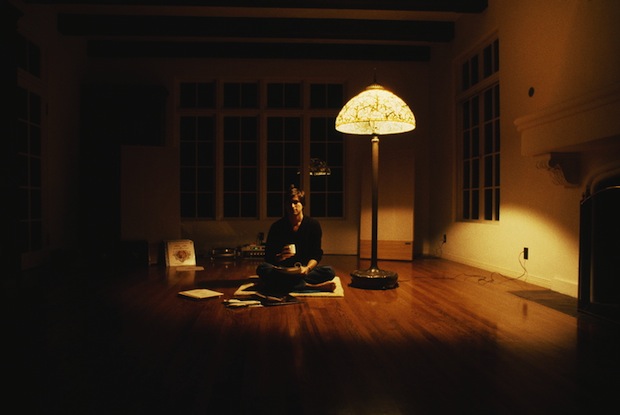
Apple is often criticised for not licensing some of its innovative technology to other companies, but the refusal stems from the need to stop people tinkering and blemishing the beauty of perfection.
'Steve believed that if you opened the system up people would start to make little changes and those changes would be compromises in the experience and he would not be able to deliver the kind of experience that he wanted.'
John Sculley, former CEO who was kicked out by Apple after 10 years, describes Jobs' methodology and how this drove the company even when he had left to start Next.
'The user experience has to go through the whole end-to-end system, whether it’s desktop publishing or iTunes. It is all part of the end-to-end system. It is also the manufacturing. The supply chain. The marketing. The stores. I remember I was brought in because I had a design background and because I was a marketer. I had product marketing experience. Not because I knew anything about computers.'
The charismatic Jobs was able to work across a huge range from the 'change the world' level down to the detail of designging and building products. He insisted that the core team could never be more than 100 people. Even though Apple now employs thousands of people at its Cupertino HQ, the product development division is still small.
Jobs looked beyond the computer world of USA and Europe and admired Ako Morita of Sony and the way his Japanese factories were laid out.
The hierarchy at Apple puts designers at the top, followed by engineers and both above managers in levels of respect.
'Microsoft hires some of the smartest people in the world. They are known for their incredibly challenging test they put people through to get hired. It’s not an issue of people being smart and talented. It’s that design at Apple is at the highest level of the organization, led by Steve personally. Design at other companies is not there. It is buried down in the bureaucracy somewhere… In bureaucracies many people have the authority to say no, not the authority to say yes. So you end up with products with compromises. This goes back to Steve’s philosophy that the most important decisions are the things you decide NOT to do, not what you decide to do. It’s the minimalist thinking again.'
The user experience includes Apple Stores (a long way from the glass, carpet and chrome fortresses that were Apple Centres in the early days.)
'He brought one of the top retailers in the world on his board to learn about retail (Mickey Drexler from The Gap, who advised Jobs to build a prototype store before launch). Not only did he learn about retail, I’ve never been in a better store than an Apple store. It has the highest revenue per square foot of any store in the world but it’s not just the revenue, it’s the experience.'
The futuristic design ethos is reflected in plans for the new Apple HQ in Cupertino, nicknamed the iSpaceship.

Jobs constantly changed the hardware and removed aspects that customers took for granted. His eye was on the future and the changes to come.
The iPhone brought with it apps and the beginning of an integrated portable internet access through dedicated platforms rather than Web browsers. These work better and fit better into the lives of consumers. They also enable companies to make money more easily on these platforms.
Commentators note that working trends are shifting with the increasing use of Blackberries and own gadgets. Some individuals are tired of using dinosaur technology supplied by their employers and resort to using their own up-to-date equipment. This makes them more productive with interesting consequences for data security.
“This is a huge change,” says Citrix’s Andrew Millard. “As the boundaries between office hours and personal time become less distinct, managers are losing control of how people 'work’, as individuals want to prioritise what they do. It is no surprise therefore that there is so much resistance to 'workshifting’.” With the right kit, however, it’s a trend that should be hard for employers or employees to resist.
Chris Anderson and Michael Wolff discuss the evolution of internet use in a recent Wired article. They draw on Jonathan L. Zittrain's 'The Future of the Internet — And How to Stop It.'

IP and TCP protocols enable a range of communication on the internet. The web with its HTML data is in decline, accounting for less than a quarter of internet traffic. Peer-to-peer, file transfers, email, company VPNs, machine to machine communication of Skype calls, online games, Xbox Live, iTunes, voice-over-IP phones, iChat and Netflix movie streaming are expanding. Many of the newer Net applications are closed, often propietary networks.
'And the shift is only accelerating. Within five years, Morgan Stanley projects, the number of users accessing the Net from mobile devices will surpass the number who access it from PCs. Because the screens are smaller, such mobile traffic tends to be driven by specialty software, mostly apps, designed for a single purpose. For the sake of the optimized experience on mobile devices, users forgo the general-purpose browser. They use the Net, but not the Web. Fast beats flexible.'
I've discussed news media response to the increasing move to digital content. Businesses are challenged by the changes and the increasing difficulty of deriving income from web based content.
'The Internet is the real revolution, as important as electricity; what we do with it is still evolving. As it moved from your desktop to your pocket, the nature of the Net changed. The delirious chaos of the open Web was an adolescent phase subsidized by industrial giants groping their way in a new world. Now they’re doing what industrialists do best — finding choke points. And by the looks of it, we’re loving it.'
Articles appear announcing the death of the PC.
'Apple CEO said that PCs are going to be "like trucks" in that they'll still be around and useful for certain work, but only a smaller percentage of the users will need one.'
This view is challenged, but perhaps at the level of semantics:
'Just what is a "personal computer", anyway? Is it defined by the operating system it uses - Windows, MacOS, or Linux? Does a physical keyboard make it a PC? A processor that uses more than some arbitrary amount of power? Is it size? It can't be size - a MacBook Air is a personal computer, and it's about the same size as an iPad. You could easily argue that today's smartphones are personal computers, as they're easily as powerful as the PCs of five or six years ago.'
'The world isn't moving away from the PC, it's just transitioning from the PC being defined as a "personal computer" to "pervasive computing." Computers will fill our lives with specialized capabilities in various form factors, sizes, and locations.' Here's an example from British Airways.

Update:

Steve Jobs has resigned today as CEO and asked to become Chairman of the board, director and Apple employee. Jobs recommends Tim Cook to replace him as CEO.
Apple demands total commitment from staff and a blurring of work/life boundaries, where late night phone calls to discuss a new idea are commonplace. Jobs has health challenges and is unable to maintain that level of intense involvement.
"I believe Apple's brightest and most innovative days are ahead of it. And I look forward to watching and contributing to its success in a new role."
Ironically the biggest tributes to Steve Jobs have come from staff in the field of medicine.
One example is how the iPad enables collaboration between doctor and patient:
"The laptop was a barrier. It was like a screen being put up between the two of us, my eyes were focused on the laptop and not on the patient," Halamka said. "Then the iPad came along and was a game changer because it invites the doctor and the patient to look at this device together. Just think about the way you hold it, it is not something that you have a wall between you and the patient, so I can show the patient their x-rays or lab tests. What I and many other clinicians have experienced is that the iPad invites shared decision making as opposed to patient and doctor alienation."
Update 2
Steve Jobs died on 5 October 2011 aged 56.
There's only one Steve Jobs and attempts to recreate his spirit at the company may lead to failure as happened at Sony, according to Time magazine.
More posts on Steve Jobs here.
Monday, 21 March 2011
Let there be light sculpture
Steve Jobs likes to empower people through technology.
'Let's say that -- for the same amount of money it takes to build the most powerful computer in the world -- you could make 1,000 computers with one-thousandth the power and put them in the hands of 1,000 creative people. You'll get more out of doing that than out of having one person use the most powerful computer in the world. Because people are inherently creative. They will use tools in ways the toolmakers never thought possible. And once a person figures out how to do something with that tool, he or she can share it with the other 999.'
Steve Jobs developed Pixar Animation, famed for Toy Story, Monsters Inc and Ratatouille. He probably didn't imagine that the iPad would be used to develop light sculptures and a different use of stop motion animation. We are familiar with stop motion from Wallace and Gromit and plasticine characters.
Welcome to the world of iPad light sculpture, developed by Dentsu with the same technology, but a particular software.
Steve Jobs was referring to ordinary users of his products, rather than employees, who often have to seek permission to do something radically different in an organisation. Where creativity and innovation are possible, managers shift from a supervisory to a facilitative role in nurturing their team's creative work.
Scott Anthony writes about how to spot disruptive innovation opportunities. Often it's not a difference in product but business model that changes the game:
One user said this about the iPad as a game changer:
'The iPad only does less than a regular computer to us geeks. To everyone else, it does more. This is what Motorola and Google and Samsung and BlackBerry and everyone else, with the sole exception of Apple, do not get about “open” computing'.
More posts on Steve Jobs here.
'Let's say that -- for the same amount of money it takes to build the most powerful computer in the world -- you could make 1,000 computers with one-thousandth the power and put them in the hands of 1,000 creative people. You'll get more out of doing that than out of having one person use the most powerful computer in the world. Because people are inherently creative. They will use tools in ways the toolmakers never thought possible. And once a person figures out how to do something with that tool, he or she can share it with the other 999.'
Steve Jobs developed Pixar Animation, famed for Toy Story, Monsters Inc and Ratatouille. He probably didn't imagine that the iPad would be used to develop light sculptures and a different use of stop motion animation. We are familiar with stop motion from Wallace and Gromit and plasticine characters.
Welcome to the world of iPad light sculpture, developed by Dentsu with the same technology, but a particular software.
Steve Jobs was referring to ordinary users of his products, rather than employees, who often have to seek permission to do something radically different in an organisation. Where creativity and innovation are possible, managers shift from a supervisory to a facilitative role in nurturing their team's creative work.
Scott Anthony writes about how to spot disruptive innovation opportunities. Often it's not a difference in product but business model that changes the game:
One user said this about the iPad as a game changer:
'The iPad only does less than a regular computer to us geeks. To everyone else, it does more. This is what Motorola and Google and Samsung and BlackBerry and everyone else, with the sole exception of Apple, do not get about “open” computing'.
More posts on Steve Jobs here.
Friday, 25 February 2011
The Steve Jobs tango
Steve Jobs has an interesting attitude to the customer. He listens, but doesn't run after them. Lack of imagination may limit what they want. If he can suggest something they haven't thought of yet, they might go for it.

Customer pull is clearly important to Apple and Steve Jobs has thought about different types of customer, since he and Steve Wozniak first put together Apple 1 and 2 (the first for fellow computer geeks who could assemble their own hardware, the second for those who wanted the product, but needed the box, screen and keyboard to make it work.)
Technology push is not allowed to dominate Apple's output. Designers could add unlimited functionality to products, but these won't sell unless the price is affordable. Technology is no good floating around with a mass of disconnected ideas. There must be a gravitational force that pulls it together in the form of saleable products.
Jobs is well aware of unarticulated and potential customer needs, so that he doesn't fall into the trap of looking for a quick assessment of articulated and identified needs. Latent needs may be awakened through careful engagement with customers.
'You have to merge these points of view, and you have to do it in an interactive way over a period of time -- which doesn't mean a week. It takes a long time to pull out of customers what they really want, and it takes a long time to pull out of technology what it can really give.'

Steve Jobs has little interest in describing himself as Superman, the charismatic leader. The team is essential to the process. Ideas may come from anyone and the team helps weed out the rubbish and refine those that are worth pursuing. Sharing ideas helps develop them and this gives the company leverage.
'Let's say that -- for the same amount of money it takes to build the most powerful computer in the world -- you could make 1,000 computers with one-thousandth the power and put them in the hands of 1,000 creative people. You'll get more out of doing that than out of having one person use the most powerful computer in the world. Because people are inherently creative. They will use tools in ways the toolmakers never thought possible. And once a person figures out how to do something with that tool, he or she can share it with the other 999.'
Jobs defines his role as Head Janitor and he clearly steps in to take up the slack when senior colleagues leave. He has fostered a company culture that promotes excellence, but hasn't achieved it by training courses and company handbooks. He focussed on the aesthetics of the product, but also the components and how the factory was laid out.
'I mean, beyond the functional benefits, the aesthetic communicates something about how they think of themselves, their sense of discipline in engineering, how they run their company, stuff like that......(Steve Wozniak and I) We thought, why don't we take the extra few days or weeks and do it right? We had a fundamental belief that doing it right the first time was going to be easier than having to go back and fix it. And I cannot say strongly enough that the repercussions of that attitude are staggering. I've seen them again and again throughout my business life. They're just staggering.'
Steve Jobs describes the culture of excellence or right first time as something that is inherently motivating for people, rather than imposed and policed:
'In my experience, people get far more excited about doing something as well as it can be done than about doing something adequately. If they are working in an environment where excellence is expected, then they will do excellent work without anything but self-motivation. I'm talking about an environment in which excellence is noticed and respected and is in the culture. If you have that, you don't have to tell people to do excellent work. They understand it from their surroundings. You may have to coach them at first, but then you just get out of their way, and they'll surprise you time and time again.'
Jobs recognises the importance of selecting the right people to run parts of the business. He describes how he transmitted his notion of attention to detail and components that symbolise a wholistic process. This enabled staff to move beyond the idea of silos and islands of production to thinking about production as an organic system that must be managed as a whole.
'People in our factory asked me, "Why is it so important to paint these machines the same color? We don't understand it." For one thing, we want the place to look nice because we bring customers through. They're going to make a decision on using NeXT products, and they ought to know that we have a very high-quality manufacturing operation. But the real reason is that we don't want people to think of the factory as separate islands of automation. We want people thinking of the whole. Suppose we have a bottleneck at one robot. In reality, you can probably rebalance the line and solve the problem -- provided you think of it as a whole. It took people six months to understand this, but now it's in their bones. We spend a lot of time going over these concepts and why they are important -- not just in the abstract, but right down to the everyday tangible point of view. That's what building a company culture is all about.'
Jobs extends this philosophy to every area of the business and puts energy into the process as well as the product. This extends to manufacturing, automation, sales and marketing, as well as information systems.
'So, to build a great company, you need more than a great product. You have to pay attention to all the different areas and be as aggressive with them as with your product. Otherwise, you'll spend half your time fixing things that break. And that's typical of high-growth companies. Half the management time is spent making repairs -- stock-option plans, marketing strategies, information systems, whatever.'
He started young and had some success, but inexperience caught up with him. On reflection he recognised the need for an Ambidextrous Organisation and has since mastered the balance between revolutionay and evolutionary change.
Apple had a monopoly on the graphical user interface for almost 10 years. Steve Jobs acknowledges that success preceded failure in a similar pattern to many successful companies. Focus shifted to managing the company and away from innovative product development that led to success. Gradually the monopoly was lost and disruptive innovation from other sources changed the face of computing and the business model.
'But after that, the product people aren't the ones that drive the company forward anymore. It's the marketing guys or the ones who expand the business into Latin America or whatever. Because what's the point of focusing on making the product even better when the only company you can take business from is yourself?'
Jobs was kicked out of Apple and went off to develop NeXt computers and Pixar animations. When he returned as CEO, the company began to return to its innovative roots.
'The system is that there is no system. That doesn't mean we don't have process. Apple is a very disciplined company, and we have great processes. But that's not what it's about. Process makes you more efficient.
But innovation comes from people meeting up in the hallways or calling each other at 10:30 at night with a new idea, or because they realized something that shoots holes in how we've been thinking about a problem. It's ad hoc meetings of six people called by someone who thinks he has figured out the coolest new thing ever and who wants to know what other people think of his idea.
And it comes from saying no to 1,000 things to make sure we don't get on the wrong track or try to do too much. We're always thinking about new markets we could enter, but it's only by saying no that you can concentrate on the things that are really important.'
Has Steve Jobs achieved level 5 leadership? Few would describe him as humble and self effacing, though he is able to stand back and reflect on patterns rather than personalities in the rise and fall of his companies. One test, that is much discussed in the media, is succession planning and whether Apple can continue to thrive as Jobs withdraws from active leadership.
The launch of iPad 2 indicates a shift in identity, as they bring other members of the team to the fore in the promotional video.
Dance fans ask me 'what has this post to do with tango?'
Some UK tango teachers have taught both men and women to dance the steps. Some of these women are shocked to find they are heavily criticised in the dance clubs of Buenos Aires, when visiting Argentina to experience tango in its place. Why? 'Let the man lead. If you lead, the man becomes weak. Your job is to respond deftly to all his signals. He controls the dance. A good leader can turn any woman into a fine tango dancer.'
The legendary Tete Rusconi was one such tango leader.
In balancing technology push and customer pull is Steve Jobs the tango leader or flexible follower?
Gary Hamel has said that the future is already with us, it's just at the edges. What starts off as fringe, ends up as mainstream.
More posts on Steve Jobs here.

Customer pull is clearly important to Apple and Steve Jobs has thought about different types of customer, since he and Steve Wozniak first put together Apple 1 and 2 (the first for fellow computer geeks who could assemble their own hardware, the second for those who wanted the product, but needed the box, screen and keyboard to make it work.)
Technology push is not allowed to dominate Apple's output. Designers could add unlimited functionality to products, but these won't sell unless the price is affordable. Technology is no good floating around with a mass of disconnected ideas. There must be a gravitational force that pulls it together in the form of saleable products.
Jobs is well aware of unarticulated and potential customer needs, so that he doesn't fall into the trap of looking for a quick assessment of articulated and identified needs. Latent needs may be awakened through careful engagement with customers.
'You have to merge these points of view, and you have to do it in an interactive way over a period of time -- which doesn't mean a week. It takes a long time to pull out of customers what they really want, and it takes a long time to pull out of technology what it can really give.'

Steve Jobs has little interest in describing himself as Superman, the charismatic leader. The team is essential to the process. Ideas may come from anyone and the team helps weed out the rubbish and refine those that are worth pursuing. Sharing ideas helps develop them and this gives the company leverage.
'Let's say that -- for the same amount of money it takes to build the most powerful computer in the world -- you could make 1,000 computers with one-thousandth the power and put them in the hands of 1,000 creative people. You'll get more out of doing that than out of having one person use the most powerful computer in the world. Because people are inherently creative. They will use tools in ways the toolmakers never thought possible. And once a person figures out how to do something with that tool, he or she can share it with the other 999.'
Jobs defines his role as Head Janitor and he clearly steps in to take up the slack when senior colleagues leave. He has fostered a company culture that promotes excellence, but hasn't achieved it by training courses and company handbooks. He focussed on the aesthetics of the product, but also the components and how the factory was laid out.
'I mean, beyond the functional benefits, the aesthetic communicates something about how they think of themselves, their sense of discipline in engineering, how they run their company, stuff like that......(Steve Wozniak and I) We thought, why don't we take the extra few days or weeks and do it right? We had a fundamental belief that doing it right the first time was going to be easier than having to go back and fix it. And I cannot say strongly enough that the repercussions of that attitude are staggering. I've seen them again and again throughout my business life. They're just staggering.'
Steve Jobs describes the culture of excellence or right first time as something that is inherently motivating for people, rather than imposed and policed:
'In my experience, people get far more excited about doing something as well as it can be done than about doing something adequately. If they are working in an environment where excellence is expected, then they will do excellent work without anything but self-motivation. I'm talking about an environment in which excellence is noticed and respected and is in the culture. If you have that, you don't have to tell people to do excellent work. They understand it from their surroundings. You may have to coach them at first, but then you just get out of their way, and they'll surprise you time and time again.'
Jobs recognises the importance of selecting the right people to run parts of the business. He describes how he transmitted his notion of attention to detail and components that symbolise a wholistic process. This enabled staff to move beyond the idea of silos and islands of production to thinking about production as an organic system that must be managed as a whole.
'People in our factory asked me, "Why is it so important to paint these machines the same color? We don't understand it." For one thing, we want the place to look nice because we bring customers through. They're going to make a decision on using NeXT products, and they ought to know that we have a very high-quality manufacturing operation. But the real reason is that we don't want people to think of the factory as separate islands of automation. We want people thinking of the whole. Suppose we have a bottleneck at one robot. In reality, you can probably rebalance the line and solve the problem -- provided you think of it as a whole. It took people six months to understand this, but now it's in their bones. We spend a lot of time going over these concepts and why they are important -- not just in the abstract, but right down to the everyday tangible point of view. That's what building a company culture is all about.'
Jobs extends this philosophy to every area of the business and puts energy into the process as well as the product. This extends to manufacturing, automation, sales and marketing, as well as information systems.
'So, to build a great company, you need more than a great product. You have to pay attention to all the different areas and be as aggressive with them as with your product. Otherwise, you'll spend half your time fixing things that break. And that's typical of high-growth companies. Half the management time is spent making repairs -- stock-option plans, marketing strategies, information systems, whatever.'
He started young and had some success, but inexperience caught up with him. On reflection he recognised the need for an Ambidextrous Organisation and has since mastered the balance between revolutionay and evolutionary change.
Apple had a monopoly on the graphical user interface for almost 10 years. Steve Jobs acknowledges that success preceded failure in a similar pattern to many successful companies. Focus shifted to managing the company and away from innovative product development that led to success. Gradually the monopoly was lost and disruptive innovation from other sources changed the face of computing and the business model.
'But after that, the product people aren't the ones that drive the company forward anymore. It's the marketing guys or the ones who expand the business into Latin America or whatever. Because what's the point of focusing on making the product even better when the only company you can take business from is yourself?'
Jobs was kicked out of Apple and went off to develop NeXt computers and Pixar animations. When he returned as CEO, the company began to return to its innovative roots.
'The system is that there is no system. That doesn't mean we don't have process. Apple is a very disciplined company, and we have great processes. But that's not what it's about. Process makes you more efficient.
But innovation comes from people meeting up in the hallways or calling each other at 10:30 at night with a new idea, or because they realized something that shoots holes in how we've been thinking about a problem. It's ad hoc meetings of six people called by someone who thinks he has figured out the coolest new thing ever and who wants to know what other people think of his idea.
And it comes from saying no to 1,000 things to make sure we don't get on the wrong track or try to do too much. We're always thinking about new markets we could enter, but it's only by saying no that you can concentrate on the things that are really important.'
Has Steve Jobs achieved level 5 leadership? Few would describe him as humble and self effacing, though he is able to stand back and reflect on patterns rather than personalities in the rise and fall of his companies. One test, that is much discussed in the media, is succession planning and whether Apple can continue to thrive as Jobs withdraws from active leadership.
The launch of iPad 2 indicates a shift in identity, as they bring other members of the team to the fore in the promotional video.
Dance fans ask me 'what has this post to do with tango?'
Some UK tango teachers have taught both men and women to dance the steps. Some of these women are shocked to find they are heavily criticised in the dance clubs of Buenos Aires, when visiting Argentina to experience tango in its place. Why? 'Let the man lead. If you lead, the man becomes weak. Your job is to respond deftly to all his signals. He controls the dance. A good leader can turn any woman into a fine tango dancer.'
The legendary Tete Rusconi was one such tango leader.
In balancing technology push and customer pull is Steve Jobs the tango leader or flexible follower?
Gary Hamel has said that the future is already with us, it's just at the edges. What starts off as fringe, ends up as mainstream.
More posts on Steve Jobs here.
Friday, 26 November 2010
4 legs good, 2 legs bad
George Orwell created a dystopian vision of the future in his 1945 novel 'Animal Farm'. Pigs are praised and humans are banished.
I think of the novel every time I hear people discussing the work of Michael Kirton on cognitive style. Innovators are praised and adaptors are shunned by many who are new to the KAI inventory. Kirton wrote that each has a different approach to problem solving, neither good nor bad, just different.
Who would you rather be: Steve Jobs or Bill Gates?
In the 20th century Microsoft was the dominant player with Bill Gates making enough money to put him near the top of the Rich List and many scorned Apple as the maker of kindergarten machines that didn't run many computer games.
Both of these men creatively swiped ideas from the work of Rank Xerox at Palo Alto. However they trod different paths. Bill Gates steadily adapted the Windows format and added features by buying the work of successful small companies. He told small business people who trained and serviced Microsoft products "I plan to get rich by making you rich". From his lawyer father he learnt the power of the small print in contracts. Entrepreneurs who dealt with him sometimes made the mistake of not checking the paperwork thoroughly before signing and discovered that in tough times Microsoft contracts might mean 'heads we win, tails you lose'.
Steve Jobs used brilliant people like Steve Wozniak to design new products from the bottom up. His incomplete education and detour through a calligraphy course led him to focus strongly on aesthetics. Apple had a tiny share of the market and lots of problems. They launched products that disappeared without trace. Apple Stores seemed targeted at the top end of the market and struggled to cater to any market successfully.
If I asked them to take the KAI inventory I bet Gates would feature at the adaptor end of the scale and Jobs at the innovator end. They've both solved lots of problems, but in very different ways.
Now in the 21st century, Jobs is the successful developer of NeXT and Pixar Animation, before returning to Apple to launch the iPod, iPhone and iPad. When I ask the same question today, the choice isn't so clear cut. Both men are seriously rich and successful.
In the personal computing world there is an element of '4 legs good, 2 legs bad' and Apple fanatics may refer to Bill Gates as the Prince of Darkness. With the advent of dual platforms and interchangeability of software, the hostility is less marked.
Michael Kirton has added another dimension to managing diversity. Above all he has highlighted the difference in what people need to thrive in problem solving: the amount of structure and consensus in agreeing that structure.
More posts on Steve Jobs here.
I think of the novel every time I hear people discussing the work of Michael Kirton on cognitive style. Innovators are praised and adaptors are shunned by many who are new to the KAI inventory. Kirton wrote that each has a different approach to problem solving, neither good nor bad, just different.
Who would you rather be: Steve Jobs or Bill Gates?
In the 20th century Microsoft was the dominant player with Bill Gates making enough money to put him near the top of the Rich List and many scorned Apple as the maker of kindergarten machines that didn't run many computer games.
Both of these men creatively swiped ideas from the work of Rank Xerox at Palo Alto. However they trod different paths. Bill Gates steadily adapted the Windows format and added features by buying the work of successful small companies. He told small business people who trained and serviced Microsoft products "I plan to get rich by making you rich". From his lawyer father he learnt the power of the small print in contracts. Entrepreneurs who dealt with him sometimes made the mistake of not checking the paperwork thoroughly before signing and discovered that in tough times Microsoft contracts might mean 'heads we win, tails you lose'.
Steve Jobs used brilliant people like Steve Wozniak to design new products from the bottom up. His incomplete education and detour through a calligraphy course led him to focus strongly on aesthetics. Apple had a tiny share of the market and lots of problems. They launched products that disappeared without trace. Apple Stores seemed targeted at the top end of the market and struggled to cater to any market successfully.
If I asked them to take the KAI inventory I bet Gates would feature at the adaptor end of the scale and Jobs at the innovator end. They've both solved lots of problems, but in very different ways.
Now in the 21st century, Jobs is the successful developer of NeXT and Pixar Animation, before returning to Apple to launch the iPod, iPhone and iPad. When I ask the same question today, the choice isn't so clear cut. Both men are seriously rich and successful.
In the personal computing world there is an element of '4 legs good, 2 legs bad' and Apple fanatics may refer to Bill Gates as the Prince of Darkness. With the advent of dual platforms and interchangeability of software, the hostility is less marked.
Michael Kirton has added another dimension to managing diversity. Above all he has highlighted the difference in what people need to thrive in problem solving: the amount of structure and consensus in agreeing that structure.
More posts on Steve Jobs here.
Subscribe to:
Posts (Atom)