Showing posts with label democracy. Show all posts

Saturday, 13 February 2016

Lloyds Bank ECNs and Wild West UK

I have written before about Lloyds Bank, the Enhanced Capital Notes (ECNs) offered to more than 123,000 retail investors in exchange for their perpetual preference shares and former building society PIBS at the end of 2009.  Here's a detailed summary by Mark Taber.

The Financial Services Authority and Lloyds developed this new type of investment as a way to help the bank on the path to independence from government assistance after the financial crisis, saving the bank and taxpayers a significant sum of money.

ECNs were offered in a prospectus, which was put together under rules and regulations and approved by the FSA.

Antonio Horta Osorio joined Lloyds Banking Group as CEO in 2011.  In late 2014 Lloyds Bank announced that they planned to redeem the ECNs early, stating that this had been triggered by a stress test and was in line with a clause in the prospectus.  Nothing in the prospectus indicated that a right to redeem had been triggered and experienced lawyers agreed.


Retail customers approached the Financial Conduct Authority (FCA), successor to the FSA, asking for protection.  The FCA declined and suggested that retail investors should deal with the issue in court.


In May 2015 the Chancellor of the High Court judged that Lloyds Bank did not have the right to redeem ECNs early.  Lloyds Bank claimed in the court that they made a mistake in drafting the early redemption clause in the prospectus and that the court should apply a different meaning to what was written.  The bank had never mentioned this error in the prospectus from 2009 until the court case in May 2015.  The FCA was not aware of it until retail investors notified them during the court proceedings.

The Court of Appeal allowed Lloyds Bank's appeal in December 2015 despite lengthy disagreements and arguments between learned counsel.  The 'mistake' was described as a 'drafting error' which all but the most naive investor should have understood.  Effectively the judgement stated that a contract as written can be changed later in court to suit the organisation that drafted it.  'A verbal contract isn't worth the paper it's written on' becomes 'a written contract is an approximation of the legal agreement you've signed.'


In late January 2016 the Chancellor of the Exchequer, George Osborne, announced a delay to the sale of government owned Lloyds Bank shares until after Easter 2016, because the share market has dropped in the banking sector.

Lloyds Bank then set 9 February 2016 as the date to redeem the ECNs, despite a request from investors for an appeal to the Supreme Court.  The Supreme Court ruled on 8 February 2016 that an appeal by retail investors would be allowed.  This was an unusually fast decision.  Neither the FCA nor the government intervened to delay redemption of the ECNs by the bank and Lloyds has now automatically redeemed these at par.  The appeal will be heard by the Supreme Court on 21 March 2016.  If retail investors win then compensation will be decided by Lloyds Bank.  Other costs, such as increased tax, may not be included.  

The Wild West has come to the UK, as we can no longer rely on the government or financial regulators to uphold regulations and protection for market stability and retail investors, even though this is part of their stated remit.  Organisations with enough money to go to court can make a contract with reasonable terms and then have them overturned in a court of law, arguing that any fool should have known they would have disadvantaged the organisation and were not intended as written.  


Members of the Treasury Select Committee have challenged Lloyds, but they have little power or influence when the regulators and the Chancellor seem determined to focus on national finances rather than the legal and regulatory framework of the UK.  Now our only hope seems to be in the hands of Mark Taber and the Supreme Court.  Perhaps there are still judges and lawyers who understand the risk and future consequences of a decision in favour of Lloyds Bank over its ECN prospectus. 


Thursday, 7 January 2016

Co-op Bank drops ethics

I've blogged many times about the crisis at the Co-op Bank in 2013-14 and attempts to plug their £3.6 billion funding gap by scalping bond and preference shareholders.  This was blocked by Mark Taber and the 3 US hedge funds with a controlling stake in the bank.


Aurelius Capital Management, Beach Point Capital Management, Silver Point Capital effectively owned the Co-op Bank, with their 80% stake, and sought to change the way it worked.  The bank offloaded non-core assets, cut stuff numbers by 21%, closed 62 branches, embarked on a membership drive and fundraising campaign.  Remaining branches have had a face lift and no doubt they are being dragged into the modern world with new computer systems.

One of the components of the drive for new customers was the assurance of their ethical standpoint, one of the major selling points throughout the Co-op Bank's history.


Now we discover that this 'ethical policy' includes closing accounts of humanitarian NGOs with no explanation to account holders.  Cuba Solidarity Campaign, Palestine Solidarity Campaign, Friends of Al-Aqsa accounts and others have been closed.  Co-op spokespeople have released statements to the media about 'risk management' and organisations not meeting their standards for due diligence and sending money to certain countries.  None of this was discussed with the organisations concerned, nor negotiations on how they might reach this vague 'standard'.  Presumably the bank is referring to UK money laundering regulations (which seem to be regularly forgotten when high net worth individuals from overseas suddenly want to buy UK property.)


'Such vulture funds are as far from the ideals of the Co-operative Group’s founding fathers as could be imagined.  Where those Rochdale cobblers and cabinetmakers joined together 170 years ago for social equity through mutual ownership of their enterprises, the likes of Aurelius and Silver Point aggressively aim to enrich the few at the expense of the many.'


Various groups plan to take legal action against the bank using equality legislation.  There is no guarantee that they will succeed, given Lloyds Bank's recent success in claiming immunity from prosecution over a prospectus, by arguing that customers 'should have known what they meant to write'.

People seem surprised at the actions of Co-op Bank.  I am not.


Aurelius Capital Management is run by Mark Brodsky, a lawyer formerly employed by Elliott Associates (one of the companies owned by Paul Singer, the notoriously aggressive vulture capitalist).  Aurelius CM (together with Elliott Associates) is attempting to force the government of Argentina to pay $1.3bn following the Argentinian debt default.  Elliott was behind the firm that bought Comet and quietly moved capital offshore before leaving it to fail (and the UK taxpayer to pick up the bill for redundancies).  Paul Singer is openly acknowledged to be pro-Zionist.

'Journalist Greg Palast said their tactics resembled “negotiating while holding the pin of the grenade”.'

The aspect of this that surprises me is the wailing by liberal left-wingers in this country.  They seem astonished by the change in the Co-op bank, but unwilling to move their accounts.  If you keep your money with vulture capitalists, then you support and endorse their activities.  Happily Oxford University students still seem to have their brains switched on after the closure of their PSC account.


Friday, 14 August 2015

Nigel Lawson and the Green Deal

Nigel Lawson was a Conservative Chancellor of the Exchequer under Margaret Thatcher.  He presided over the Big Bang, the deregulation of the City of London and various tax cuts.


He was interviewed recently and defended his record, blaming other governments for irresponsible deregulation, which contributed to the financial collapse in the last decade.

He criticised the burden of taxes for environmental measures, claiming that taking care of resources for future generations placed unnecessary financial pressure on current generations.


The Green Deal was an initiative introduced in 2012 by the Coalition government.  It provided loans for energy saving measures and recouped the money through energy bills.  It was criticised for being bureaucratic and enriching some unscrupulous providers.

After Nigel Lawson's interview the initiative was scrapped by the Conservative government.

Was Nigel Lawson right?

I've written before about a young couple who renovated their house to Passive House standards and regret installing central heating.  Their cosy home only required two hours of heating in 18 months.  This could have been achieved with one oil filled radiator or heated towel rails.  They could have avoided lots of  pipework, radiators and expensive boiler.  Their energy bills are very low.


My local council introduced higher building standards and required more energy saving measures.  Small builders resisted and attacked them for imposing regulations that increased costs.  The same builders returned a year later to apologise.  They explained that the projects had resulted in offers of new contracts, so the increased costs were offset by the unexpected free positive PR.


Another developer was asked to install solar panels in 6 out of 10 new build flats.  He was reluctant, but agreed.  Later he returned to request permission to install panels in the 4 remaining flats.  He realised that solar helped with marketing and enabled him to sell the development very quickly.  The aim is to build and sell as quickly as possible so that the money can be used for the next project.


My local council demolished its council buildings and commissioned new offices to reflect their aim for transparency of local government.  The architects interpreted this as a request for glass boxes.  The council now has a set of very modern and high tech greenhouses, which need a lot of heat in winter and cooling in summer.  What a pity they didn't retrofit and extend the original council building.

Businesses and individuals always take time to adapt to change.  I've yet to witness an environmental regulation that hasn't been embraced by businesses and used to their advantage, contributing to the bottom line.

One business that works with local councils to help social housing tenants reduce energy bills (by simple changes) finds that tenants are enthusiastic and more likely to pay their rent, if their bills drop.  Housing officers also report that tenants in energy efficient and passive house accommodation want to  do everything they can to avoid being evicted from comfortable homes.

Sadly central and local government in the UK are far behind other Northern European neighbours in taking practical steps to improve housing stock and work premises now and for the future.

Apparently we demand the right to piss money out of windows (with poor U values).

Thursday, 12 February 2015

'Racist UKIP'

I had a conversation with a friend just before the local elections.  She was angry about the rise of UKIP and dismissed the party as racist and bigoted.  I told her some of things I'd written in a previous post, describing circumstances that may have led to rising support for Nigel Farage and his colleagues.  She was genuinely surprised and told me she didn't know.


My friend comes from a distant continent.  She married an Englishman and now works in a white collar job.  She lives with her family in a quiet suburb.  She is aware of the multi cultural composition of London and works with some migrants as clients in her job.

Unfortunately what she and most media pundits, including Radio 4 and BBC tv comedians, do not know is how life is for people in other regions of the UK.  Some areas of the country are powerhouses of the modern economy, others face high unemployment and economic downturn.


Now the BBC has broadcast a radio programme about asylum seekers.  Unless  you download the podcast, it won't be available for very long.

Here's the blurb:

'Around 28 thousand people are claiming asylum in the UK. They're accommodated in some of the nation's most deprived areas while their cases are considered. Now, with numbers on the rise, some communities saytthey're struggling to cope. 

Allan Urry reports from the Northwest of England where, in some areas, there's concern about growing pressures on health services and schools. In Liverpool the City's Mayor, Joe Anderson, talks of an asylum "apartheid" and says other towns and cities need to take a fairer share. In Rochdale in Greater Manchester, there are more asylum seekers than the whole of the south east of England. The local MP Simon Danczuk says he's worried the pressures could undermine the good community relations that have always existed in the town.

Recent stories of asylum seekers living in fancy hotels have led to outraged newspaper headlines but are they a symptom of bigger failings in the UK's system for housing those who come here seeking refuge?'ey'


Why did the government reduce the number of organisations dealing with asylum seekers to 3 private providers (G4S, Serco and Clearel, only one of which had experience in the field)?

Could it be that donations to party funds and sophisticated lobbying may have helped?  G4S made a modest £50K donation in 2012, compared with Serco's £300,000.  Conflict of interest amongst politicians may be a factor, given that 2 Conservative and 2 Labour peers have shares in Serco, for example.  Some politicians obtain consultancies and directorships (after Westminster) with companies that have benefitted from government contracts.

Why would the government dump most asylum seekers in North West of England and Rochdale on the outskirts of Manchester rather than dispersing them more widely round the country (so the South East of England, excluding London, had 441 asylum seekers compared with 6298 in the North West)?

One of the official reasons is that housing in these areas is cheaper, making it easier to accommodate people.  There are some cheaper areas in other parts of England, including the South East, but housing is a highly contentious issue.  Successive governments have allowed the UK economy to rest on inflated house prices, putting them out of the reach of youngsters and ordinary people.

North West England and Rochdale are traditional Labour voting territory and unlikely to change, unless they swing to UKIP.  South East England is a traditional Conservative voting area.  2015 is the year of a general election and polling suggests there will be no overall winner.
gl
Why did the government remove local government from involvement in this process, having little say in who is moved into their areas?


Local government in these areas, with long experience in dealing with migrants.  If government removes their power, they have little recourse.  These 3 private companies have a bad reputation in outsourced services.  Only local councils could call them to account, IF they were still involved.


What effect does this have on local people?

Local residents have less time to see their doctor, public housing is no longer available to them as asylum seekers (once allowed leave to remain) take priority, schools are full.

Some of my readers have assumed I'm a UKIP supporter, which I'm not.

However they have opened a discussion that most people (especially politicians cosily cosseted in the Westminster bubble and valuable houses in London, who hold down a well paid job and have expectations of lucrative contracts after their Parliamentary career) wish to avoid.

Gordon Brown tried to stifle the debate in Rochdale, when he refused to address the concerns of an elderly woma in 2010, giving her an election address and later referring to her as a 'bigoted woman'.


Gordon Brown remained an MP, though rarely appeared in the House of Commons (except to claim his allowances).  He and his wife ran a charity, which amassed large sums of money from his speaking tours, but strangely never seemed to disburse them to any charitable work.  He claimed £10,000 per week in expenses, but have less than £1million to charity.  He told this elderly widow that no one should claim benefits for more than 6 months, but get out to work.  Effectively Gordon Brown was a benefit claimant from the taxpayer, given how little he did as an MP in his last years.  Brown has resigned as an MP.


ng to cope. Allan Urry reports from the Northwest of England where, in some areas, there's concern about growing pressures on health services and schools. In Liverpool the City's Mayor, Joe Anderson, talks of an asylum "apartheid" and says other towns and cities need to take a fairer share. In Rochdale in Greater Manchester, there are more asylum seekers than the whole of the south east of England. The local MP Simon Danczuk says he's worried the pressures could undermine the good community relations that have always existed in the town.
Recent stories of asylum seekers living in fancy hotels have led to outraged newspaper headlines but are they a symptom of bigger failings in the UK's system for housing those who come here seeking refuge?

Monday, 26 January 2015

Westminster Paedophile Mystery

Geoffrey Dickens MP made allegations about a paedophile ring that included people in power.  He compiled a dossier of evidence and handed it to the then Home Secretary, Leon Brittan, during a 30 minute meeting in 1984.  It then disappeared.


Leon Brittan, who died last week, was alleged to have suppressed the evidence and to have been involved in abuse of minors.  The satirical magazine, Private Eye, broke the story and continued to make allegations for many years.  One recent article described Brittan's rage at the allegations, plus his adamant contention that they were all false.


Public figures have appeared in the media since Lord Brittan's death to defend his reputation and dismiss the late Geoffrey Dickens as a publicity seeker.

The same media outlets have also published interviews with senior politicians, justifying the choice of ex-disc jockey, Jimmy Saville, to manage a secure mental hospital.  Saville is alleged to have taken advantage of his position and sexually abused a number of inmates.

I have worked with survivors of sexual abuse.  I've never met one person who wanted to take their abuser to court.  Many have never told their parents or family.  It's rare for a survivor to wish to test the judicial system and go through the gruelling court process.  Frances Andrade was forced to go to court and testify against her abuser, because a colleague broke her trust and spoke to the police.

I don't have any concrete evidence to support or contradict allegations by Geoffrey Dickens and against Leon Brittan.

Two questions puzzle me:

1)  Why didn't Geoffrey Dickens keep a copy of his dossier?

2)  Why didn't Leon Brittan sue Private Eye?

Update Tuesday 17 March 2015

Investigative journalist, Don Hale, reports that Cyril Smith MP confronted him and demanded he hand over evidence gathered about 7 paedophile offences committed by Cyril Smith and other powerful people in the 1980s.  This evidence had come to him from retired police officers and special branch members as well as spooks from the security service.  Hale refused.  Special branch police officers visited Hale the following day mob handed and demanded he hand over all his evidence.  They said that publication would not be in the public interest and that it would be a threat to national security.  They told him that if he didn't hand over the files he would be arrested and jailed for 2 years for perverting the course of justice.  They were aggressive and threatened violence.  They ransacked his place, took all the files and demanded to know if he'd kept copies.  He described it as a shock tactic, because it was something out of the blue.


Retired officers now report (confidentially) that they presented evidence of abuse at the time but were told to drop the case.  They were threatened by Special branch officers with prosecution under the Official Secrets Act and that they would likely lose their jobs and pensions if they proceeded.  Cyril Smith was arrested a number of times but released after the intervention of Special Branch.

Geoffrey Dickens may have believed that his dossier would be acted upon rather than destroyed.

The Home Secretary,  Theresa May ,has issued a vague statement that people might be protected against prosecution under the Official Secrets Act, if they speak up.  I wonder if she thinks the law is contingent and that covert bullying that prevents justice is OK.


Wednesday, 14 January 2015

EU bows to agribusiness pressure

Yes that's right, the European Parliament in Strasbourg has quietly passed a new food law to allow cultivation of GMO crops in member states.

I heard a tiny pieces about it on radio news, but found little on the internet.  Well Charlie Hebdo killings made a 'nice day to bury bad news'.  All heads were turned to focus on Islamic extremism.


As the article tells us:  'This comes in the midst of Transatlantic Trade and Investment Partnership (TTIP) talks aimed at securing multilateral growth through commerce between the EU and the US. Many environmentalists were afraid that such an agreement would ease GM crop laws since cultivation of GM crops is widely spread around the US.'

USA lawyers are currently suing the Uruguayan government in court (for sums exceeding the national budget) under a similar agreement signed between North and South America.


I'm willing to bet that, when TTIP is signed here, companies such as Monsanto will be bullying our government to allow widespread growth of GMO crops in the UK.

GM maize is likely to be authorised in the UK very soon.

Nature surveyed the pros and cons for GM crops and came down in the middle.

It seems that the European Parliament rushed this law through in a shoddy piece of legislation:


Two contributors to the field achieve a better balance when discussing diet and health, in my opinion. 

Dr Larry Mccleary, a neurosurgeon, gives considered responses to questions and attempts to put himself in the shoes of parents and carers of people with neurological disorders wanting to introduce dietary changes.  

Chris Masterjohn, a lipidologist, is also unwilling to make definitive statements without strong supportive evidence.


Monday, 13 October 2014

NHS and the Mansion Tax diversion

Michael Gove, Parliamentary Secretary to the Treasury and Chief Whip, appeared on Radio 4's Question Time recently.  He said he was outraged and insulted at allegations by another panellist that the Coalition Government is privatising the National Health Service.


Who is he kidding?

Some of my work is in the NHS is in primary care.  The NHS is being privatised by stealth.  Here's how it works:  a particular service, such as Physiotherapy, is put out to tender.  The chosen provider is a private company.  As the NHS physiotherapy service loses market share, it withers on the vine.  When the contract comes up for renewal, there is no longer any NHS physiotherapy to make a bid for it.  True to form, the contracted out service proves to be more expensive than the NHS equivalent.  In the county I work, mental health services were under pressure.  The area health authority contracted a private company to provide low level Cognititive Behavioural Therapy paid for centrally.  As financial pressure mounted on GP surgeries, they looked around for cuts to make.  Locally funded counselling services were an easy target.  Patients now have CBT or nothing (a service which costs the NHS more than the locally funded counselling.)

Salaries have been flatlining for several years and many services typically provided by GPs have been contracted out, reducing income.  GP surgeries run as businesses, a legacy of arrangements made when the NHS was first founded.  The more that income shrinks, the greater the pressure.

The ambulance service is in crisis as the population has increased massively in the last 2 decades, but funding has not kept pace.  Trivial and prank calls contribute to expansion of demand, but not completely.  Paramedics report that they get no breaks on shifts, because the pressure is constant.  Staff are leaving.  People are dying because ambulances take too long to reach high risk cases.

What does this have to do with the Mansion Tax?

The Liberal Democrats promoted this idea, but failed to get it through the Coalition.  Labour are now advocating this policy and promising that funds raised will be spent on the NHS.  This plays well with many regions outside of London and the South East.

If you live in Pontefract, an impoverished part of West Yorkshire, you can buy a 5 bedroom, detached 5 bedroom house built in 1894 (with attic and cellar rooms and extensive grounds) for £595,000.


In Clapham, South London, you can buy a small 3 bedroom terraced house for the same price.


These are neither the cheapest regional area or the most expensive zone of London and the South East.

The Mansion Tax will hit lots of ordinary people, who will pay a premium on top of inflated housing prices.  It will not hit the non-domiciled Russians, Chinese or Middle Eastern multi-millionaires who are buying up properties all over the South East.  These are for investment, a bolt hole insurance in case the regime changes and many are left empty and crumbling over time.  These people tend to buy through companies and are often not subject to Stamp Duty and other taxes.  Nothing has been suggested to deal with this development that skews the property market.  Properties that are bought to let will have rental prices increased to absorb the Mansion Tax.  There are no rent controls, so accommodation costs are pushing people to the margins.

Why is this a diversion from the state of the NHS?

The biggest single threat to our state run National Health Service is the current move to join the TTIP.

The Transatlantic Trade & Investment Partnership is a bi-lateral tade agreement quietly being negotiated with the USA.  This has already been agreed between North and South America to devastating effect.  Private Eye describes it as a deal which opens the door for US corporate lawyers to challenge any service that is state run in the UK, demanding access for private companies.


If you watch/listen to BBC news and analysis you might imagine this does not exist, as TTIP is so rarely reported.  Negotiations are held in secret and nothing is being reported to the public.  TTIP did not feature in any of the political party conferences in the past month.  It is left to charities and pressure groups to gather support to block the deal.


Political parties are all careful to say that the NHS will remain free at the point of use under their stewardship.  They do NOT guarantee that it will be state run.

The mansion tax is a diversion from wholesale corporate sell off of the NHS.


Friday, 10 October 2014

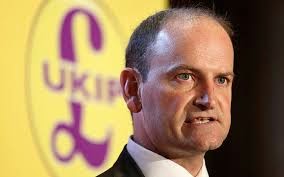
UKIP, Labour and the British working class

UKIP won a seat in Parliament last night and nearly snatched a safe seat from Labour.  Douglas Carswell retained his seat as MP, but switched parties from Conservative to UKIP.


I don't live in the constituency and have no idea how discussions went with people on the ground.  Douglas Carswell has a high profile and criticised government for poor funding of troops in Afghanistan.  He is critical of the European Union and called for a referendum on British membership.

UKIP leader, Nigel Farage, speaks simply and clearly addressing concerns of ordinary people.  He and his party are regularly branded racists and xenophobics by his opponents including the Labour Party.


Trevor Phillips was a prominent tv broadcaster for many years.  He became chairman of the EHRC (Equality and Human Rights Commission.)  During this time as leader, 6 commissioners stood down in protest at his leadership.  The Labour government supported Phillips and ignored criticism of him by these 6 prominent and well respected individuals.  At the time there was much concern about migration from the newly enlarged EU.  Increased pressure on services and infrastructure was not matched by funding and people raised concern that preferential treatment was given to new arrivals.  The EHRC was asked to research the matter and Trevor Phillips produced a report stating that there was no bias or problem.  This was readily accepted by the Labour Party and the BBC, many of whom lived or spent much of their time in London and the South East.

I worked regularly in a poor part of the East Midlands.  Major industries there have slowly shifted production to the Far East in the last couple of decades.  I worked with poor and disabled people who had been high up the housing waiting list found they were shifted low down the list and watched as newly arrived Eastern Europeans were given keys to social housing.  Several people told me that local employment agencies had an unwritten policy to avoid giving work to British people.  I also worked with individuals who were finding it difficult to hold on to jobs, despite hard and conscientious work, as new arrivals undercut their low wages.

This was a safe Labour seat and the government were not concerned about the prospects for local working class people.  Gordon Brown had introduced a range of benefits that seemed to trap people in unemployment, as the contrast in income when they took a job was rather like falling off a cliff (as they were no longer eligible for other benefits such as free dental treatment and glasses.)  Little was done for people at the lower end of the scale in terms of education and work experience, where unskilled work and demand for traditional skills are increasingly scarce.  Globalisation and outsourcing have changed employment for ever.  Labour have ignored their traditional roots in the working class.


Labour rhetoric shifted to a discussion about the concerns of 'hardworking families' and leaders of the main parties listened to the concerns of predominantly middle class pressure groups such as mumsnet.

The current coalition has focussed on bringing people back into the job market.  They want to ensure people earn more in work than on benefits.  In this Labour safe seat, I see lots of people who have never worked and found it profitable to produce more than 2 children, who are still able to claim benefits.  At the same time, I work with many people suffering chronic pain, disability or life threatening illness who are deemed fit for work and bullied by staff at the Department for Work and Pensions.  Yes the statistics for people coming off benefits and/or getting into work are rising.  Some of the former are arbitrarily booted off benefits by poorly monitored staff with draconian powers.  Some of the latter move into poorly paid and insecure work contracts, which do not guarantee them a regular income, as employers can bully them to work very long hours or withdraw all work as they please.

Large corporations in the private sector are paid incentives to hire staff on low incomes.  These incentives are the working benefits paid by the state.  The British taxpayer is now subsidising parts of the private sector.


In the past, trade unions fought for better wages and conditions for working class people.  They defended the rights of white males, but were less effective or motivated in supporting the rest.  Margaret Thatcher began the process of reducing their power.  The rail unions have remained a powerful force for their staff until now.  Bob Crow died recently and did not live to see strategies used to undermine the power of his RMT union.  This week it was announced that the London Underground will shift to driverless trains on the tube network.  If you elminate a powerful part of the workforce, which can bring the network to a halt by withdrawing their labour, you weaken the union.

Who do people turn to when their concerns are discounted as racism and bigotry?


Farage has recruited a financial spokesman with an Economics degree and robust arguments to counter opponents.  He is learning to strengthen policy statements and field challenges in the media with clarity and ease.

The Labour Party were shocked to see such a strong challenge to their safe seat, though they're deflecting attention to losses among the Conservatives and Liberal Democrats.

Was I surprised?  Not at all.  Why?  Because I regularly speak and work with people on the margins, who feel disenfranchised outside of the insular hothouse of Westminster, London and the South East.


Monday, 26 May 2014

Euro election 2014: handsome is as handsome does

On Thursday we voted in the EU election for MEPs.  After a long internet search, I discovered the candidates, but not how they'd appear on the ballot paper (more of that later).


I'm cynical about election manifestos and party commitments, having seen promises broken every year, including the pledge to hold a referendum on the revised EU constitution.

I'm more interested in how individual MEPs behave when in post.

There are 8 MEPs for the London region:  Charles Tannock (Conservative), Claude Moraes (Labour), Baroness Sarah Ludford (Liberal Democrat), Dr Syed Kamall (Conservative), Jean Lambert (Green), Gerard Batten (UK Independence Party), Mary Honeyball (Labour), Marina Yannakoudakis (Conservative).

I wrote to my MEPs for London on 21 January this year, expressing concerns about Georgia's interest in joining the EU.  In Georgia homosexuality is legal, yet the head of the church's followers advocate killing gays and a young gay man was recently murdered in the capital Tbilisi.

Syed Kamall (Con) responded asking if I'd like him to submit a Parliamentary question to the European Commission about this issue.  I agreed and he sent me a copy of the letter of to the Commission.


Marina Yannakoudakis (Con) twisted my question and answered about the right to gay marriage (which I did not even mention.)  She dismissed the idea that gays are threatened or murdered in Georgia.  I responded with a list of links to articles (gleaned from a cursory Google search), but answer came their none.

['The recognition of gay-marriages is not a pre-condition of EU Membership. If it were, then current EU Members may face problems since some do not recognise such marriages'.  'As for your words on "persecution and killings" of LGBT people in Georgia, I have found no similar reports of such incidents, so I would be grateful if you could provide me with further information so that I can investigate this alleged matter.'

'I'm sorry that you are unaware of the situation in Georgia for gays and lesbians and have been unable to find evidence for my claims.  As for examples of death threats an injury to gays in Georgia, here is a small selection via  cursory Google search:

Crowd led by Priests attacks gay rights marchers in Georgia

Antigay protesters disrupt Georgian rights rally

What was behind Georgia's anti-gay rally?

Terrifying video of rioters attacking gay pride participants in Tbilisi

In Georgia, a grisly murder highlights vulnerability of gay people

Georgia:  time for homsexuality to come out of the closet?

This is the oldest report:

Pride and Prejudice ]

Jean Lambert (Green) responded with a clear and concise account of her position and upcoming vote on the 'Lunacek report', a roadmap against homophobia and discrimination on ground of sexual orientationa nd gender identify for the EU.


Charles Tannock's (Con) response was brief, but asserted his position as a longstanding friend of Georgia who shares my concerns about human rights and civil liberties in Georgia.

Claude Moraes (Lab) sent a long reply, but confirmed his (and the Labour party's) position as committed defenders of human rights.

Mary Honeyball (Lab) acknowledged my email and said she'd get back to me.  Nothing more arrived from her.

Sarah Ludford (Lib Dem) sent a long reply with an extensive history of action in the EU on homophobia and human rights.  She concluded with a paragraph on Liberal Democrat policy on the issue.  This was the most detailed response of all.


 Gerard Batten (UKIP) has still not acknowledged my email or replied to it.

On Thursday I went to my polling station with preferred MEP candidates in this order of preference:  Sarah Ludford, Syed Kamall, Jean Lambert, Charles Tannock = Claude Moraes.

I discovered that I had ONE vote and could only pick a political party.  

I could not, in all conscience, vote Conservative with the views of Marina Yannakoudakis, however much I admire Syed Kamall.  Labour, with one non-response and one party political puff, could not get my vote.  Green, with a good response on this issue, could not be trusted on the economy.  UKIP keep the other parties on their toes, but Mr Batten is not doing his job.  Sarah Ludford sent the most comprehensive response, though I'm not too keen on other aspects of her party's work, particularly in relation to sexual abuse and harassment of staff and constituents.  I'd prefer to be able to vote for people I support and exclude those I don't.

I voted.

Update:  Here are the UK results for the European elections.

Lazy Mary Honeyball and Gerard Batten are still in, but hard working Sarah Ludford is out.


LONDON
Labour: 806,959
Con: 495,639
UKIP: 371,133
Green: 196,419
Lib Dem: 148,013

MEPs: Claude Moraes (Lab)Sayed Kamall (Con)Mary Honeyball (Lab),Gerard Batten (UKIP)Lucy Anderson (Lab)Charles Tannock (Con)Seb Dance (Lab)Jean Lambert (Green).


Saturday, 15 March 2014

Green Crap?

The Chancellor of the Exchequer, George Osborne, claims he is building a resilient economy by sweeping away green crap or environmental taxes.  An article in the Independent claims that Osborne will reduce penalties for high use of fossil fuel in Tuesday's Budget.


The 'Carbon Tax' is symbolic for environmental campaigners, as it indicates how strongly the government is committed to combating climate change.  I'm not here to argue about how far humans have contributed to climate change and whether we can reverse it.  Fossil fuels are pollutants and have had a major impact on human health and contamination of the planet for all life.  Steps taken to mitigate this have not been hugely effective.


We are running out of fossil fuel.  The developing world is catching up with Western consumption.  Oil companies are prospecting for oil in ever more remote and difficult to access locations.  Shale oil and gas extraction is provoking popular protests, as communities see their local area being damaged and livelihoods threatened by the direct and indirect effects of the process.


Environmental taxes that encourage companies to reduce consumption and improve efficiency make sense.  Commercial organisation complain and lobby, whatever is suggested.  If companies know that taxes and environmental regulations are coming, they plan and incorporate them in their daily practice.  However, if there is no regulatory pressure,  there is patchy adoption of sound energy efficiency measures.

Some say that we lose jobs to the developing world, because companies move manufacturing abroad to avoid regulation.  Much heavy industry has moved abroad already.  Germany seems to have found a way to retain engineering works in the country, while maintaining high standards of environmental regulation.


We are an island nation and reserve the right to hold dear to our Anglo Saxon attitudes.  Unlike our German and Scandinavian near neighbours, we continue to flush money down the drain through poor building standards and draughty, badly insulated homes.  Ed Milliband demands a freeze on utility prices rather than pushing to meet standards of some continental countries, that achieve low U values.


I visited an ex-council semi-detached house recently, that had been refurbished to passive house standards.  They had only used the central heating for 2 hours in the previous 18 months.  The house was warm and comfortable.


Eric Pickles has blocked local authorities from varying planning regulations to boost insulation and encourage triple glazing and passive house design, as this 'would be unfair to large house builders'.  Never mind if we have a growing problem of fuel poverty, rising heating bills and diminishing energy resources.

Vladimir Putin has demonstrated scant regard for territorial boundaries and UN warnings in his recent incursions into Georgia and Ukraine.  He knows that Russia controls vital oil and gas reserves, which the West needs.  He also knows that governments have given in to threats from large accountancy firms and permitted offshore limited liability partnerships, which have shielded illicit funds from tax, which were siphoned out of Ukraine and other Eastern bloc countries.

We forget how embargos and price rises imposed by OPEC in the early 1970s had a major negative impact on Western economies.  Scandinavia predicted the oil crisis and the UK didn't believe it until it happened.  Unless we consume less energy, we are hostages to those with large resources.

No, Mr Osborne, reducing green taxes won't lead to a resilient economy or more jobs.


Friday, 14 March 2014

Tony Benn RIP

When I first moved to London, one of my neighbours worked for Tony Benn.  He was Minister of Technology and she described him as an inspiring leader.


He has been satirised as an old fossil in the last couple of decades.  I saw him when he supported refugee groups fleeing from oppressive military regimes.  He was one of the few politicians with a genuine interest and understanding of these countries.  He recorded all conversations, not wishing to repeat negative experiences of journalists and opponents misquoting him.


He made the biggest impact when speaking about democracy.  In recent decades Western governments have justified military attacks on other countries by claiming to take democracy to dictatorships.  George Dubya Bush, famous for his 'hanging chad election' and sweeping away regulation so that corporations and rich individuals could buy elections, was never a great example of a democrat.  Both he and Tony Blair implied that they received their moral authority from God, rather than the people who elected them.  It was far easier to influence Mr Blair if you were a media mogul or billionaire businessman than if you were a UK voter.

Channel 4 published a video that Tony Benn made to be shown after his death.

We are losing a generation of thinkers and people who act on convictions.  They are being replaced by many facile, venal politicians and their bag carriers, who seem to have minimal experience beyond Westminster and very little interest in anything but power.


Wednesday, 12 March 2014

Chelsea FC closed to support Crystal Palace


The Secretary of State for Culture, Media and Sport, Maria Miller, has today announced the closure of Chelsea football club, currently top of the Premier League.  Funds will go across the river to bolster the ailing Crystal Palace FC, which has limped along with limited funding and poor results, failing to meet targets for many years.


Ms Miller attempted this move last year, but was stopped by court action, which ruled she had exceeded her powers.  She has pushed through a clause in the Sport Bill, which gives her sweeping powers to close or scale back any football club, without consultation, if a neighbouring club develops serious financial problems.

Opponents argue that this will lead to top down control of UK football and the Premier League.  Ministers counter that these moves are in the interests of football fans as they boost playing standards across broad areas.

Jose Mourinho felt shattered:  "The plans result in a good club shutting down because it's near to a failing one, with fans and staff powerless to resist closures".

Mis Miller was adamant that the new powers will lead to better sport, improved health and wellbeing and wider spread of good football to the benefit of hard working families.


Today is NOT the first of April, but the above story is fictional.

I wanted an analogy that would demonstrate the unintended consequences of government policy.  Health Secretary, Jeremy Hunt, has gained new powers through part of the Care Bill.  He will be able to close down my local hospital or its Accident and Emergency department, to retain facilities in neighbouring areas.  This is an area of 34 square miles, with a population of 364,000 people.  I know 3 people who nearly died but were saved by A and E, but who might not have survived if they'd been driven to neighbouring facilities (through dense traffic.)  I don't have a say in this, even though it has a major impact on me and the local community.  The government has promised limited consultation.  My local MP dismissed attempts to lobby him to vote against it.

The 'internal market' for health in the UK is artificial.  There are codes and categories for types of patient and disease as well as treatment.  Payment and money movements around the NHS are not straightforward.  Assessment of standards depends largely on how data is entered and categorised.  We are presented with league tables and alarming reports of dangerous hospitals, but the data on which these are based seems questionable.  Negative media reports of my local hospital don't match my experience and that of my friends.  I've seen standards improve, particularly in the NHS part of local A & E (not the Virgin stewardesses that check patients initially.)  I do NOT accept that it is unsafe for patients, as noted in this chart.


Yesterday I wrote about the resignation of Euan Sutherland.  One reason that fellow members of the Board of the Co-op stabbed him in the back was because of his pay rise.  He has delivered results in saving the Co-op Bank and Co-operative Group from destruction.  He did NOT cause the mess that the Bank and the Group are in.  I wrote about a similar backlash against the man that pulled RBS around, Stephen Hester.  There are plenty of examples where those who have made huge mistakes and cost companies and the country dear are rewarded on exit from post (or go on to become seriously rich, using their knowledge and connections from the job).  The Labour Party keep quiet about the decline of the Co-operative Group except when funding for their party and some MPs is threatened.


In the UK we seem to like rewarding failure and disputing payment for success.  In the case of healthcare, it sets a dangerous precedent.