Showing posts with label change. Show all posts

Saturday, 15 March 2014

Green Crap?

The Chancellor of the Exchequer, George Osborne, claims he is building a resilient economy by sweeping away green crap or environmental taxes.  An article in the Independent claims that Osborne will reduce penalties for high use of fossil fuel in Tuesday's Budget.


The 'Carbon Tax' is symbolic for environmental campaigners, as it indicates how strongly the government is committed to combating climate change.  I'm not here to argue about how far humans have contributed to climate change and whether we can reverse it.  Fossil fuels are pollutants and have had a major impact on human health and contamination of the planet for all life.  Steps taken to mitigate this have not been hugely effective.


We are running out of fossil fuel.  The developing world is catching up with Western consumption.  Oil companies are prospecting for oil in ever more remote and difficult to access locations.  Shale oil and gas extraction is provoking popular protests, as communities see their local area being damaged and livelihoods threatened by the direct and indirect effects of the process.


Environmental taxes that encourage companies to reduce consumption and improve efficiency make sense.  Commercial organisation complain and lobby, whatever is suggested.  If companies know that taxes and environmental regulations are coming, they plan and incorporate them in their daily practice.  However, if there is no regulatory pressure,  there is patchy adoption of sound energy efficiency measures.

Some say that we lose jobs to the developing world, because companies move manufacturing abroad to avoid regulation.  Much heavy industry has moved abroad already.  Germany seems to have found a way to retain engineering works in the country, while maintaining high standards of environmental regulation.


We are an island nation and reserve the right to hold dear to our Anglo Saxon attitudes.  Unlike our German and Scandinavian near neighbours, we continue to flush money down the drain through poor building standards and draughty, badly insulated homes.  Ed Milliband demands a freeze on utility prices rather than pushing to meet standards of some continental countries, that achieve low U values.


I visited an ex-council semi-detached house recently, that had been refurbished to passive house standards.  They had only used the central heating for 2 hours in the previous 18 months.  The house was warm and comfortable.


Eric Pickles has blocked local authorities from varying planning regulations to boost insulation and encourage triple glazing and passive house design, as this 'would be unfair to large house builders'.  Never mind if we have a growing problem of fuel poverty, rising heating bills and diminishing energy resources.

Vladimir Putin has demonstrated scant regard for territorial boundaries and UN warnings in his recent incursions into Georgia and Ukraine.  He knows that Russia controls vital oil and gas reserves, which the West needs.  He also knows that governments have given in to threats from large accountancy firms and permitted offshore limited liability partnerships, which have shielded illicit funds from tax, which were siphoned out of Ukraine and other Eastern bloc countries.

We forget how embargos and price rises imposed by OPEC in the early 1970s had a major negative impact on Western economies.  Scandinavia predicted the oil crisis and the UK didn't believe it until it happened.  Unless we consume less energy, we are hostages to those with large resources.

No, Mr Osborne, reducing green taxes won't lead to a resilient economy or more jobs.


Monday, 20 January 2014

How to annoy David Cameron

I bumped into Jesse Norman the other day.

Yes he is another so-called 'posh boy' Tory MP who went to Eton.  When I talked to him, he was using public transport.


I thanked him for his excellent work on the Treasury Select Committee doggedly interviewing people about the Co-operative Bank and disastrous slide into massive debts.  Norman helped the campaign to rescue the savings of elderly bond and preference shareholders who had dealt with the Co-op all their lives.  I'd watched some of the hearings online.

I expressed concern about the behaviour of some of his TSC colleagues, who use sarcasm and bullying to ill effect.  Interviewees freeze and then become defensive, rather than giving helpful information.

Jesse Norman apologised for not replying to my letter to him last year (why should he, I'm not one of his constituents),  and then told me how he learnt to extract maximum information with forensic skill, but without bullying.

His father in law, Lord Bingham, headed the enquiry into the Bank of Credit and Commerce International.  Bingham telephoned and went to see the key people, extracting the majority of the information by being (in my words) a courteous gentleman.  This cost the public purse  zero.  Contrast this with the series of public enquiries, which have cost us millions.


We parted and I didn't have time to tell him I'd written to the main political leaders asking for a change in behaviour of TSC members using Jesse Norman as a role model.

What has this to do with David Cameron?

I knew little about Jesse Norman.  I've discovered that he's one of the few MPs who has had a diverse career before entering politics in later life.  He knows about banking, charities, university lecturing and running arts programmes both here and abroad.  He has strong views on parliamentary democracy based on his academic work in philosophy and admiration for Edmund Burke.


Norman holds firmly to principles in part based on experience of how democracy can falter when it is weakened by undue financial and lobbying interest, as in the USA.  He led a rebellion against aspects of Lords reform, which would have turned the House of Lords into a second elected chamber.  In creative problem solving, we encourage reflection, so that people avoid premature evaluation and disastrous decisions.  Jesse Norman argues that the House of Lords, at its best, fulfills this function.

David Cameron was infuriated and sacked Jesse Norman as an adviser to the policy board.  This was in July 2012 and Norman was appointed to a parliamentary advisory board in April 2013, but sacked again after abstaining on the Syria vote in September.

Why might the letter annoy David Cameron?

I also wrote that, were Jesse Norman to be selected as candidate to replace the newly enobled Lord Bletchingley, I might vote Tory for the first time in my life.  Jesse Norman has been touted as a possible successor to Cameron, so my comment could only have irked the Prime Minister.

Dear Mr Cameron, follow Lyndon B Johnson's sound advice and  keep Jesse Norman inside the tent, so that he doesn't direct his yellow stream at you.


Tuesday, 12 November 2013

Blasphemy & Church of the Latter Day Statinators

I am grateful to Dr Malcolm Kendrick for covering this issue.


An award winning Australian television journalist, specialising in medical research, put together 2 excellent programmes.  

Heart of the Matter Part 1 - Dietary Villains is here:


Heart of the Matter Part 2 - The Cholesterol Myth is here: 


There are many scientific papers to substantiate the research findings which overturn current dogma on dietary fat and heart disease.

Critics of these 2 tv programmes do not challenge the data with facts.  Dr Maryanne Demasai and her invited contributors are villified personally and their reputations attacked.


Our distant ancestors rooted out blasphemers and those who challenged orthodoxy (including midwives) using trial by ordeal. A woman would be dropped in water. If she drowned, she was not a witch, if she lived, she was a witch.  This was the 'damned if you do and damned if you don't' school of justice and scientific research.

I was reminded of this analogy when reading the current Wikipedia page (today it's a stub) on Dr Maryannne Demasai.  The wording is restrained, but its effect is a hatchet job on the journalist and her contributors.

One of the contributors claims that challengers to the Cholesterol orthodoxy have not proven their case.  He says he finds the idea interesting but not usable.  'A diet that substitutes polyunsaturated fats for saturated fat is healthier for the human heart'.  I have previously reported on Lipidologist Chris Masterjohn's excellent job of roundly demolishing this contention by examining the original research projects used to justify it.  He finds ample evidence of bad science, poor/changed control groups, conclusions that run counter to the data produced and other serious errors.


What constitutes blasphemy in the Church of the Latter Day Statinators?


Typically anything that frees people's minds from the orthodox dogma and poses a threat to the multi billion dollar earning power of statins and associated drugs.  If people, without heart disease, learn that they can reduce health challenges and heart disease by making changes in diet and lifestyle, then drug companies will lose their cash cows.


Dr William Davis, a heart doctor, has developed a systematic approach to diet and lifestyle that helps his patients reduce coronary arterial plaque (calcium scores) from life threatening to normal levels (and sometimes zero.)


Another conventional expert, in the second tv programme on the Cholesterol Myth,  states that publicising side effects of statins may cause people to develop them psychosomatically. Dr Duane Graveline, former NASA doctor, was a pioneering advocate of statins and took them himself.  His health declined dramatically and he slowly realised the cause, after he became unable to walk.  Many years later he still has health challenges and is one of the growing groups of medical doctors who challenge the widespread use of statins and the Cholesterol Hypothesis on heart disease.  He believes that statins attack mitochondria, the power house of each cells in the body.  Psychosomatic symptoms?  I don't think so.


I have commented before in the increasing reach of pharmaceutical companies in influencing opinion and silencing criticism.  Money in the form of funding and threat of litigation (or being stuck off) keeps many individuals and organisations 'on message'.

I chose the analogy of religious orthodoxy today when a friend sent me an email criticising Mormons.  I've yet to find a religion followed by human beings that does not have its share of embarrassing history.  I've met charming Mormons, some of whom were excellent scientists. This post is not directed at religions, but the current trend of turning any conventional dogma into a medieval faith.  


Doctor eats the Bogus Diet

I am grateful once again to Dr Malcolm Kendrick for alerting me to this video.


What is the Bogus Diet?


The SkinnyNews-Tim Noakes


A diet that is high in fat and low in carbohydrate.  This is the diet that doctors are trained to dismiss, which infuriates dieticians, who stick rigidly to the 'prudent diet' with lots of cereal grains.

Tim Noakes, UCT Professor of Sports Science, wanted to lose 6 kilos before travelling to speak to elite athletes in Sweden.  He followed the Bogus Diet and........ thrived on it.

It's not for everyone, but Professor Noakes explains the benefits of increasing fat and eliminating cereals and the side effects and risks of the 'prudent diet'.

Youtube won't let me embed the video, so find it here.

The Bogus Diet he followed was researched and further developed by 3 medical authors.  One of them is Dr Eric C Westman (President elect of the American Society of Bariatric Physicians).  Dr Westman is interviewed here:


The same criticisms are levelled at this approach as before.  This view of health and major diseases in the human population are part of a well honed dogma, which must not be challenged.  I wrote about this before using the analogy of Flat Earth, here and here.  It took a long time for our ancestors to recognise that our planet is round and orbits the sun.  We're still waiting for medical orthodoxy to catch up with the science.

Update:  


Professor Noakes is my hero.  Finally someone has written a rigorous book about hydration.  It's called 'Waterlogged' and mentions my hobby horse, the health risks of dilution of electrolytes by the advice:  'the more water you drink, the better'.


'The science of hydration is utterly bogus;  it was dreamed up by marketers.'


Sunday, 9 December 2012

Leaving toilet seat up kills

A new study confirms the damage to health caused by leaving the toilet seat up.  Women have long complained about this behaviour by men, but scientists have now confirmed the ominous consequences.


A team at the prestigious Aardvark Medical School carried out a 3 month research project to test anecdotal evidence about toilet seat effects on heart health.  Professor Manteaublanc explained that previous studies were marred by excessively broad parameters.  "We excluded people who usually take a dump in the woods and those with chronic heart disease.  Our 30 test subjects were 50/50 male female and a range of ages."  His colleague Dr. Brad Huffenpuffer pointed to studies that failed to monitor people adequately.  "Unless you confine people to a closed research facility, it can be difficult to monitor behaviour 24/7.  We overcame this by using undergraduate students on a rotating schedule to monitor each subject continuously."


Results showed that far fewer female subjects left the toilet seat up.  A similar percentage of women in the study suffered heart attacks, indicating a strong correlation between seats up and myocardial infarction.


Women who suffered heart attacks during the study typically visited the toilet after a deep sleep at about 3 or 4am and failed to lower the seat to the healthy position.


Undergraduate participant tester, Bo Lurker, reported that heart attacks were more dramatic and noisy than he realised from tv and film.  "I wanted to make sure I documented everything, so I walked up alongside my subjects to check their activities, especially when they were spending a long time taking a leak or combining it with vigorous exercise.  The guys would shout and swear, pushing me away as they grabbed their chest and staggered around the bathroom."


Fellow student, Blondina Einstein, agreed.  I thought women didn't have heart attacks much and mostly took time to faint quietly.  In this study my subjects would pad to the bathroom at about 3am looking half asleep.  I'd stand in the corner and then move closer to check their behaviour.  These women would scream, stagger and push me away before falling to the floor in convulsions.  In all cases they hadn't put the seat down, which proved conclusively the danger of keeping the seat up.

Manteaublanc and Huffenpuffer undertook the research to stem the growing tide of sloppy ideas about heart health.  Dr Malcolm Kendrick's ludicrous assertions about stress and lipids and quack journalism by former physicist Gary Taubes were two of many who are spreading dangerous misinformation, according to the research team.

"We are confident that our work makes a significant contribution to the body of work, building on our previous studies of heart healthy margarine and the preventive effects of statins.  We can confidently recommend the elimination of fats (especially saturated) from the diet, routine statin supplementation to water fluoridation and automatic toilet seat closure devices as the route to heart health.  It goes without saying that  the diet should be built on healthy whole grains with 5 portions of fruit and vegetables a day."

PS  I'm getting a lot of web traffic to my blog for this article.  I suspect that some readers may have missed the point.  The aim is to spoof popular science journalism, which blurs the distinction between correlations and cause effect relationships (eg when it's hot, people wear fewer clothes - versus - walking around semi-naked causes the sun to shine and raise the temperature.)

Friday, 28 September 2012

ბრენდინგის ერი Branding a nation

I sing in a Georgian choir and am often asked to explain which Georgia it represents.

No it's not 18th century English music nor songs from a Southern United State.  If I mention Stalin, people think of USSR.


One leader has the power to evoke Georgia as a nation and that is Eduard Shevardnadze.


Georgians don't understand how this came about.  In the West we saw a succession of Soviet leaders, who seemed to be appointed because it was their turn.


They often seemed indistinguishable and equally lifeless.


Krushchev may have been chubby and cheerful, but seemed to have dead eyes.  He was most often ridiculed as the Michelin man.


Gorbachev showed greater promise, but still had a buttoned up quality.  His Minister for Foreign Affairs always stood out in television news film.  Shevardnadze appeared to have a functioning brain behind the eyes, a sense of humour and a pulse.  USSR seemed to be moving away from the film set of 'Invasion of the Body Snatchers' and appointing warm blooded humanoids to lead them.


Shevardnadze pushed for greater reform, particularly in the Republics of the Soviet Union, when Gorbachev wanted to slow down or back pedal.  He was a product of the Soviet system, but was a major driver for reform.

After the break up of the USSR he returned to Georgia and became President in his mid sixties.  He presided over a country with limited infrastructure and well established black and grey economies.  The police were corrupt and the country struggled to function, with violence, criminality and regular power cuts.  Shevardnadze avoided major military attacks on rebellious regions, which had caused such bitterness and resentment in Abkhazia under Zviad Gamsakhurdia.  He attempted to maintain civil relations with Russia and improve trading links.

His greatest achievements were in foreign policy, particularly his contribution to German reunification.


He is not admired for his attempts to hold on to power by rigging elections, although we are familiar with hanging chads, bogus voting applications and boundary changes in both the USA and the UK as some of the means for 'influencing' electoral outcomes.

Some criticise him for his failure to tackle corruption, which was widespread through most Soviet Republics.  One member of his government told me that he had the typical attitude of an old man.  Listening to this account, I was reminded of all the young men I'd met, who had strict fathers that turned into indulgent grandfathers.  Shevardnadze kept slack control of the budget and the economy suffered as a result.

Overseas we are left with the image of a handsome man with flashing teeth and twinkling eyes, who contributed to major innovation in state bureaucracy and international relations.

This contrasts with Vladimir Putin, who has become a gay icon, for his bare chested appearance in hunting, shooting and riding photos.


In 2003 Shevardnadze was tired and had tried to resign, but was persuaded to stay.  He is reported to have asked Saakashvili, when Misha came to unseat him in the Rose Revolution, 'Thank God, what took you so long?'

He continues to take an active interest in foreign policy and warns against other ways of trying to retain presidential power by participating in an attack on Iran.

History may re-evaluate Eduard Shevardnadze as a good statesman, who helped dismantle the soviet empire and emblems of the Cold War, but couldn't keep the lights on at home.


Mikheil Saakashvili is proud of his achievement in keeping the street lights shining all night on the main boulevards of Tbilisi, even if the power still shuts off sometimes in Svaneti.  He has been less successful in foreign policy and taming the Russian bear.


Tuesday, 15 May 2012

Fair Field


We forget how many businesses were started on ethical grounds in the UK.


 Several banks had their origins in the Quaker movement.


Prominent chocolate makers were part of the Quaker idea of fixed price trading rather than haggling for goods and services.


The Co-operative Group had its origins in the Rochdale Society of Equitable Pioneers.  Weavers and other skilled workers organised themselves to prevent ruination by poverty.  They founded the Toad Lane Store to sell food items and form a co-operative.


Today the Co-operative Group is a nationwide set of business that includes supermarkets and the Co-op bank.  Fierce competition in retail and banking means that customers may forget the principles on which the company was formed.


The bank has modest branches and low tech counter services.  Occasionally the organisation takes a stand that reminds us of their early days.

The Co-op announced at the end of April 2012  that it was "no longer engaging with any supplier of produce known to be sourcing from Israeli settlements." 

Israel and its supporters have used a range of tactics to prevent boycotts, including legal action.  The most common ruse is to conflate criticism of government policy with anti-semiticism. 

The UK has centuries of history showing how organisations have chosen to support the weak and marginalised members of society for the greater good.  The Co-op is following in that great tradition.

Thursday, 10 May 2012

Fluffy goes to Durban

I've been following the fortunes of the team pioneering HIVEX treatment for HIV in South Africa.  It sounds impossible, but this simple and inexpensive protocol seems to produce impressive results without terrible side effects.


The team have been struggling with attacks on their facility.  They have also applied for government approval of the treatment and jumped every hurdle, only to meet.....SILENCE.

The treatment stopped in April until they can get things on a more stable and secure footing.

Fluffy, a long term HIV positive Brit, flew into South Africa from the UK and experienced HIVEX for himself, with impressive results:

'After about my third day of treatment at the Hivex centre, I started feeling by far more energized day by day and needed no more ''nap's'' in the afternoon, which in London would last from about noon to 3pm every day. And when I woke up in the morning, instead of feeling like I was on an all night workout or labour camp, I actually felt fresh and energized and had no problem getting up even at 5am.
What I found most astonishing though is the fact that after I forgot to take my pain medication with me to the centre and then also forgot my evening dose of Tramadol (I have been on the maximum dose of 500mg for several years) my usual severe back and body pains were gone. 
I then on purpose left out the pain medication and have to say that I have not taken any pain killers for the last three weeks. These two very important issues of constant tiredness/exhaustion and the constant pain now gone, was worth it alone for me making the trip. Now all I want to find out is if there have been any changes to my bloods, which I will have checked on my next visit to my HIV consultant.'


He has now dedicated himself to promoting HIVEX and helping some of the rural dwellers to have a sustainable income to fund clinic visits and treatment, as well as helping orphans to develop a life off the streets.


Respecting a friend

'Dervish wish to announce they will not be taking part in the Irish music concert series in Israel this June. Our original decision to participate in the concerts was, like all our tours and appearances, completely non-political. The organiser of the shows is a musician and friend of the band for many years. He has worked to bridge divides between people through music for much of his life. These concerts were organised in this same spirit. At the time we agreed to these performances we were unaware there was a cultural boycott in place. We now feel that we do not wish to break this boycott. Our decision to withdraw from the concerts reflects our wish to neither endorse nor criticise anyone's political views in this situation. Dervish are a grouping of like musical minds, we are not a political party. Our motivation as a band has always been and will continue to be our love of music’


 Dervish are an Irish traditional band based in the democratic republic of Ireland. Their friend wants to support the hunger strike in Palestine by peaceful means.

 How did the Irish government respond to this? '

'The Ireland-Palestine Solidarity Campaign (IPSC) has been subjected to unprecedented attacks after the traditional music band Dervish refused to break the boycott and play in Israel. The Minister for Justice, Equality and Defence, Alan Shatter, who is an ardent Zionist has, in a frankly unbelievable press release, slammed the ‘IPSG’ [sic] for ‘cyber-bullying’ Dervish, has linked us with Al Qaeda, and has claimed we are taking away the constitutional rights of Irish citizens by asking them to boycott Israel.

 What is worrying – showing the deference to power among the Irish media - is that these statements have been taken at face value, rather than treated as an ideologically motivated assault on peaceful Palestinian rights campaigners. With our minds on the hunger strikers facing death in Israeli prisons, this minor media mugging seems trivial – talking about it sounds narcissistic. But this bullying of Irish people who support Palestinian rights is part and parcel of a so-far successful campaign to ensure that Palestinian voices are drowned out in the media.

 There has been no coverage at all of the hunger strikes in the Irish press. In comparison, there has been a flurry of articles on Dervish and the cultural boycott. You can find indignant voices talking of the value of cultural exchange as Palestinian prisoners are starving to death - here and here in the Sunday Independent; here and here in the Irish Times - and also in the Sunday Times (behind a paywall, but really, you’re not missing much). The worst of these articles come from the Sunday Independent, the Irish version of the Daily Mail. Over the past few weeks, the Sindo has been launching ongoing attacks on the IPSC – their articles and various responses are here – something which demonstrates the success of the Israeli media machine in targeting Ireland, as they had previously promised....'

  How democratic is YOUR government?

 Can you make a peaceful, non-political gesture without being branded a supporter of terrorists? The Dixie Chicks learnt the consequences of criticising George Dubya Bush's foreign policy and now it's the turn of Dervish.

Monday, 23 January 2012

Charlatan

I had an interesting conversation with a young Polish cardiologist recently. He was friendly and open to discussing views on health, without resorting to the 'Me expert, you idiot' approach of yesteryear.


I talked about some of the things I've learned about preventing heart problems and mentioned the work of Dr William Davis. The cardiologist turned to his computer, typed in Dr William Davis in the PubMed search engine and found no results. He then told me that Dr Davis must be one of those American charlatans, who are just trying to make money out of empty assertions and selling snake oil. I explained that Dr Davis has had stunning results by recommending diet and lifestyle changes in order to reduce coronary arterial plaque. The cardiologist dismissed this telling me he could claim numerous positive results and that this would prove nothing. He told me that he would need to see peer reviewed articles to convince him that Dr Davis had anything valuable to contribute to the field.

I then asked for his views on the lipid hypothesis and the idea that saturated fats contribute to heart disease. He told me that there is evidence that they do, took my email address and promised to send me links to peer reviewed articles substantiating this fact. That was at the end of November 2011 and to date I've heard nothing.

Later I typed the young cardiologist's name into PubMed and found zero results, despite the fact that this doctor routinely prescribes heart drugs and surgery to deal with various symptoms. I also checked on my GP colleagues, with whom I've worked for 20 years, and found no peer reviewed papers by any of them. I've witnessed and heard from patients testimony to their efficacy in dealing with a wide range of medical conditions. I doubt if patients need peer reviewed articles to show that their doctors aren't charlatans.

Dr Davis relies on the results of scans to show his patients' calcium scores. It's possible to challenge the cause-effect relationship between diet and heart disease that he proposes, but his results are impressive.


Dr Davis is generous with his knowledge and shares his experience freely on his blogs and in interviews. He does have a heart disease prevention programme with a membership and also sells 2 books. I don't think this automatically discounts his work.

In a previous post I mentioned the difficulty of getting research published in peer reviewed journals if it challenges orthodoxy or a sticky metaphor. Lynn Margulis persisted and made a difference to how we understand the process of evolution. The way that the Helicobacter was brought to public attention so that research was financed and appropriate antibiotics developed for the treatment of stomach ulcers is another example of this trend.


Commentators are challenging how pharmaceutical companies chase gold mine drugs and jump to conclusions about cause-effect relationships rather than correlations to research treatment for serious conditions. Some claims for drugs have been undermined by research or more detailed analysis of the initial findings on which claims for the drug were based. 'Why Science is Failing Us' is a provocative article in this vein.

$29 Billion Introduction from 29billion on Vimeo.


Another angle in this debate focuses on the trend towards senior researchers to claim credit for all breakthroughs (and to quash evidence that young juniors have found something new.) Peter Lawrence claims that the heart of research is sick. He describes the push for publication in a few high profile journals so that your papers are cited by colleagues. This means that small, obscure areas of research are overlooked and that papers on planned genetic research are favoured, an area which seems to be reaching some dead ends. The outlook for UK scientific research is depressing.

I think it's absurd to assert that a doctor can only treat people if he/she has published research in a peer reviewed journal on the subject. The history of medicine has been built on doctors and surgeons applying the results of other people's research. Some members of the field indicate that the true charlatans may be those who change the paramaters of their research AFTER the results are in or those who conceal or understate side effects and statistically insignificant results by manipulating the data.

Friday, 9 December 2011

Rapper Fat Joe says "Educate yourself to weight loss"

Here's how he used to look:


In this video he talks about how he lost 100lbs by educating himself on the science of food and metabolism. Basically Rapper Fat Joe cut out most starch and sugar.

'Super crack head level with sugar...... and then we wonder how we caught diabetes...'


'I lost 6 friends last year to heart attacks..... all younger than me...'

'We're not superheroes, we're human beings. I'm being a realist. That's going to happen to me if I don't switch it up.'

'Not only do I feel better, I'm not missing nothing. I still eat chicken, steak, lobster, with sauteed vegetables or salad. I don't eat it with that pasta, rice or bread.'

In breaking news, Denmark has levied a tax on saturated fat and Norway is running out of butter from the increasing popularity of high fat/low carb ways of eating.. 2 neighbouring countries with diametrically opposed views on diet and obesity.

Listen to da man. Rapper Thin Joe tells it like it is.

Respect.

Thursday, 1 December 2011

Doers versus Dreamers

Books offering home spun philosophy, such as 'Chicken Soup for the Soul' do well in the best seller lists, but don't seem to draw on life experience in a useful way.

Here are 2 excerpts from an interview with Steve Jobs, where he offers 2 concepts that helped him.

The first relates to change and the power of ordinary people to make a difference:


The second gives us an insight into how he made progress in his career, mainly by asking for help:

Tuesday, 1 November 2011

Truth, Justice and the American Way

This week UNESCO voted with a majority of 93 votes to recognise Palestine as a separate entity for the purposes of the organisation's work:


The United States voted against, along with 13 other countries including Canada, Germany and Australia.

107 countries voted for the motion including France, Russia, China and Austria.

The United Kingdom abstained along with 51 other countries including Denmark and Georgia.

Comments from the source of these numbers:

'Most of these are no surprise, although it is worth noting the division in Europe, with Spain, France, Ireland, Austria, Finland and Greece voting “yes,” Germany, Czech Republic and Sweden voting “no,” and the UK, Italy and Denmark abstaining. It’s also probably worth noting that the US didn’t manage to get a “no” vote from such solid supporters as countries like Latvia (which voted “no” to bringing the motion to the General Assembly earlier this month but abstained today) and Tuvalu, Nauru and other island states that almost always support the US in international forums. Another formerly stalwart US supporter who voted for Palestine is Iceland. I remember chatting with an Icelandic diplomat during the Bush administration who had told me that after one particularly egregious instance of Washington dictating terms on what should have been a bilateral decision between Reykjavik and DC the US could no longer count on their automatic support in international forums.'

The United States has since cut off $60 million funding to UNESCO. The spokeswoman at the press conference stated that the USA criticised this unilateral move, which undermined their efforts at brokering a peace settlement in the Middle East.

Wikileaks (strongly attacked by the US government as a hostile force working against democracy) released the Palestine Papers earlier this year, revealing the true nature of this 'peace process'.

They revealed that the Palestinians had made concessions requested of them repeatedly, only to be greeted with indifference by the Israeli/US parties to the negotiations, who then demanded more:


Other papers revealed communications between Israel and the US describing policy to keep Gaza on the brink of economic collapse, without tipping it over to the abyss completely:


Noam Chomsky has been critical of US support for Israel, posing as an honest broker in peace negotiations, when its role is firmly partisan. Part of the problem is the economic benefit to the US arms industry that flows from the huge amount of aid given to Israel. The US government has promised $30 billion in military aid over the next decade. He also believes that the US contributes to a PR offensive to soften public opinion to accept an attack on Iran. The principal rationale is the allegation that Middle Eastern people want such a military offensive, when the idea comes from Middle Eastern dictators (allied with the US) rather than ordinary people:


What do you do when you want to enforce policies, but find yourself in the minority?

Bully and coerce by withdrawing funding. Go on the offensive with mis-information.

Who abstained?

Countries that rely on good relations with the USA... such as UK, Denmark and Georgia. It's easier to remain neutral than vote against and risk public ridicule.

When Israel voted against the motion, other delegates laughed.

The United States and some other western governments have taken action to starve Wikileaks of funding. They have targetted online payment conduits, banks and other financial institutions to ensure that money does not flow in for further revelations.

Professor Chomsky believes that the US government reveals itself as defiantly anti-democratic in its foreign policy action. He also thinks that the scare tactics about the threat to security by the leaks is a smokescreen. He cites the example of a study from a medical journal in Falluja (attacked by US forces in November 2004). They found levels of cancers, leukemias and other diseases higher than in the aftermath of Hiroshima. This was not covered in the US media, which focussed on Iran and Afghanistan:


From a Palestinian viewpoint it seems fruitless to continue negotiating with two parties, who have huge economic interests in delaying a resolution or allowing concessions from their side. It makes more sense to take another route and seek acceptance by a UN body responsible for humanitarian aid and cultural heritage. Trust networks within the UN have built up over time and recognise some of the attempts made by Israel to erase Palestinian territory, homes and culture. UNESCO has censored Israel several times for its treatment of Arab sites of archaeological significance (to little effect.)

It will be interesting to see what happens when the UN resolution is tabled to recognise Palestine as a separate state.

Update

Israel has today decided to speed up building 2000 new settlement homes in the West Bank and withhold funds from the Palestinian Authority. Palestinians are appealing to the UN to intervene.

The USA and Israel have long criticsed Middle Eastern governments and held Israel as a prime example of democracy in the region.

How strange that their response to democratic election processes is to punish people for 'voting the wrong way.'

Perhaps the world does not share a common perception of democracy and dictatorship.

Update 2

Canada has also announced a cut to its UNESCO funding. It would be fascinating to have heard this week's conversations across North America between US and Canadian diplomats and politicians.

Sunday, 16 October 2011

War on terror?

The USA give an annual subsidy of $3bn to an independent and affluent state. Much of it is in the form of military hardware.

The policy supports the line that Israel is conducting a war on terror.

This is part of state supported military action:


Destroying the means for a population to feed themselves and earn money from food crops does not fit into my perception of a war against terrorism.

However it does support the idea that Israel wishes to systematically remove Palestinians from land and colonise it for Israeli (non Arab Jews). That reminds me of something my parents' generation fought against as part of a world war.

Such action will continue unopposed until the USA recognises that their subsidy is used to displace, starve and destroy one ethnic group.

Saturday, 17 September 2011

Peace One Day

At regular intervals the media announce that today is International ***** Day (insert worthy cause in the gap.) It's easy to be cynical and assume that a committee of retired bureaucrats have devised this as make-work activity. Little seems to change.

The same reaction occurs when emails circulate about World Peace Day on 21 September. The story of how this came about is intriguing.


Actor and filmmaker Jeremy Gilley decided to campaign for the idea of one day of peace and non-violence. Gilley was frustrated at the relentless level of conflict in the world. He was influenced by the early death of his grandfather, who, as a prisoner of war, witnessed the bomb in Nagasaki and had lasting health effects from the radiation. Gilley chose the date because 21 was his grandfather's favourite number.

Gilley had no money. He wrote to everyone he could think of to promote the idea. He travelled all over the world filming and listening to ordinary people in war zones and the difference that peace might make to them. He decided to build a case and make it stronger and more detailed.

Finally UK and Costa Rica proposed a motion to the UN General Assembly on 7 September 2001 and it was passed unanimously. Kofi Annan invited him to a press conference at 8am on 11 September, but the attack on the twin towers make it impossible.

Gilley persisted and toured with his film. People in Israel sneered that it's just symbolism, after watching Gilley's film. He recognised that he needed tangible results to convince people.

He came to understand the 4 pillars of success:

- A great idea
- A constituency
- Finance
- An ability to raise awareness


His profile was too low to make an impact, so he recruited the actor, Jude Law. Together they went to Afghanistan and spoke to all organisations involved in the conflict. A major problem was the safety of humanitarian workers in the country. After Gilley returned home, a letter came from the Taliban agreeing to a ceasefire on 21 September.

On that one day of peace 1.6 million children were vaccinated against polio as a result.

Later it was announced that there was a 70% reduction in violence on that day.

Gilley then aimed for a Global Truce on 21 September, with the idea that a 70% reduction in violence could be possible everywhere if it had been achieved in such an intractable situation as that facing Afghanistan.

One of his mentors told him that it's not going to come from the action of governments. 'It's all about individuals - you and me, partnerships, local businesses - working together.'


In Pinchot's terms Gilley has followed most of the commandments, particularly doing any job necessary, finding people to help him, running in his own race and being true to his goals.

Wednesday, 7 September 2011

Why don't we all get cancer?

This question is the title of a lecture by Craig B. Thompson, President and CEO of Memorial Sloan-Kettering Cancer. He's talking about the latest findings in cancer research.

The answer focusses on the state of our genes and specifically those responsible for glucose metabolism. A PET scan checks this.

Glucose is the trigger for dormant cancer cells to proliferate.


'It matters where your calories come from. We have good evidence that excess fat does not increase your cancer risk, excess carbohydrate does increase your cancer risk and protein is somewhere in the middle.'

As Tom Naughton comments, 1/3 of the student audience had misunderstood the lecture and still believed that dietary fat would increase the growth of tumours. Low fat health messages have taken hold on public perception.

Friday, 19 August 2011

The visionary systems thinker

Zen and the art of digital design could be the title of the Steve Jobs story. His focus is on beautiful design, simplicity, integrity and the user experience of technology.

'He will reject something which no one will see as a problem. But because his standards are so high, people sit there and say, “How does Apple do it? How does apple have such incredible products?”'


Apple is often criticised for not licensing some of its innovative technology to other companies, but the refusal stems from the need to stop people tinkering and blemishing the beauty of perfection.

'Steve believed that if you opened the system up people would start to make little changes and those changes would be compromises in the experience and he would not be able to deliver the kind of experience that he wanted.'

John Sculley, former CEO who was kicked out by Apple after 10 years, describes Jobs' methodology and how this drove the company even when he had left to start Next.

'The user experience has to go through the whole end-to-end system, whether it’s desktop publishing or iTunes. It is all part of the end-to-end system. It is also the manufacturing. The supply chain. The marketing. The stores. I remember I was brought in because I had a design background and because I was a marketer. I had product marketing experience. Not because I knew anything about computers.'

The charismatic Jobs was able to work across a huge range from the 'change the world' level down to the detail of designging and building products. He insisted that the core team could never be more than 100 people. Even though Apple now employs thousands of people at its Cupertino HQ, the product development division is still small.

Jobs looked beyond the computer world of USA and Europe and admired Ako Morita of Sony and the way his Japanese factories were laid out.

The hierarchy at Apple puts designers at the top, followed by engineers and both above managers in levels of respect.

'Microsoft hires some of the smartest people in the world. They are known for their incredibly challenging test they put people through to get hired. It’s not an issue of people being smart and talented. It’s that design at Apple is at the highest level of the organization, led by Steve personally. Design at other companies is not there. It is buried down in the bureaucracy somewhere… In bureaucracies many people have the authority to say no, not the authority to say yes. So you end up with products with compromises. This goes back to Steve’s philosophy that the most important decisions are the things you decide NOT to do, not what you decide to do. It’s the minimalist thinking again.'

The user experience includes Apple Stores (a long way from the glass, carpet and chrome fortresses that were Apple Centres in the early days.)

'He brought one of the top retailers in the world on his board to learn about retail (Mickey Drexler from The Gap, who advised Jobs to build a prototype store before launch). Not only did he learn about retail, I’ve never been in a better store than an Apple store. It has the highest revenue per square foot of any store in the world but it’s not just the revenue, it’s the experience.'
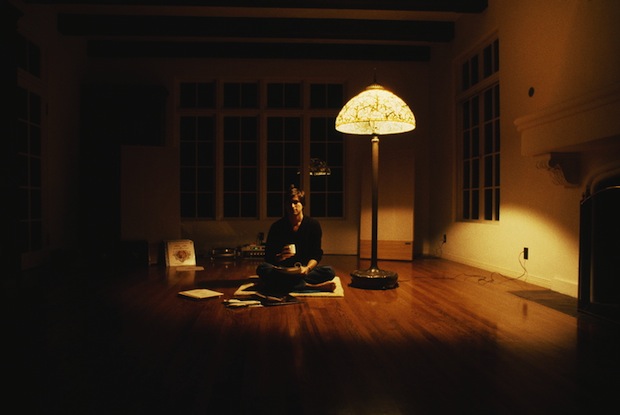
The futuristic design ethos is reflected in plans for the new Apple HQ in Cupertino, nicknamed the iSpaceship.


Jobs constantly changed the hardware and removed aspects that customers took for granted. His eye was on the future and the changes to come.

The iPhone brought with it apps and the beginning of an integrated portable internet access through dedicated platforms rather than Web browsers. These work better and fit better into the lives of consumers. They also enable companies to make money more easily on these platforms.


Commentators note that working trends are shifting with the increasing use of Blackberries and own gadgets. Some individuals are tired of using dinosaur technology supplied by their employers and resort to using their own up-to-date equipment. This makes them more productive with interesting consequences for data security.

“This is a huge change,” says Citrix’s Andrew Millard. “As the boundaries between office hours and personal time become less distinct, managers are losing control of how people 'work’, as individuals want to prioritise what they do. It is no surprise therefore that there is so much resistance to 'workshifting’.” With the right kit, however, it’s a trend that should be hard for employers or employees to resist.

Chris Anderson and Michael Wolff discuss the evolution of internet use in a recent Wired article. They draw on Jonathan L. Zittrain's 'The Future of the Internet — And How to Stop It.'

CISCO estimates based on CAIDA publications, Andrew Odlyzko

IP and TCP protocols enable a range of communication on the internet. The web with its HTML data is in decline, accounting for less than a quarter of internet traffic. Peer-to-peer, file transfers, email, company VPNs, machine to machine communication of Skype calls, online games, Xbox Live, iTunes, voice-over-IP phones, iChat and Netflix movie streaming are expanding. Many of the newer Net applications are closed, often propietary networks.

'And the shift is only accelerating. Within five years, Morgan Stanley projects, the number of users accessing the Net from mobile devices will surpass the number who access it from PCs. Because the screens are smaller, such mobile traffic tends to be driven by specialty software, mostly apps, designed for a single purpose. For the sake of the optimized experience on mobile devices, users forgo the general-purpose browser. They use the Net, but not the Web. Fast beats flexible.'

I've discussed news media response to the increasing move to digital content. Businesses are challenged by the changes and the increasing difficulty of deriving income from web based content.

'The Internet is the real revolution, as important as electricity; what we do with it is still evolving. As it moved from your desktop to your pocket, the nature of the Net changed. The delirious chaos of the open Web was an adolescent phase subsidized by industrial giants groping their way in a new world. Now they’re doing what industrialists do best — finding choke points. And by the looks of it, we’re loving it.'

Articles appear announcing the death of the PC.

'Apple CEO said that PCs are going to be "like trucks" in that they'll still be around and useful for certain work, but only a smaller percentage of the users will need one.'

This view is challenged, but perhaps at the level of semantics:

'Just what is a "personal computer", anyway? Is it defined by the operating system it uses - Windows, MacOS, or Linux? Does a physical keyboard make it a PC? A processor that uses more than some arbitrary amount of power? Is it size? It can't be size - a MacBook Air is a personal computer, and it's about the same size as an iPad. You could easily argue that today's smartphones are personal computers, as they're easily as powerful as the PCs of five or six years ago.'

'The world isn't moving away from the PC, it's just transitioning from the PC being defined as a "personal computer" to "pervasive computing." Computers will fill our lives with specialized capabilities in various form factors, sizes, and locations.' Here's an example from British Airways.


Update:


Steve Jobs has resigned today as CEO and asked to become Chairman of the board, director and Apple employee. Jobs recommends Tim Cook to replace him as CEO.

Apple demands total commitment from staff and a blurring of work/life boundaries, where late night phone calls to discuss a new idea are commonplace. Jobs has health challenges and is unable to maintain that level of intense involvement.

"I believe Apple's brightest and most innovative days are ahead of it. And I look forward to watching and contributing to its success in a new role."

Ironically the biggest tributes to Steve Jobs have come from staff in the field of medicine.

One example is how the iPad enables collaboration between doctor and patient:

"The laptop was a barrier. It was like a screen being put up between the two of us, my eyes were focused on the laptop and not on the patient," Halamka said. "Then the iPad came along and was a game changer because it invites the doctor and the patient to look at this device together. Just think about the way you hold it, it is not something that you have a wall between you and the patient, so I can show the patient their x-rays or lab tests. What I and many other clinicians have experienced is that the iPad invites shared decision making as opposed to patient and doctor alienation."

Update 2

Steve Jobs died on 5 October 2011 aged 56.

There's only one Steve Jobs and attempts to recreate his spirit at the company may lead to failure as happened at Sony, according to Time magazine.

More posts on Steve Jobs here.