Peter D Kramer challenged Western societies and the increasing trend to view extraversion as the norm and introversion as problematic. His book 'Listening to Prozac' raised issues about cosmetic pharmacology and the urge to homogenise personalities in the modern world.
Susan Cain gives a TED talk from the perspective of a successful introvert and argues the case for accepting and valuing introversion in the workplace.
Saturday, 31 March 2012

Monday, 27 February 2012
Mr Bean and the Mac
It is well known that Martin Bean, the OU Vice Chancellor, used to work for Microsoft. Students and tutors have long complained of the OU bias towards Microsoft and Windows in computing and technical support. This has been eased over the years by software flexibility in Macs allowing dual systems.

It was a challenge marking the first electronic assignments on a Mac. When the electronic marking system was upgraded, I couldn't get it to work and had to buy a cheap Windows laptop for OU work.
Someone told me about Mike Hay and his eTMA file handler.

Mike's free download provided the easiest and most robust bit of software for electronic marking that I'd found. Not only has he compiled a clear manual, but he offers telephone support when new users get stuck. I've found him more helpful than the OU computer helpdesk. Satisfied customers are encouraged to make a donation to charity to show appreciation for his efforts.

I assume that Mike knitted his bit of kit to help with his own teaching.
What does this innovation have to do with Mr Bean? It costs the OU nothing, boosts participation of Mac users and lessens criticism of the technical monoculture at the university.
How about acknowledging Mike Hay's contribution with an award?
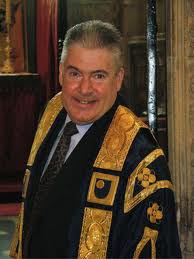
It was a challenge marking the first electronic assignments on a Mac. When the electronic marking system was upgraded, I couldn't get it to work and had to buy a cheap Windows laptop for OU work.
Someone told me about Mike Hay and his eTMA file handler.

Mike's free download provided the easiest and most robust bit of software for electronic marking that I'd found. Not only has he compiled a clear manual, but he offers telephone support when new users get stuck. I've found him more helpful than the OU computer helpdesk. Satisfied customers are encouraged to make a donation to charity to show appreciation for his efforts.

I assume that Mike knitted his bit of kit to help with his own teaching.
What does this innovation have to do with Mr Bean? It costs the OU nothing, boosts participation of Mac users and lessens criticism of the technical monoculture at the university.
How about acknowledging Mike Hay's contribution with an award?
Saturday, 18 February 2012
Jose Antonio Abreu: visionary leader

Jose Antonio Abreu wanted young people from deprived backgrounds to experience what he had enjoyed through musical education. At the start he had 50 (donated) music stands for 100 young musicians.
Only 11 kids turned up to the first rehearsal. "Do I close the programme or multiply these kids?" He accepted the challenge and made a promise to those 11 pioneers that he'd convert this into one of the leading orchestras in the world.
Today art is no longer the monopoly of an elite, but has become a social right.
"In its essence the orchestra and choir are much more than artistic structures: they are examples and schools of social life, because to sing and play together means to coexist intimately toward perfection and excellence, following a strict discipline of organisation and coordination in order to seek the harmonic interdependence of voices and instruments. That's how they build a spirit of solidarity and fraternity, developing self esteem and fostering ethical and aesthetic values related to music in every sense."
300,000 children are involved from lower and middle classes. El Sistema is a programme of social rescue. The impact is felt in 3 areas: the personal, the family and the community spheres.
The child attains a sense of identity and importance in the world and the music ends up overcoming material poverty. Music is the number one prevention against prostitution, violence, bad habits, bad company and everything degrading to the life of a child.
Here's a rehearsal of el Sistema's world class Venezuelan Youth Orchestra conducted by Gustavo Dudamel:
Monday, 30 January 2012
Cause-Effect? Why bother when conjecture will do
Deaths from heart attacks have halved in the UK in the past decade. This is the conclusion by researchers from the Public Health Department of Oxford University.

Researchers have looked at the data and found that fewer people are having heart attacks and more people are surviving heart attacks. Dr Kate Smolina concludes that this a great success story for the NHS.
Dr Mike Rayner then goes on to discuss why that might be so. Coronary care in the NHS seems to have improved.
He then describes things that may have made a difference, such as a reduction in smoking. He guesses that a reduction in saturated fat intake and an increase in fruit consumption (mostly as juice) may have made a difference.
Professor Goldacre thinks that drugs for high cholesterol and high blood pressure may have made a difference. Goldacre also details improvements in cardiac care, such as faster transportation to hospital after a heart attack may have made a difference.

So we have a report that gives us a simple fact: deaths from heart attacks have halved in the UK in the past decade.
It then discusses what may or may not have contributed to this change.
What gets reported in the UK press?
Deaths have halved because NHS doctors have been prescribing statins.
Never let facts get in the way of cosy beliefs and comfortable prejudices.

Researchers have looked at the data and found that fewer people are having heart attacks and more people are surviving heart attacks. Dr Kate Smolina concludes that this a great success story for the NHS.
Dr Mike Rayner then goes on to discuss why that might be so. Coronary care in the NHS seems to have improved.
He then describes things that may have made a difference, such as a reduction in smoking. He guesses that a reduction in saturated fat intake and an increase in fruit consumption (mostly as juice) may have made a difference.
Professor Goldacre thinks that drugs for high cholesterol and high blood pressure may have made a difference. Goldacre also details improvements in cardiac care, such as faster transportation to hospital after a heart attack may have made a difference.

So we have a report that gives us a simple fact: deaths from heart attacks have halved in the UK in the past decade.
It then discusses what may or may not have contributed to this change.
What gets reported in the UK press?
Deaths have halved because NHS doctors have been prescribing statins.
Never let facts get in the way of cosy beliefs and comfortable prejudices.
Sunday, 29 January 2012
Can we learn to be creative?
This is a question often posed when I tell people what I teach. It implies that some of us are creative and others are not, which I dispute.
I believe that we are all creative in different ways. However it's possible to build creative muscle by regular practice.
Some choose mindfulness and a meditation practice to still the mind and promote more immediate responses to life, rather than conditioned behaviour based on thoughts of past and future.
Others practice a form of exercise that stimulates different pathways and a better sense of balance. Qi Gong shifts thinking and energy.
Creative writing is popular as a way of opening up the imagination. Some write non stop for 10 minutes a day, without editing their output. Others follow a range of exercises.

Will Hewett set himself the challenge of singing for 15 minutes a day for a year. He planned to boost his creativity and help himself to be more outgoing:
Will's dual purpose fits the results I've observed in many people who follow a daily practice. Confidence, balance and internal calm are some of the qualities that seem to flow from time spent with the self on some purposeful activity, that seems to have no material payoff.
I believe that we are all creative in different ways. However it's possible to build creative muscle by regular practice.
Some choose mindfulness and a meditation practice to still the mind and promote more immediate responses to life, rather than conditioned behaviour based on thoughts of past and future.
Others practice a form of exercise that stimulates different pathways and a better sense of balance. Qi Gong shifts thinking and energy.
Creative writing is popular as a way of opening up the imagination. Some write non stop for 10 minutes a day, without editing their output. Others follow a range of exercises.

Will Hewett set himself the challenge of singing for 15 minutes a day for a year. He planned to boost his creativity and help himself to be more outgoing:
Will's dual purpose fits the results I've observed in many people who follow a daily practice. Confidence, balance and internal calm are some of the qualities that seem to flow from time spent with the self on some purposeful activity, that seems to have no material payoff.
Saturday, 28 January 2012
The Big Con
Her Majesty's Opposition are scornful of David Cameron this week, because he has not slashed Stephen Hester's bonus.
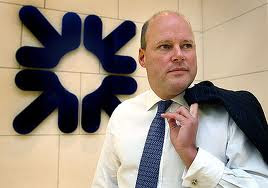
When the Royal Bank of Scotland was saved from collapse by government investment, Hester was brought in to bring the bank back to solvency so that it could be resold and public money returned to the Treasury. HMO, who were then Her Majesty's Labour Government, designed the contract, by which Hester received a relatively modest salary, but a substantial bonus awarded for meeting specific targets. The aim was to motivate Hester to perform, rather than sit back and draw a comfortable salary. He has exceeded those targets, behaved with great honesty and openness, thereby restoring some trust in the banking industry.
I sincerely hope that the Labour Front Bench, Gordon Brown's former bag carriers, are not now suffering from early onset dementia affecting their short term memory. That would be a tragedy indeed.
David Cameron made a firm statement about excessive bonuses paid to directors when companies were failing. He criticised bonuses collected for poor performance. Stephen Hester has performed well in difficult circumstances and is entitled to receive his bonus.
I hope the Prime Minister was referring to examples such as Conygar, a small property investment company. There was uproar at the recent AGM when directors awarded themselves substantial bonuses.

Was this as a result of diligent acquisition, development and sale of properties?
No.
The directors had merely sold and bought shares in the company, which, on paper, gave the impression of expansion and increased profitability. In effect they were rewarding themselves for churn, that old trick of financial advisers and investment fund managers (as well as some fiddling with the figures).

One of the problems was that the majority of shareholders were large institutions, many of whom seemed to have some link to the remuneration committee or were indifferent to the decision. One representative shrugged and likened these directors to Premier League footballers accustomed to garnering astronomical salaries. The majority of action to block the bonuses was taken by small investors. There seem to be 3 large institutional shareholders and only one of these, Aviva, voted against the remuneration package. Cameron needs to consider the cosy old boy network of boardrooms and institutional shareholders to prevent future abuse.
Perhaps more effort needs to be made to out those institutions that collude with bad practice and to publicise the efforts of companies like Aviva in upholding probity.
Perhaps Eds Milliband & Balls believe that the British public are stupid and have no idea what Labour did whilst in government, nor how to distinguish between rewards for performance and naked greed.
The Big Con is not the reward given to Stephen Hester for his excellent performance, but lowdown dirty dealings in an AIM company boardroom remuneration committee (and other similar examples.)

When the Royal Bank of Scotland was saved from collapse by government investment, Hester was brought in to bring the bank back to solvency so that it could be resold and public money returned to the Treasury. HMO, who were then Her Majesty's Labour Government, designed the contract, by which Hester received a relatively modest salary, but a substantial bonus awarded for meeting specific targets. The aim was to motivate Hester to perform, rather than sit back and draw a comfortable salary. He has exceeded those targets, behaved with great honesty and openness, thereby restoring some trust in the banking industry.
I sincerely hope that the Labour Front Bench, Gordon Brown's former bag carriers, are not now suffering from early onset dementia affecting their short term memory. That would be a tragedy indeed.
David Cameron made a firm statement about excessive bonuses paid to directors when companies were failing. He criticised bonuses collected for poor performance. Stephen Hester has performed well in difficult circumstances and is entitled to receive his bonus.
I hope the Prime Minister was referring to examples such as Conygar, a small property investment company. There was uproar at the recent AGM when directors awarded themselves substantial bonuses.

Was this as a result of diligent acquisition, development and sale of properties?
No.
The directors had merely sold and bought shares in the company, which, on paper, gave the impression of expansion and increased profitability. In effect they were rewarding themselves for churn, that old trick of financial advisers and investment fund managers (as well as some fiddling with the figures).

One of the problems was that the majority of shareholders were large institutions, many of whom seemed to have some link to the remuneration committee or were indifferent to the decision. One representative shrugged and likened these directors to Premier League footballers accustomed to garnering astronomical salaries. The majority of action to block the bonuses was taken by small investors. There seem to be 3 large institutional shareholders and only one of these, Aviva, voted against the remuneration package. Cameron needs to consider the cosy old boy network of boardrooms and institutional shareholders to prevent future abuse.
Perhaps more effort needs to be made to out those institutions that collude with bad practice and to publicise the efforts of companies like Aviva in upholding probity.
Perhaps Eds Milliband & Balls believe that the British public are stupid and have no idea what Labour did whilst in government, nor how to distinguish between rewards for performance and naked greed.
The Big Con is not the reward given to Stephen Hester for his excellent performance, but lowdown dirty dealings in an AIM company boardroom remuneration committee (and other similar examples.)
Monday, 23 January 2012
Charlatan
I had an interesting conversation with a young Polish cardiologist recently. He was friendly and open to discussing views on health, without resorting to the 'Me expert, you idiot' approach of yesteryear.

I talked about some of the things I've learned about preventing heart problems and mentioned the work of Dr William Davis. The cardiologist turned to his computer, typed in Dr William Davis in the PubMed search engine and found no results. He then told me that Dr Davis must be one of those American charlatans, who are just trying to make money out of empty assertions and selling snake oil. I explained that Dr Davis has had stunning results by recommending diet and lifestyle changes in order to reduce coronary arterial plaque. The cardiologist dismissed this telling me he could claim numerous positive results and that this would prove nothing. He told me that he would need to see peer reviewed articles to convince him that Dr Davis had anything valuable to contribute to the field.
I then asked for his views on the lipid hypothesis and the idea that saturated fats contribute to heart disease. He told me that there is evidence that they do, took my email address and promised to send me links to peer reviewed articles substantiating this fact. That was at the end of November 2011 and to date I've heard nothing.
Later I typed the young cardiologist's name into PubMed and found zero results, despite the fact that this doctor routinely prescribes heart drugs and surgery to deal with various symptoms. I also checked on my GP colleagues, with whom I've worked for 20 years, and found no peer reviewed papers by any of them. I've witnessed and heard from patients testimony to their efficacy in dealing with a wide range of medical conditions. I doubt if patients need peer reviewed articles to show that their doctors aren't charlatans.
Dr Davis relies on the results of scans to show his patients' calcium scores. It's possible to challenge the cause-effect relationship between diet and heart disease that he proposes, but his results are impressive.
Dr Davis is generous with his knowledge and shares his experience freely on his blogs and in interviews. He does have a heart disease prevention programme with a membership and also sells 2 books. I don't think this automatically discounts his work.
In a previous post I mentioned the difficulty of getting research published in peer reviewed journals if it challenges orthodoxy or a sticky metaphor. Lynn Margulis persisted and made a difference to how we understand the process of evolution. The way that the Helicobacter was brought to public attention so that research was financed and appropriate antibiotics developed for the treatment of stomach ulcers is another example of this trend.

Commentators are challenging how pharmaceutical companies chase gold mine drugs and jump to conclusions about cause-effect relationships rather than correlations to research treatment for serious conditions. Some claims for drugs have been undermined by research or more detailed analysis of the initial findings on which claims for the drug were based. 'Why Science is Failing Us' is a provocative article in this vein.
Another angle in this debate focuses on the trend towards senior researchers to claim credit for all breakthroughs (and to quash evidence that young juniors have found something new.) Peter Lawrence claims that the heart of research is sick. He describes the push for publication in a few high profile journals so that your papers are cited by colleagues. This means that small, obscure areas of research are overlooked and that papers on planned genetic research are favoured, an area which seems to be reaching some dead ends. The outlook for UK scientific research is depressing.
I think it's absurd to assert that a doctor can only treat people if he/she has published research in a peer reviewed journal on the subject. The history of medicine has been built on doctors and surgeons applying the results of other people's research. Some members of the field indicate that the true charlatans may be those who change the paramaters of their research AFTER the results are in or those who conceal or understate side effects and statistically insignificant results by manipulating the data.

I talked about some of the things I've learned about preventing heart problems and mentioned the work of Dr William Davis. The cardiologist turned to his computer, typed in Dr William Davis in the PubMed search engine and found no results. He then told me that Dr Davis must be one of those American charlatans, who are just trying to make money out of empty assertions and selling snake oil. I explained that Dr Davis has had stunning results by recommending diet and lifestyle changes in order to reduce coronary arterial plaque. The cardiologist dismissed this telling me he could claim numerous positive results and that this would prove nothing. He told me that he would need to see peer reviewed articles to convince him that Dr Davis had anything valuable to contribute to the field.
I then asked for his views on the lipid hypothesis and the idea that saturated fats contribute to heart disease. He told me that there is evidence that they do, took my email address and promised to send me links to peer reviewed articles substantiating this fact. That was at the end of November 2011 and to date I've heard nothing.
Later I typed the young cardiologist's name into PubMed and found zero results, despite the fact that this doctor routinely prescribes heart drugs and surgery to deal with various symptoms. I also checked on my GP colleagues, with whom I've worked for 20 years, and found no peer reviewed papers by any of them. I've witnessed and heard from patients testimony to their efficacy in dealing with a wide range of medical conditions. I doubt if patients need peer reviewed articles to show that their doctors aren't charlatans.
Dr Davis relies on the results of scans to show his patients' calcium scores. It's possible to challenge the cause-effect relationship between diet and heart disease that he proposes, but his results are impressive.
Dr Davis is generous with his knowledge and shares his experience freely on his blogs and in interviews. He does have a heart disease prevention programme with a membership and also sells 2 books. I don't think this automatically discounts his work.
In a previous post I mentioned the difficulty of getting research published in peer reviewed journals if it challenges orthodoxy or a sticky metaphor. Lynn Margulis persisted and made a difference to how we understand the process of evolution. The way that the Helicobacter was brought to public attention so that research was financed and appropriate antibiotics developed for the treatment of stomach ulcers is another example of this trend.

Commentators are challenging how pharmaceutical companies chase gold mine drugs and jump to conclusions about cause-effect relationships rather than correlations to research treatment for serious conditions. Some claims for drugs have been undermined by research or more detailed analysis of the initial findings on which claims for the drug were based. 'Why Science is Failing Us' is a provocative article in this vein.
$29 Billion Introduction from 29billion on Vimeo.
Another angle in this debate focuses on the trend towards senior researchers to claim credit for all breakthroughs (and to quash evidence that young juniors have found something new.) Peter Lawrence claims that the heart of research is sick. He describes the push for publication in a few high profile journals so that your papers are cited by colleagues. This means that small, obscure areas of research are overlooked and that papers on planned genetic research are favoured, an area which seems to be reaching some dead ends. The outlook for UK scientific research is depressing.
I think it's absurd to assert that a doctor can only treat people if he/she has published research in a peer reviewed journal on the subject. The history of medicine has been built on doctors and surgeons applying the results of other people's research. Some members of the field indicate that the true charlatans may be those who change the paramaters of their research AFTER the results are in or those who conceal or understate side effects and statistically insignificant results by manipulating the data.
Subscribe to:
Posts (Atom)