Wednesday, 14 January 2015

EU bows to agribusiness pressure

Yes that's right, the European Parliament in Strasbourg has quietly passed a new food law to allow cultivation of GMO crops in member states.

I heard a tiny pieces about it on radio news, but found little on the internet.  Well Charlie Hebdo killings made a 'nice day to bury bad news'.  All heads were turned to focus on Islamic extremism.


As the article tells us:  'This comes in the midst of Transatlantic Trade and Investment Partnership (TTIP) talks aimed at securing multilateral growth through commerce between the EU and the US. Many environmentalists were afraid that such an agreement would ease GM crop laws since cultivation of GM crops is widely spread around the US.'

USA lawyers are currently suing the Uruguayan government in court (for sums exceeding the national budget) under a similar agreement signed between North and South America.


I'm willing to bet that, when TTIP is signed here, companies such as Monsanto will be bullying our government to allow widespread growth of GMO crops in the UK.

GM maize is likely to be authorised in the UK very soon.

Nature surveyed the pros and cons for GM crops and came down in the middle.

It seems that the European Parliament rushed this law through in a shoddy piece of legislation:


Two contributors to the field achieve a better balance when discussing diet and health, in my opinion. 

Dr Larry Mccleary, a neurosurgeon, gives considered responses to questions and attempts to put himself in the shoes of parents and carers of people with neurological disorders wanting to introduce dietary changes.  

Chris Masterjohn, a lipidologist, is also unwilling to make definitive statements without strong supportive evidence.


Monday, 12 January 2015

Celebrity chefs make poor scientists

I was listening to an interview with celebrity chef, Hugh Fearnley Whittingstall.  He has made his name in tv series showing how he grows fruit and veg and rears (and slaughters) animals on his farm, before cooking the produce.


He admitted that he'd had a shocking health scare.  His blood cholesterol levels were high and he was bordering on levels 'requiring statins'.  He went on to say that this was because of the amount of butter and cream he used to consume.

HFW is a high profile media celebrity and the story was widely reported.  Unfortunately Hugh is no scientist and has swallowed the NHS line on the cholesterol hypothesis hook, line and sinker.

The illustration above indicates another reason why his blood lipids and blood glucose levels may have soared:  sugars and starches.


Here are some other views:  Dr Malcolm Kendrick (on reasons to AVOID statins), Dr William Davis (on ways to become heart healthy through eliminating cereals) and Dr Stephen Gundry (on ways to improve heart and general health through diet and lifestyle).


Thursday, 8 January 2015

Why do doctors get angry when diabetics lower their blood sugars?

I've talked to some people who feel browbeaten by their doctors.  They lower blood sugar levels by changing diet and lifestyle, but don't get the response they expect.  Lower blood sugar reduces blood pressure and endothelial damage in the circulatory system, I thought.  So lower blood sugar should reduce the risk of heart attacks, I believed.

Their doctor may then turn their attention to cholesterol levels and berate the patient for 'very high levels'.  If the patient takes the trouble to note down the numbers to check against NHS guidelines, they may find most numbers within the normal range, but triglycerides are a little higher.  'One swallow doesn't make a Summer' and it's not great scientific practice to take action based on a single reading for trigs (much the same as writing a prescription based on one blood pressure reading.)  You need to know if it's a one-off event based on some temporary trigger or a general trend.

Back to the blood sugar.

I'm a fan of Jenny Ruhl and her easy to read guidelines on diabetes and optimum blood glucose levels.


She helped solved the mystery of these doctors' reactions:

It turns out that some doctors have come to believe a good study that reached some poor conclusions based on shoddy analysis of data.  In short:  the research took 2 groups of people with type 2 diabetes - one lot had no intervention and the other took steps to reduce their blood sugar levels.  Some of the intervention group had heart attacks and died (more than in the non-intervention group).  The conclusion reached was that lowering blood sugar levels was DANGEROUS.

Another look at the data showed that some of the intervention group cheated and DID NOT lower their blood sugar levels.  Those that did had no heart attacks and became healthier.

Always view tabloid headline reports of medical research with scepticism.  It might also be an idea to treat doctors' negative statements about sensible diet and lifestyle changes with some detachment.  They may not have read the original research or treated it with the critical rigour it deserves.

It's your health and life.

Monday, 13 October 2014

NHS and the Mansion Tax diversion

Michael Gove, Parliamentary Secretary to the Treasury and Chief Whip, appeared on Radio 4's Question Time recently.  He said he was outraged and insulted at allegations by another panellist that the Coalition Government is privatising the National Health Service.


Who is he kidding?

Some of my work is in the NHS is in primary care.  The NHS is being privatised by stealth.  Here's how it works:  a particular service, such as Physiotherapy, is put out to tender.  The chosen provider is a private company.  As the NHS physiotherapy service loses market share, it withers on the vine.  When the contract comes up for renewal, there is no longer any NHS physiotherapy to make a bid for it.  True to form, the contracted out service proves to be more expensive than the NHS equivalent.  In the county I work, mental health services were under pressure.  The area health authority contracted a private company to provide low level Cognititive Behavioural Therapy paid for centrally.  As financial pressure mounted on GP surgeries, they looked around for cuts to make.  Locally funded counselling services were an easy target.  Patients now have CBT or nothing (a service which costs the NHS more than the locally funded counselling.)

Salaries have been flatlining for several years and many services typically provided by GPs have been contracted out, reducing income.  GP surgeries run as businesses, a legacy of arrangements made when the NHS was first founded.  The more that income shrinks, the greater the pressure.

The ambulance service is in crisis as the population has increased massively in the last 2 decades, but funding has not kept pace.  Trivial and prank calls contribute to expansion of demand, but not completely.  Paramedics report that they get no breaks on shifts, because the pressure is constant.  Staff are leaving.  People are dying because ambulances take too long to reach high risk cases.

What does this have to do with the Mansion Tax?

The Liberal Democrats promoted this idea, but failed to get it through the Coalition.  Labour are now advocating this policy and promising that funds raised will be spent on the NHS.  This plays well with many regions outside of London and the South East.

If you live in Pontefract, an impoverished part of West Yorkshire, you can buy a 5 bedroom, detached 5 bedroom house built in 1894 (with attic and cellar rooms and extensive grounds) for £595,000.


In Clapham, South London, you can buy a small 3 bedroom terraced house for the same price.


These are neither the cheapest regional area or the most expensive zone of London and the South East.

The Mansion Tax will hit lots of ordinary people, who will pay a premium on top of inflated housing prices.  It will not hit the non-domiciled Russians, Chinese or Middle Eastern multi-millionaires who are buying up properties all over the South East.  These are for investment, a bolt hole insurance in case the regime changes and many are left empty and crumbling over time.  These people tend to buy through companies and are often not subject to Stamp Duty and other taxes.  Nothing has been suggested to deal with this development that skews the property market.  Properties that are bought to let will have rental prices increased to absorb the Mansion Tax.  There are no rent controls, so accommodation costs are pushing people to the margins.

Why is this a diversion from the state of the NHS?

The biggest single threat to our state run National Health Service is the current move to join the TTIP.

The Transatlantic Trade & Investment Partnership is a bi-lateral tade agreement quietly being negotiated with the USA.  This has already been agreed between North and South America to devastating effect.  Private Eye describes it as a deal which opens the door for US corporate lawyers to challenge any service that is state run in the UK, demanding access for private companies.


If you watch/listen to BBC news and analysis you might imagine this does not exist, as TTIP is so rarely reported.  Negotiations are held in secret and nothing is being reported to the public.  TTIP did not feature in any of the political party conferences in the past month.  It is left to charities and pressure groups to gather support to block the deal.


Political parties are all careful to say that the NHS will remain free at the point of use under their stewardship.  They do NOT guarantee that it will be state run.

The mansion tax is a diversion from wholesale corporate sell off of the NHS.


Friday, 10 October 2014

UKIP, Labour and the British working class

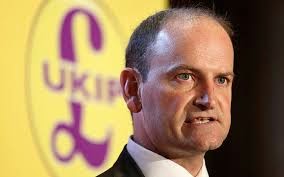
UKIP won a seat in Parliament last night and nearly snatched a safe seat from Labour.  Douglas Carswell retained his seat as MP, but switched parties from Conservative to UKIP.


I don't live in the constituency and have no idea how discussions went with people on the ground.  Douglas Carswell has a high profile and criticised government for poor funding of troops in Afghanistan.  He is critical of the European Union and called for a referendum on British membership.

UKIP leader, Nigel Farage, speaks simply and clearly addressing concerns of ordinary people.  He and his party are regularly branded racists and xenophobics by his opponents including the Labour Party.


Trevor Phillips was a prominent tv broadcaster for many years.  He became chairman of the EHRC (Equality and Human Rights Commission.)  During this time as leader, 6 commissioners stood down in protest at his leadership.  The Labour government supported Phillips and ignored criticism of him by these 6 prominent and well respected individuals.  At the time there was much concern about migration from the newly enlarged EU.  Increased pressure on services and infrastructure was not matched by funding and people raised concern that preferential treatment was given to new arrivals.  The EHRC was asked to research the matter and Trevor Phillips produced a report stating that there was no bias or problem.  This was readily accepted by the Labour Party and the BBC, many of whom lived or spent much of their time in London and the South East.

I worked regularly in a poor part of the East Midlands.  Major industries there have slowly shifted production to the Far East in the last couple of decades.  I worked with poor and disabled people who had been high up the housing waiting list found they were shifted low down the list and watched as newly arrived Eastern Europeans were given keys to social housing.  Several people told me that local employment agencies had an unwritten policy to avoid giving work to British people.  I also worked with individuals who were finding it difficult to hold on to jobs, despite hard and conscientious work, as new arrivals undercut their low wages.

This was a safe Labour seat and the government were not concerned about the prospects for local working class people.  Gordon Brown had introduced a range of benefits that seemed to trap people in unemployment, as the contrast in income when they took a job was rather like falling off a cliff (as they were no longer eligible for other benefits such as free dental treatment and glasses.)  Little was done for people at the lower end of the scale in terms of education and work experience, where unskilled work and demand for traditional skills are increasingly scarce.  Globalisation and outsourcing have changed employment for ever.  Labour have ignored their traditional roots in the working class.


Labour rhetoric shifted to a discussion about the concerns of 'hardworking families' and leaders of the main parties listened to the concerns of predominantly middle class pressure groups such as mumsnet.

The current coalition has focussed on bringing people back into the job market.  They want to ensure people earn more in work than on benefits.  In this Labour safe seat, I see lots of people who have never worked and found it profitable to produce more than 2 children, who are still able to claim benefits.  At the same time, I work with many people suffering chronic pain, disability or life threatening illness who are deemed fit for work and bullied by staff at the Department for Work and Pensions.  Yes the statistics for people coming off benefits and/or getting into work are rising.  Some of the former are arbitrarily booted off benefits by poorly monitored staff with draconian powers.  Some of the latter move into poorly paid and insecure work contracts, which do not guarantee them a regular income, as employers can bully them to work very long hours or withdraw all work as they please.

Large corporations in the private sector are paid incentives to hire staff on low incomes.  These incentives are the working benefits paid by the state.  The British taxpayer is now subsidising parts of the private sector.


In the past, trade unions fought for better wages and conditions for working class people.  They defended the rights of white males, but were less effective or motivated in supporting the rest.  Margaret Thatcher began the process of reducing their power.  The rail unions have remained a powerful force for their staff until now.  Bob Crow died recently and did not live to see strategies used to undermine the power of his RMT union.  This week it was announced that the London Underground will shift to driverless trains on the tube network.  If you elminate a powerful part of the workforce, which can bring the network to a halt by withdrawing their labour, you weaken the union.

Who do people turn to when their concerns are discounted as racism and bigotry?


Farage has recruited a financial spokesman with an Economics degree and robust arguments to counter opponents.  He is learning to strengthen policy statements and field challenges in the media with clarity and ease.

The Labour Party were shocked to see such a strong challenge to their safe seat, though they're deflecting attention to losses among the Conservatives and Liberal Democrats.

Was I surprised?  Not at all.  Why?  Because I regularly speak and work with people on the margins, who feel disenfranchised outside of the insular hothouse of Westminster, London and the South East.


Wednesday, 8 October 2014

It's not that easy being green

For the purposes of this post I'm side stepping the climate change debate.  We have a big enough challenge ensuring there are energy and natural resources for generations coming after us on Planet Earth.


I live in Croydon, an unfashionable area of Greater London that lies South of the capital on the way to Gatwick airport.  It is both a borough and a town called Croydon (to confuse people driving to the areas.)  The town of Croydon is sometimes called the Manhatten of South East England because of the number of high rise blocks on the skyline.


In recent years many tower blocks are being demolished to make way for newer replacements.  Some of the demolished buildings were built in my time in the area.  If it takes more materials to build new rather than renovate and retrofit old buildings, why are so many recent apartments and office blocks being torn down?

The simple answer is money.

It costs more to renovate, because full VAT (value added tax) is charged on retrofitted building and zero rate on new build.  The greener option is not on a level playing field with the alternative.

I'm not making a party political point here as all the major parties have followed this formula and chosen to cosy up to the large construction companies and property developers.


Let's look at another example.  The supermarket firm Sainsbury commissioned a new branch in Greenwich, which was designed and built to high standards of energy efficiency and eco-friendliness.  Later it decided to sell, but placed a caveat in the contract that no rival could use the shop as a supermarket.  This led to plans to demolish the building.  Campaigners worked to save the store.

Eric Pickles of the Department for Communities and Local Government (DCLG) has decreed that no local council should raise local building standards beyond those laid down by central government.  He has blocked new schemes that would significantly increase the development of zero carbon homes in South West England.  His argument is that this disadvantages building companies.


In my view there are 2 reasons why Mr Pickles is wrong:

1)  Progress and improvement have been made through innovation and deviation from the norm by pioneers.  Without experimentation and trail blazers we will continue to waste energy and resources.

2)  When Croydon council planned massive redevelopment of the town centre, the Head of Planning was clueless about energy efficiency and sustainable building.  Local councillors told me that higher standards would be too expensive.  I asked staff of large building companies about this.  They told me they were building similar schemes to higher standards in Greenwich.  Did it cost more?  No.  Why did they build to a higher standard in Greenwich?  Because Greenwich council asked them.

If political parties are serious about their Green Credentials for the coming general election, here are some fundamentals:

1)  Reduce VAT on renovation projects to zero.

2)  Maintain building standards and encourage local councils to go beyond them.

Anything else is Greenwash.


Friday, 19 September 2014

Pricing and Poundland

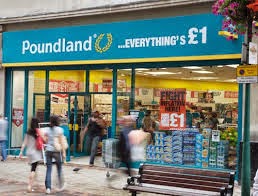
Poundland shopping was my guilty secret.  I thought discount shops ripped off manufacturers.  A radio documentary put me right.


One of the founders, Steve Smith, was part of a family that ran a stall in Bilston market.  His father was an engineering draughtsman, but found that he made more money from selling specialist pens to colleagues.

Steve learnt from market stall customers what they wanted and how much they wished to pay (as well as how much and how often they'd buy).  He'd go away and source the goods, negotiating a price that would give them a profit on the sale.

On the stall was a cardboard box labelled 'everything here for 10 pence'.  The family discovered they made more money from the discount box than the rest of the stall.  That contributed to the idea of a discount chain of stalls.

Steve and his co-founder sourced no-name goods.   They took over £13000 on the first day of trading.  They worked hard on landing branded suppliers.   Once they had one, WD40, the rest followed.  Steve aimed to look after customers and add value to goods sold.  He encouraged managers to take a turn on the till, to ensure they developed the habit of listening to customers.

What is the attraction to manufacturers?  

Poundland strikes a hard bargain once a year.  Once the price is agreed, the only time that manufacturers hear from a discount stores is when they want to order more goods.


The big 4 supermarkets are in constant contact, demanding surcharges for prime positioning of product on shelves, discount promotions and other arrangements that make it difficult to estimate cashflow as well as putting pressure on staff at short notice.  I've worked with managers from a major UK manufacturer and know the stress caused by powerful supermarkets that borders on bullying.

What is the attraction to customers?

Discount stores such as Poundland, Lidl and Aldi, focus on a simple and transparent formula.  Their goods are of good quality, but sold at a reasonable and consistent price.  The big 4 supermarkets use a mixture of deals:  BOGOF (buy one, get one free) and loyalty cards with points redeemable on specific goods, which aim to entice customers to buy larger quantities.  Tesco attracts criticism for convoluted pricing that conceals poor deals.

Why shop at a supermarket for the same basic goods, when you can buy them for consistently cheaper prices at a discount store?

People reject manipulation and tricks that leave them poorer.  Tesco is losing market share to the discounters.

Low cost airlines also meet customer resistance because of the use of dynamic pricing.  This enables the companies to drive up the price for repeat customers on the internet, while offering lower prices to new enquiries.  Easyjet and Ryanair are no longer small airlines.  Customers are less willing to tolerate substandard service for low prices.  Retail outlets like Aldi have demonstrated how low prices can be coupled with high quality and raised the bar for all.