Monday, 18 November 2013

Working with insomnia 4

I don't eat late in the day.  However I've found that sluggish digestion negatively affects my sleep.  I sometimes include ground flaxseed in my diet.  This cleanses the colon and has many health benefits.  Flaxseed absorbs a lot of liquid and moves slowly through the gut, interrupting and preventing sleep.  I restrict consumption to the early part of my day.


One element that disturbed me when I went to bed was intrusive light sources.  I was bothered by a new security light which stayed on until 2 am and over which I had no control.   My landline telephone also emitted light that affected my ability to fall asleep.  I've overcome this problem in various ways, including resting a sock over the phone.

Seth Roberts has written much about insomnia, mood and his experiments in promoting better sleep.  He likes to stand when working.  He also recognises the importance of 'morning faces', which doesn't mean looking at static pictures on the net, but having some sort of contact that replicates a conversation early in the day to promote better mood.


I've followed his recent posts on eyewear that blocks blue light.  The theory is that excessive blue light from light bulbs, computers and electronic devices messes up our light sensors and disrupts the circadian rhythms and melatonin production.  The result is poor sleep.


Comments on a recent post revealed experiments by readers with yellow/orange safety goggles and other means of replicating the experiment (such as computer software to replicate natural light phases).


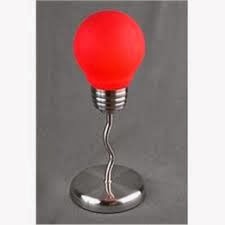
I was impatient to experiment and thought about lampshades we used to make with coloured tissue paper and an inflated balloon as a base.  Then I thought about red and yellow lightbulbs, but had none in the house.


My experiment involved a flexible table lamp.  I angled the light so that it was horizontal to the wall.  I then draped a thick golden yellow serviette over it, avoiding the ventilation holes and the low energy light bulb to prevent fire risk.


The effect was dramatic.  The bedroom was filled with a deep yellow light (despite some white light being visible at either end of the lamp).  I felt surprisingly relaxed and sleepy.  Most interventions to improve sleep have a decreasing effect on me with time.  I notice the same level of relaxation and sleepiness each night.  I'll continue with the experiment before I try blue blocking spectacles.

This is a very cheap and easy way of improving sleep, with none of the side effects of brain wave sounds or melatonin supplements.

UPDATE:

I've experimented with expensive blue light blocking glasses and found them annoying and of limited use.

I've also used cheap yellow and orange safety goggles.  Both pairs fit nicely over ordinary reading glasses and worked well when reading and working on computer.

I found the yellow goggles didn't make much difference.  The orange goggles relaxed the eyes and me.  I found myself yawning and feeling sleepy after using them for a while.  I highly recommend cheap orange safety goggles.


Sadly, like everything else, they don't work for me all the time.

Working with insomnia 3

Typical advice for treating insomnia includes eliminating caffeine and other stimulants, refraining from eating shortly before bedtime and avoiding alcohol.


I haven't drunk tea or coffee for many years and avoid green tea, because it can contain more caffeine than ordinary tea.  I don't eat late and avoid excessive alcohol.

Any beverage drunk after 6pm may stimulate the bladder and lead to visits to the bathroom throughout the night, particularly for older people.


We are also advised to take exercise, so that we are physically tired before bed.  I've found that going to the gym and swimming later in the day may prevent sleep completely.  I suspect that it may be swimming, spa, steam room and sauna that contributes to insomnia.  It may be the effect of chlorine or the big heat variations in the body.  I now avoid gym and swim the day before a very early start.


I don't experience the same problem when I've been digging weeds for a whole day.  I wonder if there are several beneficial components of exercise, not just physical exertion.  Several people have explained why they enjoy golf by demonstrating how it unhooks the brain from the treadwheel of continual thoughts.  This in itself relaxes the body.  I suspect digging out weeds does the same for me.


One invaluable tool I've found for relaxation is a bed of nails.  This compact mat with circles of plastic spikes helps the body release tension by stimulating muscles and pressure points. I wear thin cotton clothes.  After a while I'm no longer aware of the spikes and find it very comfortable.  Sometimes I feel sleepy, but when I put the mat away, I'm less relaxed.  I have slept on it, but prefer not to because of the risk of scratches to elbows and wrists when moving around.

As with everything else I've tried, sometimes it helps me sleep and sometimes it doesn't.


Working with Insomnia 2

I moved on from just listening to music and experimented with a range of spoken word and sound tracks.

Brain wave induction tapes, such as the Silva Method, helped but the effect tended to wear off.  I found the metranome beat intrusive.


Sometimes music for brain wave training was more helpful.


I have experimented with various gizmos using barely audible sounds for sleep induction.  These tend to work when I'm tired, but may increase insomnia at other times, preventing deep sleep.

Working with Insomnia 1

Lack of sleep can contribute to major health problems.  Cortisol production may be affected by insomnia and contribute to stress, inflammation and poor weight regulation.

I am not one of those people who go to sleep the moment their head hits the pillow.  I have experiences more problems getting to sleep and having enough deep sleep in the last few decades.


During a very stressful period of my life, I found my iPod helpful at night.  Certain music at low volume eased me into sleep.  Andreas Scholl's English folk music and Nikolaus Harnoncourt's version of Handel's Messiah are 2 notable examples.  Background noise and white noise are well known for helping soothe people and help young children off to sleep.


I found this helpful, but sometimes it didn't work.

Tuesday, 12 November 2013

Blasphemy & Church of the Latter Day Statinators

I am grateful to Dr Malcolm Kendrick for covering this issue.


An award winning Australian television journalist, specialising in medical research, put together 2 excellent programmes.  

Heart of the Matter Part 1 - Dietary Villains is here:


Heart of the Matter Part 2 - The Cholesterol Myth is here: 


There are many scientific papers to substantiate the research findings which overturn current dogma on dietary fat and heart disease.

Critics of these 2 tv programmes do not challenge the data with facts.  Dr Maryanne Demasai and her invited contributors are villified personally and their reputations attacked.


Our distant ancestors rooted out blasphemers and those who challenged orthodoxy (including midwives) using trial by ordeal. A woman would be dropped in water. If she drowned, she was not a witch, if she lived, she was a witch.  This was the 'damned if you do and damned if you don't' school of justice and scientific research.

I was reminded of this analogy when reading the current Wikipedia page (today it's a stub) on Dr Maryannne Demasai.  The wording is restrained, but its effect is a hatchet job on the journalist and her contributors.

One of the contributors claims that challengers to the Cholesterol orthodoxy have not proven their case.  He says he finds the idea interesting but not usable.  'A diet that substitutes polyunsaturated fats for saturated fat is healthier for the human heart'.  I have previously reported on Lipidologist Chris Masterjohn's excellent job of roundly demolishing this contention by examining the original research projects used to justify it.  He finds ample evidence of bad science, poor/changed control groups, conclusions that run counter to the data produced and other serious errors.


What constitutes blasphemy in the Church of the Latter Day Statinators?


Typically anything that frees people's minds from the orthodox dogma and poses a threat to the multi billion dollar earning power of statins and associated drugs.  If people, without heart disease, learn that they can reduce health challenges and heart disease by making changes in diet and lifestyle, then drug companies will lose their cash cows.


Dr William Davis, a heart doctor, has developed a systematic approach to diet and lifestyle that helps his patients reduce coronary arterial plaque (calcium scores) from life threatening to normal levels (and sometimes zero.)


Another conventional expert, in the second tv programme on the Cholesterol Myth,  states that publicising side effects of statins may cause people to develop them psychosomatically. Dr Duane Graveline, former NASA doctor, was a pioneering advocate of statins and took them himself.  His health declined dramatically and he slowly realised the cause, after he became unable to walk.  Many years later he still has health challenges and is one of the growing groups of medical doctors who challenge the widespread use of statins and the Cholesterol Hypothesis on heart disease.  He believes that statins attack mitochondria, the power house of each cells in the body.  Psychosomatic symptoms?  I don't think so.


I have commented before in the increasing reach of pharmaceutical companies in influencing opinion and silencing criticism.  Money in the form of funding and threat of litigation (or being stuck off) keeps many individuals and organisations 'on message'.

I chose the analogy of religious orthodoxy today when a friend sent me an email criticising Mormons.  I've yet to find a religion followed by human beings that does not have its share of embarrassing history.  I've met charming Mormons, some of whom were excellent scientists. This post is not directed at religions, but the current trend of turning any conventional dogma into a medieval faith.  


Doctor eats the Bogus Diet

I am grateful once again to Dr Malcolm Kendrick for alerting me to this video.


What is the Bogus Diet?


The SkinnyNews-Tim Noakes


A diet that is high in fat and low in carbohydrate.  This is the diet that doctors are trained to dismiss, which infuriates dieticians, who stick rigidly to the 'prudent diet' with lots of cereal grains.

Tim Noakes, UCT Professor of Sports Science, wanted to lose 6 kilos before travelling to speak to elite athletes in Sweden.  He followed the Bogus Diet and........ thrived on it.

It's not for everyone, but Professor Noakes explains the benefits of increasing fat and eliminating cereals and the side effects and risks of the 'prudent diet'.

Youtube won't let me embed the video, so find it here.

The Bogus Diet he followed was researched and further developed by 3 medical authors.  One of them is Dr Eric C Westman (President elect of the American Society of Bariatric Physicians).  Dr Westman is interviewed here:


The same criticisms are levelled at this approach as before.  This view of health and major diseases in the human population are part of a well honed dogma, which must not be challenged.  I wrote about this before using the analogy of Flat Earth, here and here.  It took a long time for our ancestors to recognise that our planet is round and orbits the sun.  We're still waiting for medical orthodoxy to catch up with the science.

Update:  


Professor Noakes is my hero.  Finally someone has written a rigorous book about hydration.  It's called 'Waterlogged' and mentions my hobby horse, the health risks of dilution of electrolytes by the advice:  'the more water you drink, the better'.


'The science of hydration is utterly bogus;  it was dreamed up by marketers.'


Thursday, 7 November 2013

Mark Taber makes progress with Co-op Bank

If you, your family or friends hold retail investments with Co-op Bank (such as bonds and preference shares), then you need to get information about the offer made to customers this week.  Here is the announcement made by Co-op Group Chief Executive, Euan Sutherland, on 4 November 2013.


Why does this matter?

If you vote to accept the offer and submit your forms promptly, you will receive a higher reward than those who leave it to the last moment.  If you're late, you'll miss the early bird bonus.

My broking firm will sort it for me, so  why do I need to worry?

Many broking firms have been slow on the uptake, not organised the paperwork and have given out erroneous information.  They need a firm push from customers to spur them into action.***

Here is Mark Taber's potted summary of the offer.


Mark Taber has a track record of supporting distressed retail investors.  In particular he has worked hard for pensioners who rely on income from bonds and preference shares to pay for their care home fees.  The Co-op Bank did not include this group in their original discussions.  Mark Taber has changed their minds by mounting an effective campaign to publicise the injustices and poor business practices of the bank and lax oversight by the regulators.

The Prime Minister, the Chancellor of the Exchequer and their Opposition Counterparts did not take action.  Other politicians, such as Jesse Norman, worked hard to interrogate the bankers and regulators, which helped move us to the current offer.

Mark has run campaigns to help customers of other banks including the Bank of Ireland.  He holds no retail investments in Co-op Bank and has worked voluntarily to achieve an astonishingly positive outcome.  His website accepts donations to help him survive whilst working so hard for others.

Thank you Mark Taber.


*** Update on stockbrokers:  I understand that Hargreaves Lansdown are the star performers with regards to the Co-op Bank offer (on 12/11/2013).   'They have produced a clear and easy to understand corporate action notice and agreed to chase up clients who have not acted' (Mark Taber).  They have set the benchmark by which other stockbrokers will be judged (currently performing much less well).

Stephen Fitzpatrick understands the power of working with integrity, when all around you others are not.  It's good for sustainable business.  If you treat people fairly, more customers will find you.  If you don't, like the Co-op Bank when they first announced the need to bridge the funding gap, customers will leave you.